 Indietro
Blood: Composition, Structure, and Function – Study Notes for Anatomy & Physiology
Guida di studio - Note intelligenti
 Appunti personalizzati basati sui tuoi materiali, ampliati con definizioni chiave, esempi e contesto.
Blood: Composition and Physical Characteristics
Overview of Blood
Blood is the only liquid connective tissue in the human body, playing a vital role in transport, regulation, and protection. It is more viscous than water due to its solid components and consists of formed elements (cells and cell fragments) suspended in plasma (liquid matrix).
Formed elements: Red blood cells (erythrocytes), white blood cells (leukocytes), and platelets (thrombocytes).
Plasma: A mixture of water, electrolytes, proteins, nutrients, wastes, hormones, and gases.
Functions of Blood:
Transport of gases (O2, CO2), nutrients, metabolic wastes, enzymes, and hormones
Stabilization of pH and electrolyte composition of interstitial fluids
Restriction of fluid loss through clotting reactions
Defense against toxins and pathogens
Stabilization of body temperature
Blood Volume and Formed Elements
The average adult has 4–6 liters of whole blood. Blood volume can be classified as:
Hypovolemia: Low blood volume
Normovolemia: Normal blood volume
Hypervolemia: High blood volume
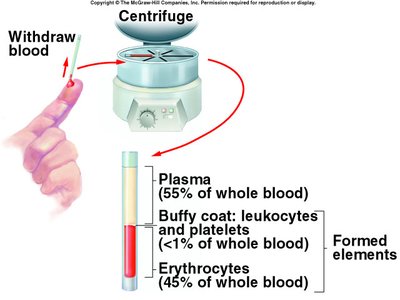
Formed elements make up slightly less than half the blood volume. The percentage of whole blood occupied by cellular components is called the hematocrit.
Plasma: Composition and Proteins
Plasma Composition
Plasma represents about 55% of blood volume, with approximately 90% of plasma being water. Plasma differs from interstitial fluid by containing a larger number of dissolved proteins and a higher dissolved oxygen content.
Plasma Proteins
Albumins: Most abundant plasma protein; contributes to viscosity, osmolarity, and influences blood pressure, flow, and fluid balance.
Globulins: Provide immune system defenses; include alpha, beta, and gamma globulins.
Fibrinogen: Precursor of fibrin threads that help form blood clots.
Regulatory proteins: Includes hormones and enzymes.
All plasma proteins are formed by the liver except immunoglobulins (produced by immune system cells) and regulatory proteins.
Nonprotein Components of Plasma
Amino acids from dietary protein or tissue breakdown
Nitrogenous wastes (e.g., urea)
Nutrients (glucose, vitamins, fats, minerals)
Blood gases (O2 and CO2)
Electrolytes (Na+ is predominant cation; Cl- and HCO3- are major anions)
Formed Elements of Blood
Types of Formed Elements
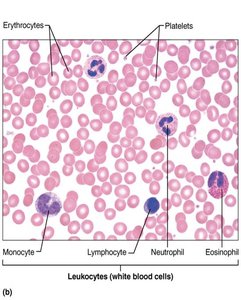
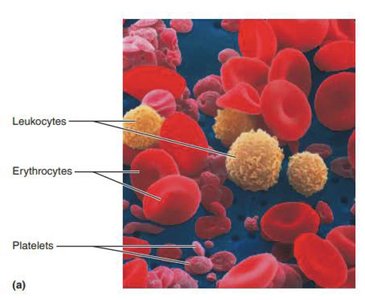
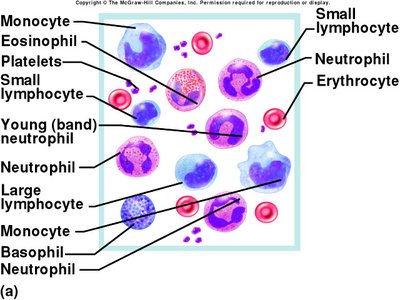
Formed elements include erythrocytes, leukocytes, and platelets. Each has distinct structural and functional characteristics.
Red Blood Cells (Erythrocytes)
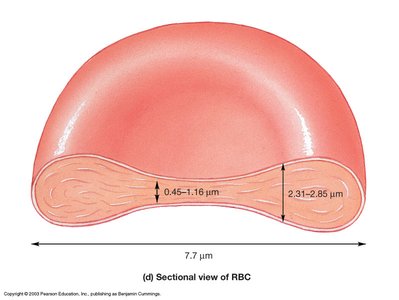
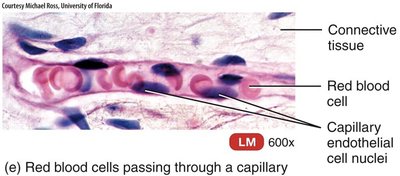
Erythrocytes are the most abundant formed element, specialized for oxygen and carbon dioxide transport. Their biconcave disc shape increases surface area-to-volume ratio, facilitating gas exchange.
Transport O2 to tissues and CO2 back to lungs
Contain hemoglobin (Hb), which binds O2 and CO2
Contain the enzyme carbonic anhydrase (CAH), catalyzing formation of carbonic acid from CO2 and water
Hemoglobin Structure and Function
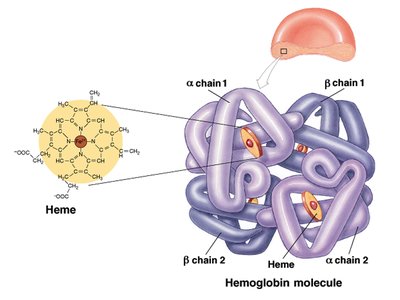
Hemoglobin is a globular protein composed of four globin subunits, each associated with a heme molecule. Each heme contains an iron ion that reversibly binds O2.
Adult hemoglobin: two alpha and two beta chains
Each protein chain holds one iron-containing heme group
Oxygen binds to heme groups
Red Blood Cell Count and Hemoglobin Concentration
RBC count and hemoglobin concentration indicate the amount of oxygen blood can carry
RBC count is higher in men than women due to androgen stimulation and menstrual losses in women
Hematopoiesis: Production of Blood Components
Hematopoiesis and Erythropoiesis
Hematopoiesis is the formation of formed elements of blood, occurring in red bone marrow from a single cell type called the hemocytoblast. Erythropoiesis is the specific formation of red blood cells.
Hemocytoblasts differentiate to form all types of blood cells
Erythropoiesis produces millions of RBCs per second from stem cells in bone marrow
Regulation of Erythropoiesis
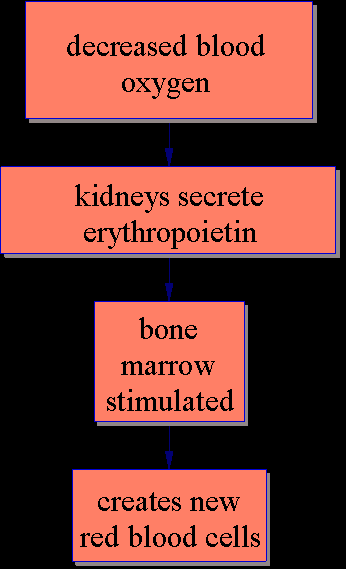
Erythropoiesis is regulated by erythropoietin (EPO), a hormone produced by the kidneys in response to hypoxia (low blood oxygen).
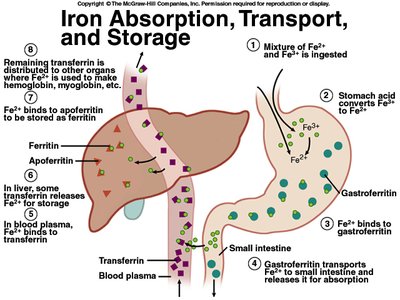
Iron Absorption, Transport, and Storage
Dietary iron is absorbed in the intestine, transported in blood by transferrin, and stored in the liver as ferritin. Iron is essential for hemoglobin synthesis.
Red Blood Cell Lifespan and Destruction
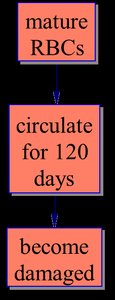
RBC Lifespan
Mature RBCs circulate for about 120 days before becoming damaged and removed from circulation.
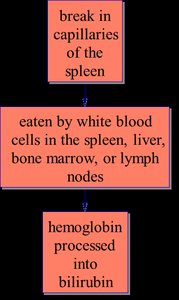
RBC Destruction and Fate of Hemoglobin
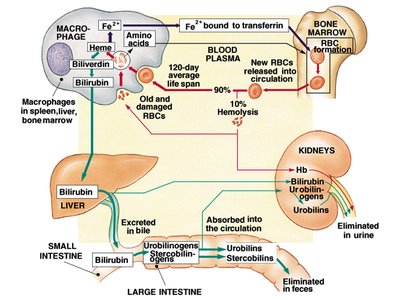
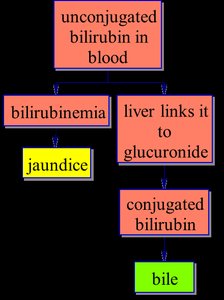
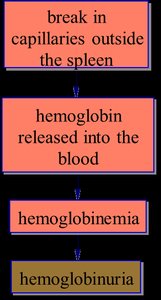
Most RBCs break in the spleen, where macrophages process damaged cells. Hemoglobin is broken down into amino acids, iron, and bilirubin.
Blood Types and Clinical Applications
ABO Blood Types
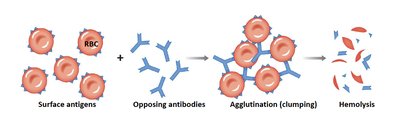
ABO blood type is determined by the presence or absence of antigens (agglutinogens) A and B on RBC membranes. Antibodies (agglutinins) appear in plasma and can cause agglutination if opposing antigens are present.
Rh Factor and Hemolytic Disease of the Newborn
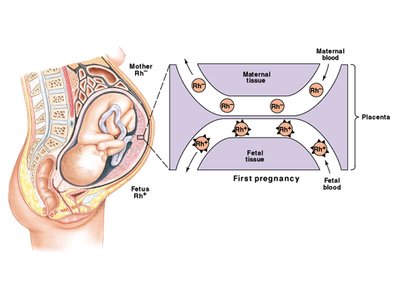
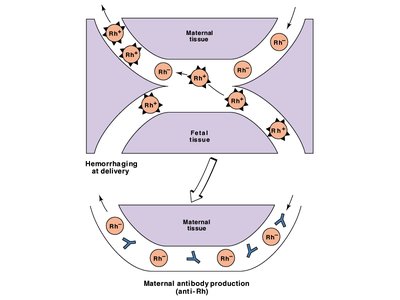
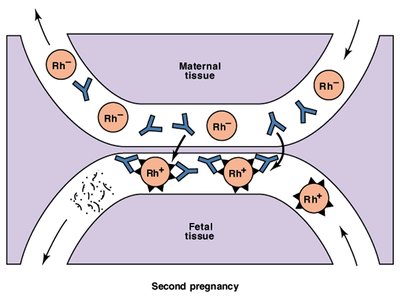
The Rh factor is another antigen on RBCs. Rh incompatibility can lead to hemolytic disease of the newborn if an Rh-negative mother carries an Rh-positive fetus.
White Blood Cells (Leukocytes)
Leukocyte Types and Functions
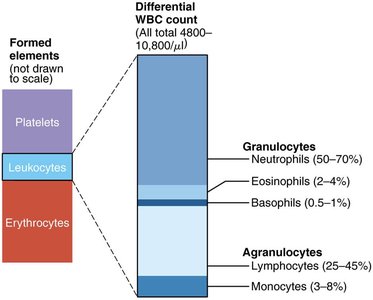
Leukocytes defend the body against pathogens, remove toxins, wastes, and abnormal or damaged cells. They are grouped into two broad classes:
Granular leukocytes: Neutrophils, eosinophils, basophils
Agranular leukocytes: Lymphocytes, monocytes
Platelets (Thrombocytes)
Platelet Structure and Function
Platelets are membrane-enclosed packets of cytoplasm, fragments of megakaryocytes in bone marrow. They play a crucial role in hemostasis (blood clotting).
Secrete clotting factors and growth factors for endothelial repair
Form temporary platelet plugs
Dissolve old blood clots
Phagocytize bacteria
Attract WBCs to sites of inflammation
Thrombopoiesis
Thrombopoietin from the liver or kidney stimulates hemocytoblasts to differentiate into megakaryoblasts, which replicate DNA and form megakaryocytes. Cytoplasmic fragments enter the bloodstream as platelets.
Summary Table: Blood Cell Types
Cell Type | Main Function | Relative Abundance |
|---|---|---|
Erythrocyte | Oxygen and carbon dioxide transport | Most abundant |
Leukocyte | Defense against pathogens | Less abundant |
Platelet | Blood clotting | Least abundant |
Additional info: These notes expand on brief points from the original material, providing definitions, examples, and academic context for each blood component and process.
