 Indietro
Blood Flow and Blood Pressure Regulation: Anatomy & Physiology Study Notes
Guida di studio - Note intelligenti
 Appunti personalizzati basati sui tuoi materiali, ampliati con definizioni chiave, esempi e contesto.
Blood Vessels and Blood Flow
Types and Structure of Blood Vessels
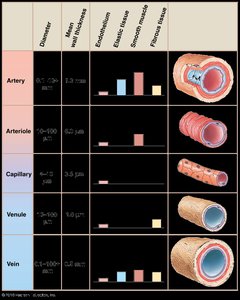
Blood vessels are classified based on their structure and function in the circulatory system. Each type of vessel has unique features that support its role in blood transport.
Arteries: Thick-walled vessels that carry blood away from the heart under high pressure.
Arterioles: Smaller branches of arteries that regulate blood flow into capillaries.
Capillaries: Thin-walled vessels where exchange of gases, nutrients, and wastes occurs.
Venules: Small vessels that collect blood from capillaries and transport it to veins.
Veins: Vessels that return blood to the heart under lower pressure.
Pressure Gradients and Blood Flow
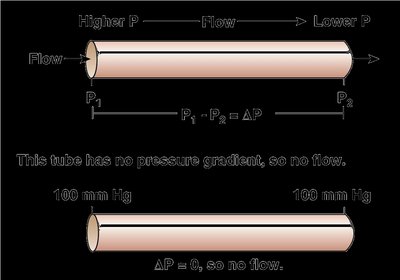
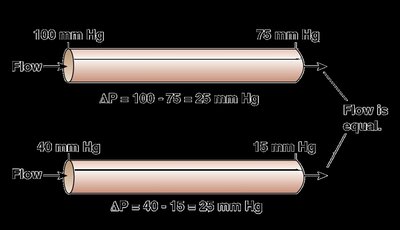
Blood flow in the circulatory system is driven by pressure gradients. Blood moves from areas of higher pressure to areas of lower pressure. Without a pressure gradient, there is no flow.
Pressure Gradient (ΔP): The difference in pressure between two points in a vessel.
Flow (F): Directly proportional to the pressure gradient:
Blood Pressure Changes Across the Systemic Circulation
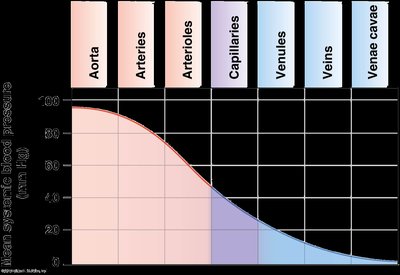
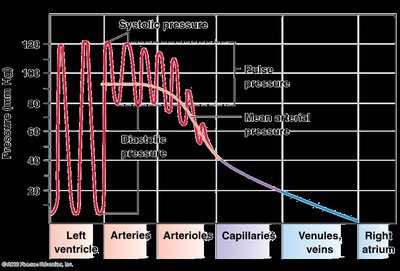
As blood travels through the systemic circulation, pressure decreases due to resistance encountered in the vessels. The greatest drop in pressure occurs in the arterioles.
Mean arterial pressure (MAP): The average pressure in the arteries during one cardiac cycle.
Pulse pressure (PP): The difference between systolic and diastolic blood pressure.
Resistance to Blood Flow
Determinants of Resistance
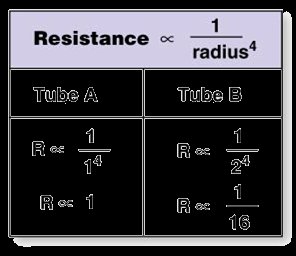
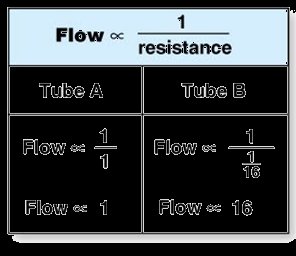
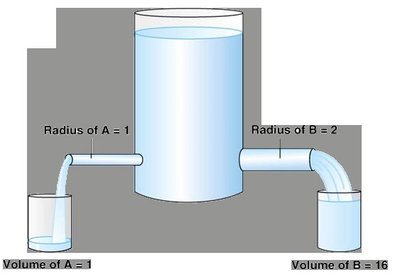
Resistance (R) opposes blood flow and is influenced by vessel length, blood viscosity, and vessel radius. The radius of the vessel is the most significant factor due to its effect being raised to the fourth power.
Resistance is inversely proportional to the fourth power of the radius:
Vasoconstriction: Decreases radius, increases resistance, decreases flow.
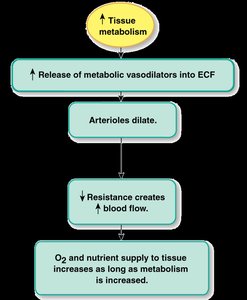
Vasodilation: Increases radius, decreases resistance, increases flow.
Hagen-Poiseuille Law
The Hagen-Poiseuille equation quantifies the relationship between resistance, vessel length, viscosity, and radius:
L: Length of the vessel
η: Viscosity of the blood
r: Radius of the vessel
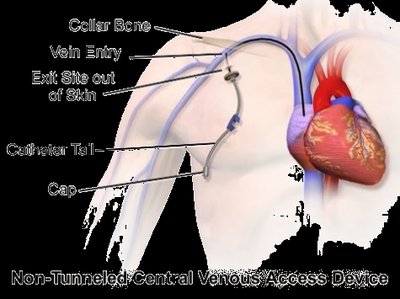
Clinical application: When rapid fluid infusion is needed, a shorter and wider catheter is preferred due to lower resistance and higher flow.

Regulation of Arteriolar Resistance
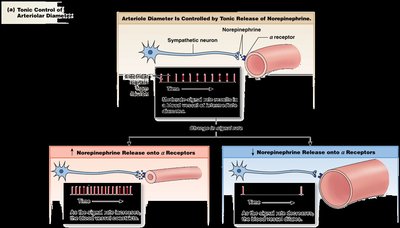
Arteriolar resistance is controlled by local metabolic factors, sympathetic nervous system activity, and hormones.
Local control: Changes in O2, CO2, H+, and K+ concentrations.
Sympathetic reflexes: Adjust vascular tone via norepinephrine release.
Hormonal control: Various hormones can cause vasoconstriction or vasodilation.
Blood Pressure Regulation
Blood Pressure Formulas and Definitions
Blood pressure is a critical parameter for tissue perfusion and is tightly regulated by the body.
Pulse Pressure (PP):
Mean Arterial Pressure (MAP): or
Hypotension: Lower than normal MAP
Hypertension: Higher than normal MAP; known as the "silent killer" due to its asymptomatic nature
Factors Influencing Blood Pressure
Blood pressure is influenced by both extrinsic and intrinsic factors:
Extrinsic: Fluid intake and excretion, salt intake (NaCl increases blood volume and BP)
Intrinsic: Heart rate, stroke volume, preload, afterload, and contractility
Blood pressure is directly linked to cardiac output (CO):
Maintaining Blood Pressure
The body maintains blood pressure through several mechanisms:
Ventricular contraction: Generates driving pressure
Vessel diameter: Dilation and constriction regulate resistance
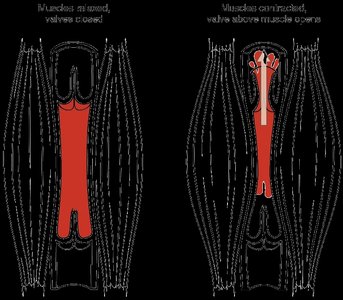
Skeletal muscle pump: Assists venous return
Blood volume changes: Fluid intake increases, excretion decreases blood volume
Cardiac Performance and Blood Flow
Determinants of Cardiac Performance
Cardiac performance, which determines blood flow, is influenced by four primary factors:
Heart Rate (HR): Number of beats per minute
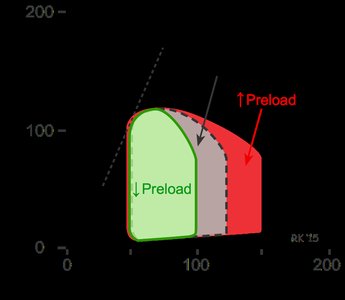
Preload: Degree of stretch of the heart muscle before contraction (related to venous return)
Afterload: Resistance the heart must overcome to eject blood
Inotropic State (Contractility): Strength of cardiac muscle contraction
Stroke Volume and Cardiac Output
Stroke volume (SV) is the amount of blood ejected by the ventricle in one contraction. Cardiac output (CO) is the total volume of blood pumped by the heart per minute.
Stroke Volume: (End-Diastolic Volume minus End-Systolic Volume)
Cardiac Output:
Preload and Venous Return
Preload is determined by venous return, which is enhanced by several physiological mechanisms:
Increased circulating blood volume
Skeletal muscle pump: Rhythmic contractions and one-way valves in veins
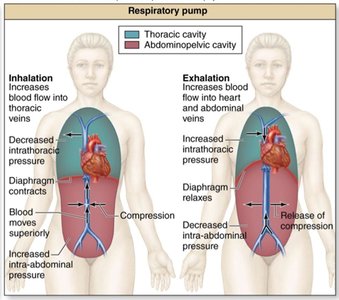
Respiratory pump: Changes in thoracic and abdominal pressure during breathing
Atrial kick: Contraction of the atria to fill the ventricles
Venoconstriction: Constriction of veins to increase return
Additional info: These notes integrate key physiological principles and clinical applications relevant to blood flow and pressure regulation, as covered in college-level Anatomy & Physiology courses.
