 Indietro
Blood Flow and Blood Pressure Regulation in Human Physiology
Guida di studio - Note intelligenti
 Appunti personalizzati basati sui tuoi materiali, ampliati con definizioni chiave, esempi e contesto.
Blood Flow and the Control of Blood Pressure
Blood Pressure in the Cardiovascular System
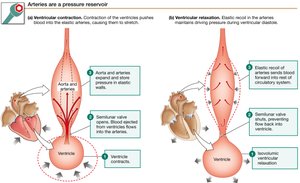
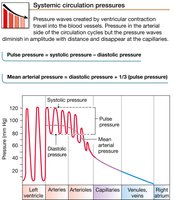
Blood pressure is a fundamental concept in human physiology, reflecting the force exerted by circulating blood upon the walls of blood vessels. It is highest in the arteries and lowest in the veins, and is essential for driving blood flow throughout the systemic circulation.
Pulse Pressure: The difference between systolic and diastolic pressure, representing the strength of the pressure wave produced by ventricular contraction.
Mean Arterial Pressure (MAP): The average pressure in the arteries during one cardiac cycle, serving as the driving force for blood flow.
Hypotension: Lower than normal MAP; Hypertension: Higher than normal MAP.
Venous Return: Aided by valves, skeletal muscle pump, and respiratory pump.
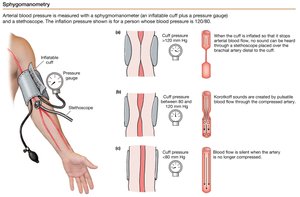
Blood Pressure Measurement: Estimated by sphygmomanometry, using Korotkoff sounds to determine systolic and diastolic values.
Cardiac Output and Peripheral Resistance
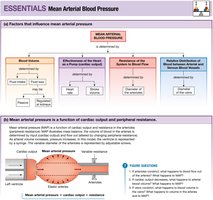
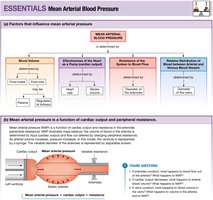
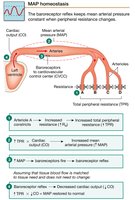
Mean arterial pressure (MAP) is determined by the interplay between cardiac output and peripheral resistance. Cardiac output is the volume of blood pumped by the heart per minute, while peripheral resistance is the opposition to blood flow within the vessels.
Blood Flow into Aorta: Equals the cardiac output of the left ventricle.
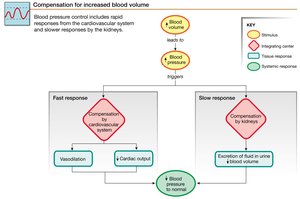
Blood Volume: Changes in blood volume directly affect blood pressure. The kidney regulates blood volume by removing excess fluid.
MAP Equation:
Compensation: Lost fluid volume is compensated through drinking or intravenous infusion; vasoconstriction and sympathetic stimulation increase pressure.
Pressure, Flow, and Resistance
Blood flow is governed by pressure gradients and resistance within the cardiovascular system. Resistance is influenced by vessel radius, length, and blood viscosity.
Flow Direction: Blood flows from areas of higher pressure to lower pressure.
Resistance Factors: Radius (most significant), length, and viscosity.
Poiseuille’s Law: , where is resistance, is viscosity, is length, and is radius.
Velocity of Flow: Determined by total cross-sectional area of vessels.
Factor | Effect on Resistance |
|---|---|
Radius | Inverse (smaller radius increases resistance) |
Length | Direct (longer vessel increases resistance) |
Viscosity | Direct (higher viscosity increases resistance) |
Arteriolar Resistance and Regulation
Local and Systemic Control Mechanisms
Arteriolar resistance is modulated by local factors, sympathetic reflexes, and hormones. These mechanisms ensure appropriate distribution of blood flow and regulation of blood pressure.
Local Control: Includes nitric oxide, kinins, and histamine (potent vasodilators).
Systemic Control: Sympathetic reflexes and hormones such as angiotensin and atrial natriuretic peptide (ANP).
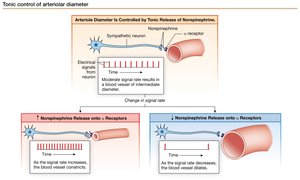
Sympathetic Branch: Controls most vascular smooth muscle; norepinephrine maintains arteriolar tone.
Receptor Types: Norepinephrine binds to alpha receptors (vasoconstriction); epinephrine binds to beta receptors (vasodilation in heart, liver, and skeletal muscle arterioles).
.0
Regulation of Cardiovascular Function
The Baroreceptor Reflex
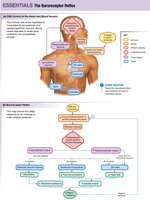
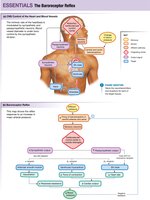
The baroreceptor reflex is a key mechanism for maintaining blood pressure homeostasis. Baroreceptors in the carotid arteries and aorta detect changes in pressure and send signals to the cardiovascular control center (CVCC) in the brainstem.
Continuous Action Potentials: Baroreceptors produce tonic action potentials to the brainstem.
Pressure Changes: Reflected in the frequency of action potentials.
Orthostatic Hypotension: A decrease in blood pressure due to postural change; triggers the baroreceptor reflex to restore normal pressure.
Failure to Compensate: May lead to decreased oxygen delivery to the brain, causing light-headedness or dizziness.
 0
Integration with Other Systems
Cardiovascular function is influenced by other physiological systems, including the respiratory system, hypothalamus, and cerebral cortex. Adaptive integration ensures proper responses to changes in oxygen, carbon dioxide, and emotional stimuli.
Arterial Chemoreceptors: Activated by low oxygen, increasing cardiac output.
Hypothalamic and Cortical Modulation: Learned and emotional responses can affect blood pressure.
Vasovagal Syncope: Fainting due to sudden drop in blood pressure.
Kidney: Maintains body fluid balance, closely tied to blood pressure regulation.
Key Learning Objectives
Explain what creates blood pressure and how it changes through systemic circulation.
Define and explain systolic pressure, diastolic pressure, pulse pressure, and pulsatile flow.
Define mean arterial pressure and explain how to calculate it.
Describe how blood pressure is estimated using sphygmomanometry.
Explain the contributions of cardiac output and peripheral resistance to blood pressure.
Explain how blood volume and distribution between arteries and veins affect arterial blood pressure.
Use Poiseuille’s law to explain factors influencing resistance.
Describe autonomic control of blood vessel diameter, including neurotransmitters and receptor types.
Describe the steps of the baroreceptor reflex, including stimulus, sensor, pathways, integrating centers, targets, responses, and feedback loops.
