 Indietro
Blood Flow and the Control of Blood Pressure: Study Notes
Guida di studio - Note intelligenti
 Appunti personalizzati basati sui tuoi materiali, ampliati con definizioni chiave, esempi e contesto.
Blood Flow and the Control of Blood Pressure
Overview of the Cardiovascular System
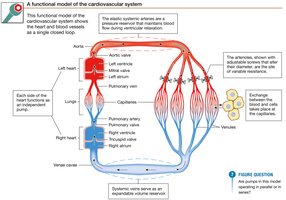
The cardiovascular system is responsible for transporting blood throughout the body, ensuring the delivery of oxygen and nutrients and the removal of waste products. It consists of the heart, blood vessels, and blood, and is regulated to maintain homeostasis and adequate tissue perfusion.
Heart: Acts as a dual pump, sending blood through the pulmonary and systemic circuits.
Blood Vessels: Include arteries, arterioles, capillaries, venules, and veins, each with specialized structure and function.
Homeostasis: Maintained by regulating blood pressure, blood volume, and resistance.
The Blood Vessels
Structure and Function of Blood Vessels
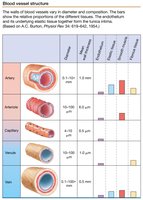
Blood vessels are composed of layers of smooth muscle, elastic tissue, and connective tissue. The thickness and composition of these layers vary depending on the vessel type and function.
Endothelium: The innermost layer, secretes paracrine factors and regulates vessel function.
Vascular Smooth Muscle: Controls vessel diameter through vasoconstriction and vasodilation.
Elastic and Fibrous Tissue: Provide strength and flexibility, especially in arteries.
Types of Blood Vessels
Arteries: Carry blood away from the heart, act as pressure reservoirs, and have thick, elastic walls.
Arterioles: Smaller branches of arteries, major site of resistance, regulate blood flow to tissues.
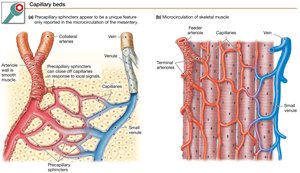
Capillaries: Smallest vessels, primary site of exchange between blood and interstitial fluid, composed of a single layer of endothelium.
Venules: Collect blood from capillaries, thin walls, little connective tissue.
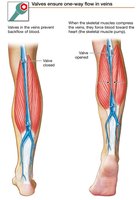
Veins: Return blood to the heart, act as volume reservoirs, have thin walls and one-way valves to prevent backflow.
Angiogenesis
Angiogenesis is the formation of new blood vessels, essential for growth, wound healing, and tissue repair. It is regulated by cytokines such as VEGF and FGF (promoters) and angiostatin and endostatin (inhibitors).
Clinical Relevance: Targeting angiogenesis can help treat cancer and promote collateral circulation in heart disease.
Blood Pressure
Blood Pressure Gradients
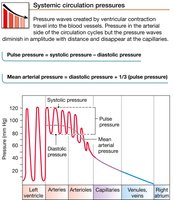
Blood pressure is the force exerted by blood on vessel walls. It is highest in the arteries and lowest in the veins, creating a pressure gradient that drives blood flow.
Pulse Pressure: Difference between systolic and diastolic pressure, reflects the strength of the pressure wave.
Mean Arterial Pressure (MAP): Average pressure in the arteries, represents the driving force for blood flow.
MAP Equation:
Measuring Blood Pressure
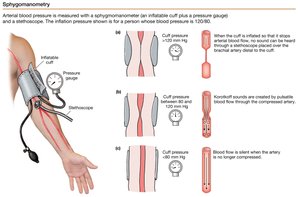
Blood pressure is measured using a sphygmomanometer and a stethoscope. The appearance and disappearance of Korotkoff sounds indicate systolic and diastolic pressures, respectively.
Determinants of Mean Arterial Pressure
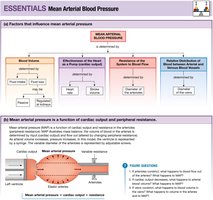
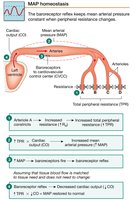
MAP is determined by cardiac output (CO) and total peripheral resistance (TPR). Changes in blood volume, vessel diameter, and cardiac function all influence MAP.
Cardiac Output: Volume of blood pumped by the heart per minute.
Peripheral Resistance: Resistance to blood flow in the arterioles.
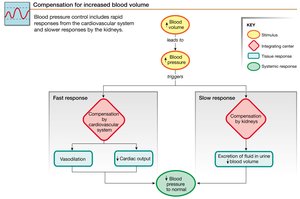
Kidneys: Regulate blood volume by excreting or retaining fluid.
Resistance in the Arterioles
Factors Affecting Arteriolar Resistance
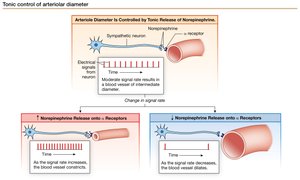
Arteriolar resistance is controlled by local factors (e.g., nitric oxide, kinins, histamine), sympathetic reflexes, and hormones. Vasoconstriction and vasodilation regulate blood flow to tissues.
Vasoconstriction: Decreases vessel diameter, increases resistance.
Vasodilation: Increases vessel diameter, decreases resistance.
Sympathetic Control: Norepinephrine maintains arteriolar tone; epinephrine can cause vasodilation in specific tissues.
Regulation of Cardiovascular Function
The Baroreceptor Reflex
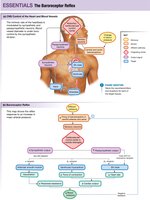
The baroreceptor reflex is a negative feedback mechanism that helps maintain stable blood pressure. Baroreceptors in the carotid arteries and aorta detect changes in pressure and send signals to the cardiovascular control center in the brainstem.
Orthostatic Hypotension: A drop in blood pressure upon standing, quickly corrected by the baroreceptor reflex.
Other Regulatory Systems
Chemoreceptors: Respond to changes in blood oxygen, carbon dioxide, and pH.
Kidneys: Adjust blood volume and pressure through fluid balance.
Hypothalamus and Cortex: Modulate cardiovascular responses to emotions and stress.
Distribution of Blood to the Tissues
Local and Systemic Control
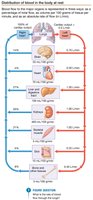
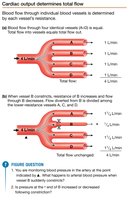
Blood flow to tissues is matched to their metabolic needs through local autoregulation and systemic reflexes. Arterioles regulate their own flow, and total flow is determined by cardiac output.
Myogenic Autoregulation: Vascular smooth muscle contracts in response to stretch.
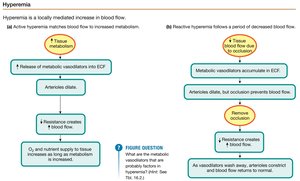
Active Hyperemia: Increased blood flow in response to increased metabolism.
Reactive Hyperemia: Increased blood flow following a period of reduced blood supply.
Exchange at the Capillaries
Capillary Structure and Function
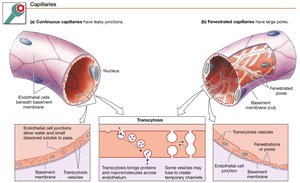
Capillaries are the primary site of exchange between blood and tissues. Their thin walls and extensive surface area facilitate efficient diffusion and transport.
Continuous Capillaries: Have tight junctions, found in muscle, connective tissue, and neural tissue.
Fenestrated Capillaries: Have large pores, found in kidneys and intestines.
Sinusoids: Modified capillaries in bone marrow, liver, and spleen.
Velocity of Blood Flow
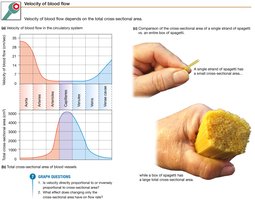
Blood flow velocity is slowest in the capillaries, allowing time for exchange. Velocity is inversely related to the total cross-sectional area of the vessels.
Mechanisms of Capillary Exchange
Diffusion: Movement of small solutes and gases down their concentration gradients.
Transcytosis: Vesicular transport of larger molecules and proteins.
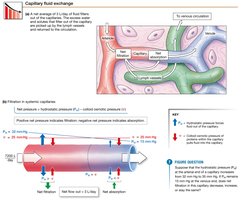
Bulk Flow: Mass movement of fluid due to hydrostatic and osmotic pressure gradients.
The Lymphatic Circulation
Functions of the Lymphatic System
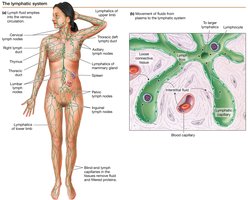
The lymphatic system returns excess fluid and proteins to the circulatory system, absorbs fats from the digestive tract, and filters pathogens. Lymphatic vessels are blind-ended and contain valves to ensure one-way flow.
Lymph Nodes: Filter lymph and house immune cells.
Edema: Swelling caused by excess interstitial fluid, due to inadequate lymph drainage or increased capillary filtration.

Cardiovascular Disease
Risk Factors and Pathophysiology
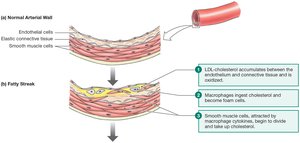
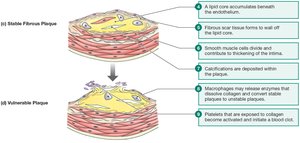
Cardiovascular disease (CVD) is influenced by both controllable (e.g., smoking, obesity, hypertension) and uncontrollable (e.g., age, sex, genetics) risk factors. Atherosclerosis, the buildup of plaques in arteries, is a major contributor to CVD.
Diabetes Mellitus: Increases risk of atherosclerosis.
Cholesterol: High LDL-C is associated with increased risk; HDL-C is protective.
Hypertension
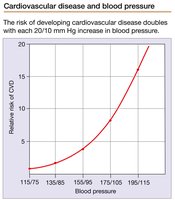
Hypertension is chronically elevated blood pressure and a major risk factor for CVD. It can be primary (essential) or secondary to other conditions. Treatment includes lifestyle changes and medications such as diuretics, beta-blockers, and ACE inhibitors.
Complications: Heart failure, stroke, kidney damage.
