 Indietro
Blood: Structure, Function, and Clinical Relevance
Guida di studio - Note intelligenti
 Appunti personalizzati basati sui tuoi materiali, ampliati con definizioni chiave, esempi e contesto.
Circulatory System Overview
Cardiovascular and Lymphatic Systems
The circulatory system consists of the cardiovascular system (heart and blood vessels) and the lymphatic system (lymph nodes, vessels, and organs). These systems work together to transport nutrients, gases, wastes, and immune cells throughout the body.
Cardiovascular System: Transports blood, nutrients, and gases.
Lymphatic System: Returns excess tissue fluid to the bloodstream and provides immune defense.
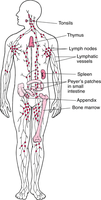
Chapter 17: Blood
Blood Functions
Blood is a specialized connective tissue with multiple essential functions.
Transportation: Delivers oxygen, nutrients, and hormones; removes wastes.
Protection: Immune responses and blood clotting.
Homeostasis: Maintains pH (7.35–7.45), temperature (37°C), and fluid balance.
Blood Components
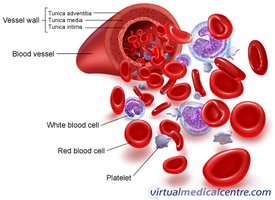
Blood is composed of plasma (fluid matrix) and formed elements (cells and cell fragments).
Plasma: 55% of blood volume; contains water, proteins, electrolytes, nutrients, wastes, gases, and regulatory substances.
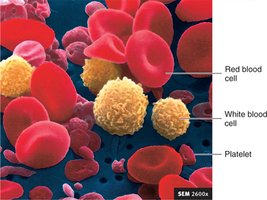
Formed Elements: 45% of blood volume; includes erythrocytes (red blood cells), leukocytes (white blood cells), and thrombocytes (platelets).
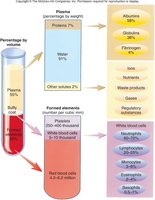
Plasma: Major and Minor Components
Plasma is mostly water (91%), with proteins (7%) and other solutes (2%).
Major Proteins:
Albumin: Maintains osmotic pressure, buffers pH, transports substances.
Globulins: Transport lipids, hormones, and vitamins; immune functions (γ globulins).
Fibrinogen: Essential for blood clotting.
Minor Components: Electrolytes, nutrients, wastes, respiratory gases, and regulatory substances.
Formed Elements: Erythrocytes (Red Blood Cells)
Erythrocytes are the most abundant formed element, specialized for oxygen transport.
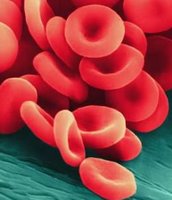
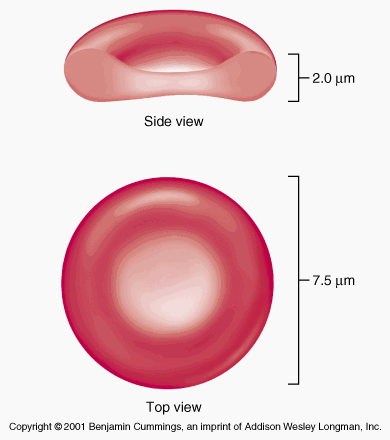
Structure: Biconcave disks, lack nucleus and mitochondria, packed with hemoglobin.
Function: Transport oxygen and carbon dioxide.
Hemoglobin Structure and Function
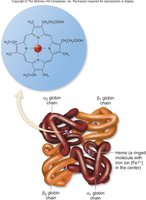
Hemoglobin is a quaternary protein with four globin chains and four heme groups, each containing iron.
Oxygen Transport: Each hemoglobin molecule binds up to four oxygen molecules.
Carbon Dioxide Transport: CO2 is carried dissolved in plasma, bound to hemoglobin, or as bicarbonate ions.
Structural Adaptations of Erythrocytes
Erythrocytes' biconcave shape increases surface area and flexibility, facilitating gas exchange and passage through capillaries. Their lack of nucleus and mitochondria allows more space for hemoglobin and enables anaerobic metabolism.
Life History of Red Blood Cells: Formation and Destruction
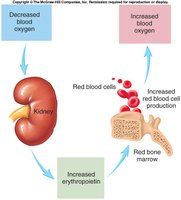
Erythropoiesis: Formation occurs in red bone marrow, regulated by erythropoietin (from kidneys).
Stages: Hemocytoblast → Erythroblast → Normoblast → Reticulocyte → Erythrocyte.
Lifespan: ~120 days; destroyed by macrophages in spleen/liver.
Breakdown: Globin to amino acids; heme to iron (stored) and bilirubin (excreted in bile/urine).
Blood Groups: ABO and Rh
Blood types are determined by antigens on erythrocyte surfaces.
ABO Group:
Type A: A antigens, anti-B antibodies
Type B: B antigens, anti-A antibodies
Type AB: A and B antigens, no antibodies (universal recipient)
Type O: No antigens, both antibodies (universal donor)
Rh Group: Rh positive (D antigen present), Rh negative (D antigen absent)
Transfusion Reactions
If blood types are mismatched, immune reactions can cause agglutination, embolus formation, and hemolysis.
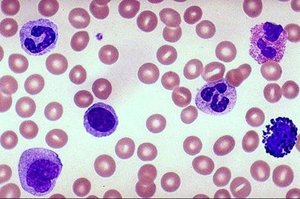
Formed Elements: Leukocytes (White Blood Cells)
Leukocytes are involved in immune and inflammatory responses, defending against external and internal threats.
Granulocytes:
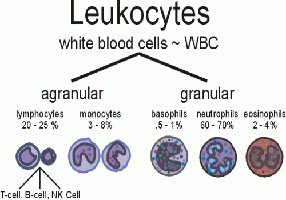
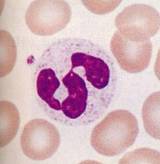
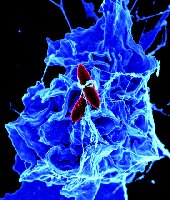
Neutrophils: Phagocytic, ingest bacteria; nucleus with 3–4 lobes.
Eosinophils: Cytotoxic, kill parasites; bilobed nucleus, red-staining granules.
Basophils: Release heparin and histamine; bilobed nucleus, blue-staining granules.
Agranulocytes:
Monocytes: Largest, kidney-shaped nucleus, develop into macrophages.
Lymphocytes: Smallest, nucleus occupies most of cell, adaptive immunity.
Leukocyte Life History
Leukopoiesis occurs in red bone marrow, starting from hemocytoblasts and differentiating into various leukocyte types under the influence of colony stimulating factors.
Formed Elements: Thrombocytes (Platelets)
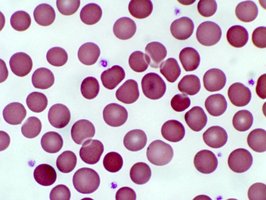
Thrombocytes are cell fragments derived from megakaryocytes, essential for hemostasis (stoppage of bleeding).
Thrombopoiesis: Hemocytoblast → Megakaryocyte → Platelet.
Hemostasis: Formation of primary and secondary plugs.
Primary Hemostatic Plug
Platelets adhere to exposed collagen via von Willebrand factor, release vasoconstrictors and activators, and aggregate to form a loose plug. 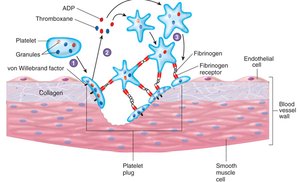
Secondary Hemostatic Plug: Coagulation Cascade
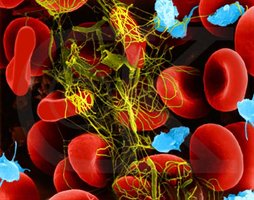
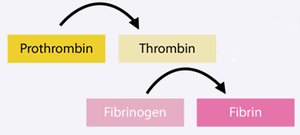
The coagulation cascade activates clotting factors, converting prothrombin to thrombin, which then converts fibrinogen to fibrin, forming a stable clot.
Intrinsic Pathway: Triggered by exposed collagen.
Extrinsic Pathway: Triggered by tissue damage.
Blood Wall Repair and Fibrinolysis
Platelet-derived growth factors stimulate repair, while plasminogen is activated to plasmin (by t-PA), dissolving the clot (fibrinolysis).
Control of Coagulation Cascade
Absence of exposed collagen: Prevents platelet adhesion.
Prostacyclin and nitric oxide: Prevent platelet aggregation.
Anticoagulants: Heparin and antithrombin inhibit clotting factors.
Thrombus vs. Embolus and Clinical Treatments
Thrombus: Blood clot on intact endothelium.
Embolus: Clot that travels through the bloodstream.
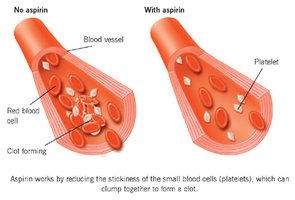
Treatments: Plavix, aspirin, coumadin, and heparin are used to prevent or treat clots.
Summary Table: Blood Components
Component | Main Function | Key Features |
|---|---|---|
Plasma | Transport, homeostasis | Water, proteins, solutes |
Erythrocytes | Oxygen/CO2 transport | Biconcave, hemoglobin, no nucleus |
Leukocytes | Immunity | Granulocytes/agranulocytes |
Thrombocytes | Hemostasis | Cell fragments, clotting |
Additional info:
Blood is a specialized connective tissue, and its components are essential for maintaining physiological balance and defense.
Clinical applications include transfusion compatibility, clot prevention, and treatment of clotting disorders.
