 Indietro
Blood: Structure, Function, and Clinical Relevance
Guida di studio - Note intelligenti
 Appunti personalizzati basati sui tuoi materiali, ampliati con definizioni chiave, esempi e contesto.
Blood: Structure, Function, and Clinical Relevance
Components and Functions of Blood
Blood is a specialized connective tissue that plays a vital role in maintaining homeostasis. It consists of plasma and formed elements, each with distinct functions and proportions.
Functions of Blood:
Transport of dissolved gases (O2, CO2), nutrients, hormones, and metabolic wastes
Regulation of pH and ion composition of interstitial fluids
Restriction of fluid losses at injury sites
Defense against toxins and pathogens
Stabilization of body temperature
Characteristics:
Temperature: 38ºC (100.4ºF)
High viscosity
Slightly alkaline (pH 7.35–7.45)
Blood volume: ~7% of body weight
Blood Composition
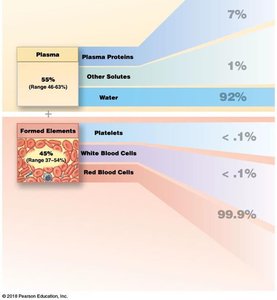
Plasma: Makes up about 55% of blood volume; over 90% is water, with proteins and solutes.
Formed Elements: Comprise 45% of blood volume; include red blood cells (RBCs), white blood cells (WBCs), and platelets.
Red Blood Cells (Erythrocytes)
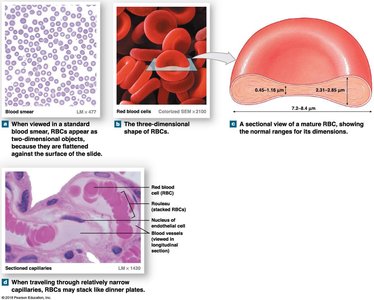
Red blood cells are the most abundant formed elements and are essential for oxygen transport. Their structure is closely related to their function.
RBC Count:
Adult male: 4.5–6.3 million/µL
Adult female: 4.2–5.5 million/µL
Hematocrit: Percentage of formed elements in blood (male: 46%, female: 42%)
Structure:
Large surface-area-to-volume ratio for efficient gas exchange
Form stacks (rouleaux) for smooth flow in vessels
Flexible to pass through small capillaries
Red Blood Cell Production (Hemopoiesis)
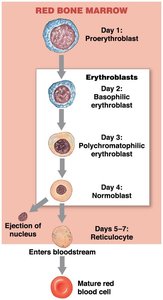
RBCs are produced in the red bone marrow, primarily in long bones such as the femur. The process is stimulated by hypoxia and involves several maturation stages.
Stages of RBC Maturation:
Myeloid stem cell
Proerythroblast
Erythroblast stages (basophilic, polychromatophilic, normoblast)
Reticulocyte (enters bloodstream)
Mature RBC
Iron is recycled at the end of the RBC life cycle.
Blood Types and Antigens
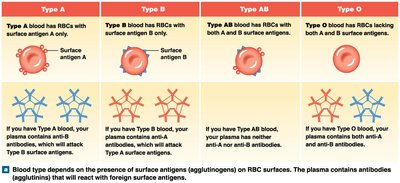
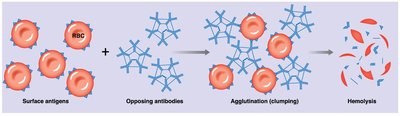
Blood type is determined by the presence or absence of specific surface antigens (agglutinogens) on RBCs. These antigens are recognized by the immune system, and mismatches can cause transfusion reactions.
Major Blood Types:
Type A: Surface antigen A
Type B: Surface antigen B
Type AB: Both A and B antigens
Type O: Neither A nor B antigens
Rh Factor:
Rh positive (Rh+): Rh antigen present
Rh negative (Rh−): Rh antigen absent
Agglutinins: Antibodies in plasma that react with foreign antigens
Transfusion Reactions and Compatibility
Transfusion reactions occur when plasma antibodies react with incompatible RBC antigens, causing agglutination and hemolysis. Compatibility testing is essential before transfusions.
Universal Donor: Type O− (but cross-reactions can still occur due to other antigens)
Cross-match Testing: Reveals potential reactions between donor and recipient blood
Blood Type Testing
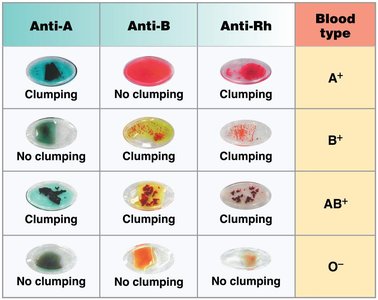
Blood type is determined by mixing blood with anti-A, anti-B, and anti-Rh antibodies and observing clumping (agglutination).
Anti-A | Anti-B | Anti-Rh | Blood type |
|---|---|---|---|
Clumping | No clumping | Clumping | A+ |
No clumping | Clumping | Clumping | B+ |
Clumping | Clumping | Clumping | AB+ |
No clumping | No clumping | No clumping | O− |
Blood Group Distribution in Australia
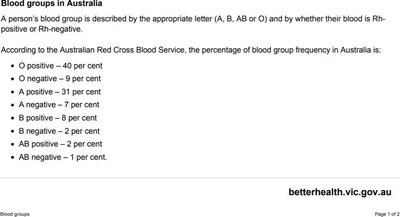
Blood group frequencies vary by population. In Australia, O positive is the most common.
Blood Group | Frequency (%) |
|---|---|
O positive | 40 |
O negative | 9 |
A positive | 31 |
A negative | 7 |
B positive | 8 |
B negative | 2 |
AB positive | 2 |
AB negative | 1 |
White Blood Cells (Leukocytes)
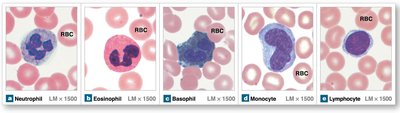
White blood cells are crucial for immune defense. They are classified based on their appearance and function.
Types of WBCs:
Neutrophils: 50–70%, phagocytic toward bacteria
Eosinophils: 2–4%, respond to allergens, kill protozoa and roundworms
Basophils: 1%, provide inflammation in damaged tissues
Monocytes: 2–8%, engulf debris and pathogens
Lymphocytes: T cells, B cells, NK cells; adaptive immunity
Blood Clotting (Hemostasis)
Hemostasis is the process of stopping bleeding and involves three phases: vascular, platelet, and coagulation.
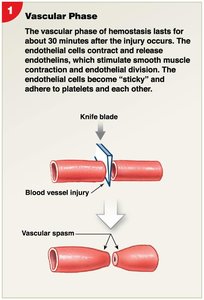
Vascular Phase
Triggered by injury; causes vascular spasm (contraction of smooth muscle)
Lasts about 30 minutes
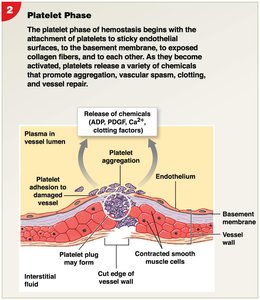
Platelet Phase
Platelets adhere to exposed surfaces and aggregate to form a platelet plug
Begins within 15 seconds after injury
Platelets release chemicals that promote aggregation and vessel repair
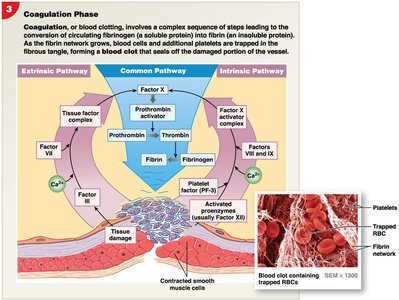
Coagulation Phase
Begins 30 seconds or more after injury
Involves clotting factors (Ca2+ and 11 proteins)
Conversion of fibrinogen to fibrin forms a blood clot
Summary Table: Blood Components
Component | Proportion | Main Function |
|---|---|---|
Plasma | ~55% | Transport, regulation |
RBCs | ~45% | Oxygen transport |
WBCs | <1% | Immune defense |
Platelets | <1% | Clotting |
Additional info: The notes expand on brief points with academic context, including definitions, examples, and tables for clarity. All images included are directly relevant to the adjacent content, reinforcing key concepts in blood anatomy and physiology.
