 Indietro
Blood: Structure, Function, and Disorders – Study Notes for Anatomy & Physiology
Guida di studio - Note intelligenti
 Appunti personalizzati basati sui tuoi materiali, ampliati con definizioni chiave, esempi e contesto.
Circulatory System: Blood
Overview of Blood in the Body
Blood is a specialized connective tissue essential for the transportation of substances, protection against pathogens, and regulation of physiological parameters. It is closely associated with the cardiovascular and lymphatic systems.
Transportation: Delivers oxygen, nutrients, hormones, and removes waste products.
Protection: Involves immune cells and clotting mechanisms to defend against infection and blood loss.
Regulation: Maintains homeostasis, including pH, temperature, and fluid balance.
Properties and Composition of Blood
Physical Properties
Viscosity: The resistance of blood to flow, influenced by the number of cells and proteins present.
Osmolarity: The concentration of solutes (mainly proteins and ions) that cannot cross the vessel wall, affecting fluid movement between blood and tissues.
Components of Blood
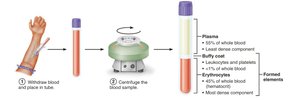
Blood consists of plasma (the liquid matrix) and formed elements (cells and cell fragments).
Plasma: ~55% of blood volume; contains water, electrolytes, nutrients, gases, hormones, and proteins.
Leukocytes (White Blood Cells): <1%; immune defense.
Platelets: <1%; cell fragments involved in clotting.
Erythrocytes (Red Blood Cells): ~45%; transport oxygen.
Plasma Proteins and Their Functions
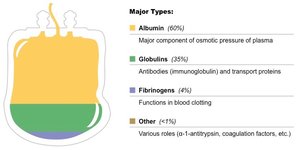
Plasma proteins play critical roles in maintaining osmotic pressure, immune defense, and blood clotting.
Type | Percentage | Main Function |
|---|---|---|
Albumin | 60% | Major osmotic component of plasma |
Globulins | 35% | Antibodies (immunoglobulins) and transport proteins |
Fibrinogen | 4% | Blood clotting |
Other | <1% | Various roles (e.g., coagulation factors) |
Formed Elements of Blood
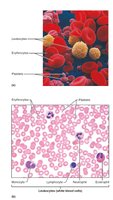
Types of Formed Elements
Erythrocytes (RBCs): Biconcave, anucleate cells specialized for oxygen transport.
Leukocytes (WBCs): Immune cells with various functions (see below).
Platelets: Cell fragments essential for blood clotting.
Erythrocytes (Red Blood Cells)
Structure and Function
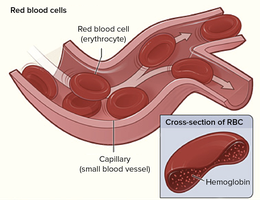
Erythrocytes are highly specialized for oxygen transport due to their biconcave shape and high hemoglobin content. They lack nuclei and organelles, relying on anaerobic metabolism for energy.
Biconcave shape: Increases surface area for gas exchange and flexibility for capillary passage.
Hemoglobin: Protein responsible for binding and transporting oxygen and, to a lesser extent, carbon dioxide.
Hemoglobin Structure and Function
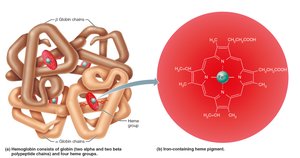
Hemoglobin is a quaternary protein composed of four polypeptide chains, each with a heme group containing an iron ion that binds oxygen. Hemoglobin can also bind carbon dioxide (as carbaminohemoglobin) and is involved in buffering blood pH.
Each hemoglobin molecule: Binds up to four oxygen molecules.
CO2 transport: About 15-20% of CO2 is carried by hemoglobin.
Erythropoiesis: Formation of Red Blood Cells
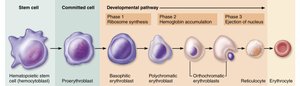
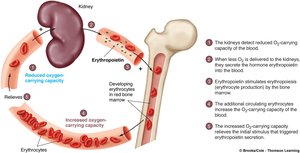
Erythropoiesis is the process of red blood cell production, occurring in the bone marrow and regulated by the hormone erythropoietin (EPO), primarily produced by the kidneys in response to low oxygen levels.
Stem cells: Hematopoietic stem cells differentiate into erythrocytes through several stages.
Regulation: Negative feedback loop involving EPO and oxygen-carrying capacity.
Life Cycle and Fate of Erythrocytes
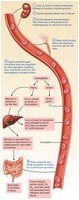
Red blood cells circulate for about 120 days before being removed by the spleen. Components such as iron and amino acids are recycled, while heme is converted to bilirubin in the liver.
Destruction: Old or damaged RBCs are phagocytized in the spleen.
Recycling: Iron is stored or reused; bilirubin is excreted in bile.
Disorders of Erythrocytes
Anemia
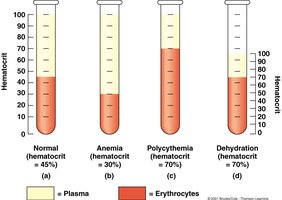
Anemia is defined as a reduced oxygen-carrying capacity of the blood, often due to low RBC count or hemoglobin levels. Symptoms include pallor, weakness, and shortness of breath. Causes include blood loss, increased RBC destruction, or decreased production.
Hematocrit: Used to assess anemia; normal is ~45%, anemia is lower.
Sickle Cell Anemia
Sickle cell anemia is a genetic disorder caused by a mutation in the hemoglobin gene, resulting in abnormal, rigid, sickle-shaped RBCs. These cells can block capillaries, causing pain and organ damage, and are more prone to destruction.
Inheritance: Recessive trait; heterozygotes have some resistance to malaria.
Effect on oxygen transport: Decreased efficiency and increased blood viscosity.
Blood Doping
Blood doping involves artificially increasing the number of RBCs (often via EPO or transfusions) to enhance athletic performance. This practice increases oxygen delivery but also raises blood viscosity, increasing the risk of clotting and cardiovascular complications.
Platelets and Hemostasis
Platelets
Platelets are cell fragments derived from megakaryocytes. They play a crucial role in hemostasis by forming plugs at sites of vessel injury and initiating the clotting cascade.
Hemostasis: Prevention of Blood Loss
Hemostasis is the process that stops bleeding from damaged vessels and involves three major steps:
Vascular spasm: Constriction of the vessel to reduce blood flow.
Platelet plug formation: Platelets adhere to exposed collagen and release chemicals to attract more platelets.
Coagulation: Fibrinogen is converted to fibrin, forming a stable clot.
Clotting Pathways
Blood clotting involves two pathways that converge to form fibrin:
Extrinsic pathway: Triggered by tissue factor from damaged tissue; rapid response.
Intrinsic pathway: Initiated by factors within the blood; slower process.
Thrombin: Enzyme that converts fibrinogen to fibrin.
Disorders of Hemostasis
Thrombus: Clot that forms in an unbroken vessel.
Embolus: A thrombus that breaks free and travels in the bloodstream.
Embolism: An embolus that lodges and blocks a vessel (e.g., pulmonary embolism).
Risk factors include atherosclerosis, inflammation, and immobility.
Controlling Clotting
Antithrombin III: Inactivates thrombin.
Heparin: Enhances antithrombin III activity.
Aspirin: Inhibits platelet aggregation.
Warfarin: Inhibits vitamin K, reducing prothrombin synthesis.
Leukocytes (White Blood Cells)
Types of Leukocytes
Granulocytes: Contain granules and lobed nuclei.
Neutrophils: Phagocytes; respond to bacterial infection.
Eosinophils: Target parasites; release enzymes.
Basophils: Release histamine and heparin.
Agranulocytes: Lack visible granules; spherical or kidney-shaped nuclei.
Lymphocytes: T-cells (attack viruses/tumors), B-cells (produce antibodies).
Monocytes: Differentiate into macrophages; phagocytize pathogens and debris.
Leukopoiesis
Leukopoiesis is the formation of white blood cells from myeloid stem cells (for granulocytes, platelets, RBCs) and lymphoid stem cells (for lymphocytes and monocytes).
Leukocyte Disorders
Infectious Mononucleosis: Caused by Epstein-Barr virus; excess large lymphocytes.
Leukemia: Cancer of WBCs; overproduction of abnormal cells.
Blood Types and Transfusion
Blood Group Antigens and Antibodies
Blood cells have surface antigens (glycoproteins) that determine blood type. The immune system produces antibodies against foreign antigens, leading to agglutination if incompatible blood is transfused.
Rh Factor
The Rh (Rhesus) factor is another antigen that can be present (+) or absent (−) on RBCs. Incompatibility between Rh− mothers and Rh+ infants can cause hemolytic disease of the newborn, preventable with immunosuppressive therapy.
Summary Table: Major Blood Components and Functions
Component | Percentage | Main Function |
|---|---|---|
Plasma | ~55% | Transport of nutrients, wastes, proteins, hormones |
Erythrocytes | ~45% | Oxygen and carbon dioxide transport |
Leukocytes | <1% | Immune defense |
Platelets | <1% | Clotting |
