Indietro
Blood: Structure, Function, and Physiology
Guida di studio - Note intelligenti
 Appunti personalizzati basati sui tuoi materiali, ampliati con definizioni chiave, esempi e contesto.
Blood: Structure, Function, and Physiology
Core Concepts of Blood
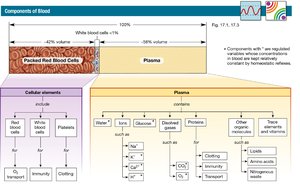
Blood is a unique connective tissue composed of cellular elements suspended in a liquid matrix called plasma. It plays a critical role in transport, immunity, and homeostasis within the human body.
Blood Cells: Includes red blood cells (RBCs), white blood cells (WBCs), and platelets.
Plasma: The fluid matrix containing water, proteins, ions, organic molecules, gases, trace elements, and vitamins.
Functions: Transport of gases, nutrients, waste, immune defense, and regulation of body temperature and pH.
Plasma and Its Components
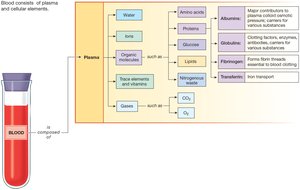
Plasma is the extracellular matrix of blood, nearly identical to interstitial fluid but distinguished by the presence of plasma proteins.
Water: The main component, serving as a solvent.
Proteins: Albumins (osmotic balance), globulins (immunity), fibrinogen (clotting), transferrin (iron transport).
Other Components: Ions (Na+, K+, Ca2+), organic molecules (glucose, amino acids, lipids), gases (O2, CO2), trace elements, and vitamins.
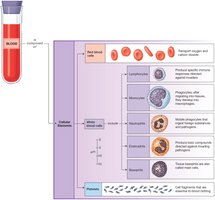
Cellular Elements of Blood
The cellular elements of blood include erythrocytes, leukocytes, and platelets, each with specialized functions.
Red Blood Cells (Erythrocytes): Transport oxygen and carbon dioxide.
White Blood Cells (Leukocytes): Immunity and defense against pathogens. Subtypes include lymphocytes, monocytes, neutrophils, eosinophils, and basophils.
Platelets: Cell fragments involved in clotting and tissue repair.
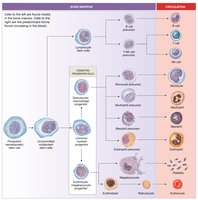
Blood Cell Production (Hematopoiesis)
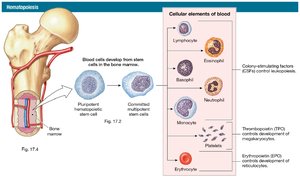
Blood cells are produced in the bone marrow through a process called hematopoiesis, regulated by cytokines.
Red Bone Marrow: Active site of blood cell production, contains hemoglobin.
Yellow Bone Marrow: Inactive, contains adipose cells.
Cytokines: Interleukins, colony stimulating factors (CSFs), thrombopoietin (TPO), erythropoietin (EPO).
Leukopoiesis: Production of WBCs.
Thrombopoiesis: Production of platelets.
Erythropoiesis: Production of RBCs.
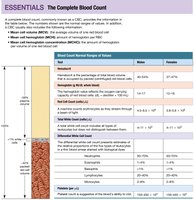
The Complete Blood Count (CBC)
A CBC is a common diagnostic test that measures the concentration and characteristics of blood cells.
Mean Corpuscular Volume (MCV): Average volume of one RBC.
Mean Corpuscular Hemoglobin (MCH): Amount of hemoglobin per RBC.
Mean Corpuscular Hemoglobin Concentration (MCHC): Hemoglobin concentration per volume of RBC.
Parameter | Normal Range (Male) | Normal Range (Female) |
|---|---|---|
Hematocrit | 40–54% | 37–47% |
Hemoglobin (g/dL) | 14–17 | 12–15 |
Total White Cell Count (cells/μL) | 4–11 × 103 | 4–11 × 103 |
Platelet Count (cells/μL) | 150–450 × 103 | 150–450 × 103 |
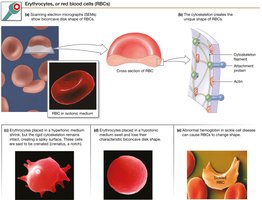
Red Blood Cells (RBCs)
RBCs are specialized for oxygen transport and lack a nucleus when mature. Their morphology can indicate disease.
Hematocrit: Ratio of RBCs to plasma, expressed as a percentage.
MCV: Indicates RBC size.
Life Span: Approximately 120 days.
Disorders: Anemia (low hemoglobin), polycythemia vera (excess RBCs).
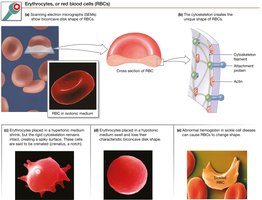
Hemoglobin Synthesis and Iron Homeostasis
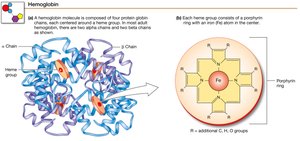
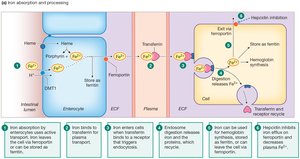
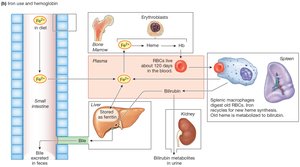
Hemoglobin is the oxygen-carrying protein in RBCs, requiring iron for synthesis. Iron is absorbed from the diet, transported by transferrin, and stored in the liver as ferritin.
Structure: Four globin molecules, four heme groups (porphyrin ring with iron atom).
Iron Metabolism: Iron is recycled from old RBCs; excess is stored in the liver.
Bilirubin: Remnants of heme are converted to bilirubin, excreted as bile and urine.
Jaundice: Caused by elevated bilirubin levels.
Red Blood Cell Disorders
Disorders affecting RBCs can decrease oxygen transport and include various forms of anemia and polycythemia.
Anemia: Low hemoglobin content. Causes include blood loss, hemolytic anemia (hereditary or acquired), iron deficiency, folic acid deficiency, vitamin B12 deficiency, and inadequate erythropoietin production.
Polycythemia Vera: Excess RBC production.
Type | Causes |
|---|---|
Accelerated RBC Loss | Blood loss, hemolytic anemias (membrane defects, enzyme defects, abnormal hemoglobin, infections, drugs, autoimmune reactions) |
Decreased RBC Production | Defective synthesis, aplastic anemia, iron deficiency, folic acid deficiency, vitamin B12 deficiency, inadequate erythropoietin |
Platelets
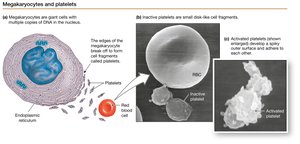
Platelets are cell fragments derived from megakaryocytes, essential for hemostasis, immunity, and inflammation.
Structure: Smaller than RBCs, contain mitochondria, smooth ER, granules.
Life Span: About 10 days.
Function: Initiate clotting, tissue repair, immune response.
Hemostasis and Coagulation
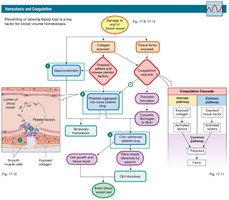
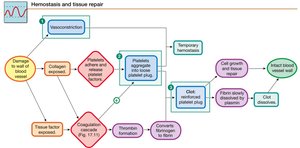
Hemostasis is the process that prevents blood loss from damaged vessels, involving vasoconstriction, platelet plug formation, and coagulation.
Vasoconstriction: Reduces blood flow to the area.
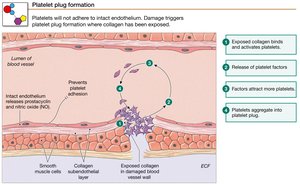
Platelet Plug: Platelets adhere to exposed collagen, release factors, and aggregate.
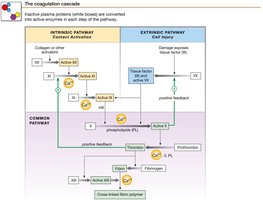
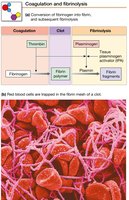
Coagulation Cascade: Intrinsic and extrinsic pathways converge to form a clot.
Fibrinolysis: Breakdown of fibrin by plasmin.
Anticoagulants and Hemophilia
Anticoagulants are substances that prevent coagulation, limiting the extent of clotting. Hemophilia is a group of disorders caused by defects in the coagulation cascade.
Endogenous Anticoagulants: Heparin, antithrombin, protein C.
Hemophilia: Deficiency or defect in clotting factors.
Summary of Blood Physiology
Blood is essential for transport, immunity, and homeostasis. Its cellular and plasma components are tightly regulated, and disorders can significantly impact health.