 Indietro
Blood Vessels and Blood Flow: Structure, Function, and Regulation
Guida di studio - Note intelligenti
 Appunti personalizzati basati sui tuoi materiali, ampliati con definizioni chiave, esempi e contesto.
Blood Vessels and the Control of Blood Pressure
Core Concepts
Life depends on maintaining adequate blood flow through the circulatory system. Blood vessels are specialized structures that facilitate the transport of blood, regulate blood pressure, and enable exchange between blood and tissues. This section explores the types of blood vessels, their structural differences, and the mechanisms that control blood flow and vessel function.
Structure and Function of Blood Vessels
Blood vessels are classified into five major types, each with distinct structural and functional properties:
Arteries: Thick-walled vessels with abundant smooth muscle and elastic tissue. They act as pressure reservoirs, maintaining blood flow during ventricular relaxation.
Arterioles: Smaller branches of arteries, primarily muscular, and serve as sites of variable resistance in the microcirculation.
Capillaries: The smallest vessels, consisting of a single layer of endothelium and basal lamina. They are the primary site of exchange between blood and interstitial fluid.
Venules: Receive blood from capillaries, have thin walls, and allow some exchange.
Veins: Thin-walled vessels with less smooth muscle and elastic tissue. They act as volume reservoirs and contain one-way valves to prevent backflow.
All blood vessels contain vascular smooth muscle, which is arranged in circular or spiral layers. The inner layer, called the endothelium, secretes paracrine factors that regulate blood pressure, vessel growth, and absorption.
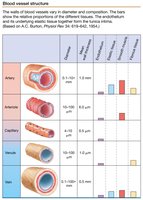
Vessel Type | Wall Thickness | Elastic Tissue | Muscle | Function |
|---|---|---|---|---|
Artery | Thick | High | High | Pressure reservoir |
Arteriole | Medium | Low | High | Variable resistance |
Capillary | Very thin | None | None | Exchange |
Venule | Thin | None | Low | Convergent flow |
Vein | Thin | Low | Low | Volume reservoir |
Microcirculation: Arterioles, Capillary Beds, and Venules
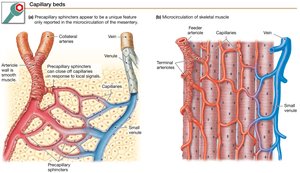
The microcirculation consists of arterioles, capillary beds, and venules. Arterioles branch into metarterioles, which have partial smooth muscle layers. Precapillary sphincters regulate blood flow into capillaries or direct it to venous circulation. Capillaries lack smooth muscle and are composed of a flat layer of endothelium and basal lamina. Pericytes are contractile cells associated with capillaries that contribute to impermeability and secrete factors promoting vascular growth.
Venous Return and One-Way Valves
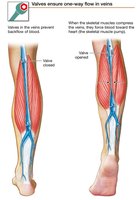
Venules collect blood from capillaries and converge into veins. Veins have thin walls, less elastic tissue, and contain one-way valves that prevent backward flow. They are more numerous than arteries and lie closer to the body surface.
Angiogenesis: Formation of New Blood Vessels
Angiogenesis is the process of forming new blood vessels. It is essential for normal development, wound healing, and growth of the uterine lining. Angiogenesis is regulated by cytokines, including vascular endothelial growth factor (VEGF) and fibroblast growth factor (FGF), which promote vessel growth. Inhibitors such as angiostatin and endostatin suppress vessel formation. Regulating angiogenesis has clinical applications, such as inhibiting tumor growth or promoting collateral circulation in heart disease.
Regulation of Vascular Smooth Muscle: Role of Nitric Oxide
Nitric oxide (NO) is a major paracrine regulator of vascular smooth muscle. It is synthesized by nitric oxide synthase (NOS) from L-arginine and oxygen, producing NO and L-citrulline. NO induces vasorelaxation by increasing cyclic GMP (cGMP) levels, which leads to relaxation of smooth muscle and increased blood flow.
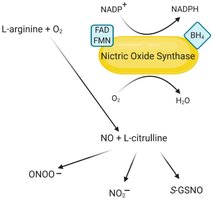
NO Synthesis:
NO Effects: Vasodilation, increased blood flow, regulation of blood pressure
Clinical Example: Drugs like sildenafil (Viagra) enhance NO signaling to treat erectile dysfunction and pulmonary hypertension.
Summary Table: Blood Vessel Types and Functions
Type | Structure | Function |
|---|---|---|
Artery | Thick, elastic, muscular | Pressure reservoir, carries blood away from heart |
Arteriole | Muscular, less elastic | Variable resistance, regulates flow to capillaries |
Capillary | Single layer endothelium | Exchange of gases, nutrients, wastes |
Venule | Thin, little muscle | Collects blood from capillaries |
Vein | Thin, valves, less elastic | Volume reservoir, returns blood to heart |
Learning Objectives
Compare and contrast the structure, mechanical properties, and functions of the five major types of blood vessels.
Describe the structure and function of the microcirculation (arterioles → capillary beds → venules).
Define angiogenesis and its physiological and clinical significance.
Describe the effect of nitric oxide on vascular smooth muscle.
Additional info: Academic context was added to clarify vessel structure, function, and regulatory mechanisms, and to provide clinical examples for angiogenesis and nitric oxide signaling.
