 Indietro
Cell Structure and Function: Study Notes for Anatomy & Physiology
Guida di studio - Note intelligenti
 Appunti personalizzati basati sui tuoi materiali, ampliati con definizioni chiave, esempi e contesto.
Cells: The Living Units
Introduction to Cells
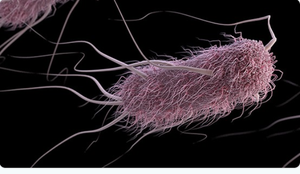
Cells are the fundamental structural and functional units of all living organisms. The human body contains trillions of cells, with over 200 distinct types, each specialized for particular functions. Despite their diversity, all cells share certain common features, such as a plasma membrane, cytoplasm, and nucleus.
Definition: A cell is the smallest living unit capable of independent existence.
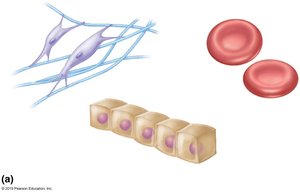
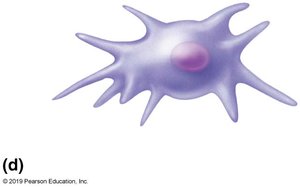
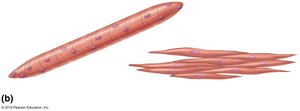
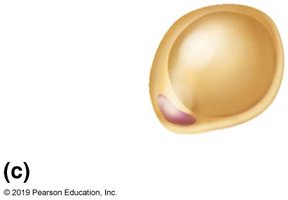
Key Features: Cells vary in size, shape, and function, reflecting their roles in the body.
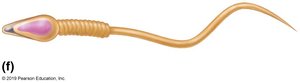
Examples: Fibroblasts (connective tissue), erythrocytes (red blood cells), epithelial cells, leukocytes (white blood cells), myocytes (muscle cells), adipocytes (fat cells), neurons (nerve cells), spermatozoa (sperm cells).
Cell Structure
Generalized Cell Anatomy
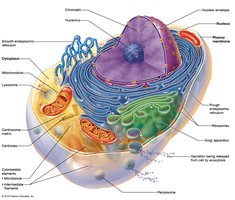
All human cells are organized into three main structural regions: plasma membrane, cytoplasm, and nucleus. Each region has distinct functions essential for cell survival and activity.
Plasma Membrane: Defines cell boundaries; acts as a semi-permeable barrier.
Cytoplasm: Contains organelles and cytosol; site of most cellular activities.
Nucleus: Control center; stores genetic information and directs protein synthesis.
Extracellular Materials
Components Outside the Cell
Extracellular materials are substances found outside cells, playing crucial roles in tissue structure and function.
Extracellular Fluids: Includes interstitial fluid, blood plasma, cerebrospinal fluid, lymph.
Cellular Secretions: Substances released by cells (e.g., mucus, saliva, acids).
Extracellular Matrix: Network of proteins and polysaccharides; provides structural support, especially in connective tissue.
The Plasma Membrane
Structure and Function
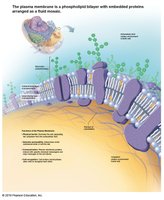
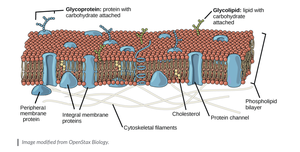
The plasma membrane is a dynamic boundary separating the cell's internal environment from the external space. It is described by the fluid mosaic model, which highlights its composition and flexibility.
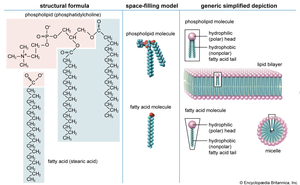
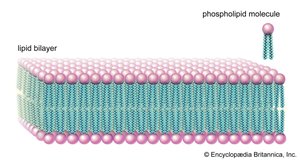
Fluid Mosaic Model: The membrane consists of phospholipids, cholesterol, and proteins that move fluidly within the membrane.
Phospholipid Bilayer: Main structural component; hydrophilic heads face outward, hydrophobic tails face inward.
Selective Permeability: Controls entry and exit of substances, maintaining homeostasis.
Membrane Components
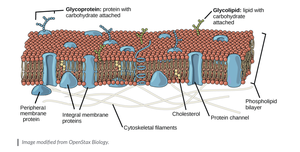
Several specialized molecules are embedded in the plasma membrane, each contributing to its function.
Integral Proteins: Span the membrane; function as channels, transporters, or receptors.
Peripheral Proteins: Attached to membrane surfaces; often act as enzymes or structural anchors.
Glycoproteins and Glycolipids: Form the glycocalyx; important for cell recognition and communication.
Cholesterol: Stabilizes membrane fluidity.
Membrane Junctions
Cells are often connected to each other via specialized junctions, which facilitate communication and structural integrity.
Tight Junctions: Seal adjacent cells, preventing passage of molecules.
Desmosomes: Anchoring junctions; resist mechanical stress.
Gap Junctions: Allow direct communication between cells via channels.
Transport Across the Plasma Membrane
Passive Transport Mechanisms
Passive transport does not require cellular energy and relies on concentration gradients to move substances across the membrane.
Simple Diffusion: Movement of small, nonpolar molecules (e.g., O2, CO2) directly through the lipid bilayer.
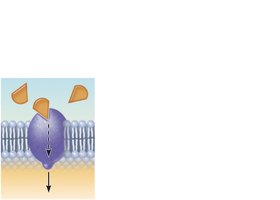
Facilitated Diffusion: Movement of larger or polar molecules (e.g., glucose, ions) via carrier or channel proteins.
Osmosis: Diffusion of water through a semipermeable membrane.
Equation for Diffusion Rate:
Active Transport Mechanisms
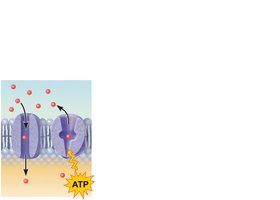
Active transport requires energy (ATP) to move substances against their concentration gradients or to transport large molecules.
Primary Active Transport: Uses pumps (e.g., sodium/potassium pump) to move ions against gradients.
Vesicular Transport: Moves large particles via vesicles (endocytosis and exocytosis).
Cytoplasm and Organelles
Cytoplasm
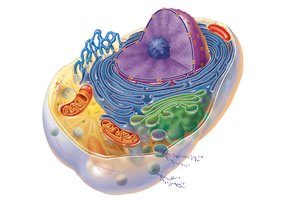
The cytoplasm is the site of most cellular activities and contains cytosol, inclusions, and organelles.
Cytosol: Fluid component; contains water, proteins, ions, and nutrients.
Inclusions: Stored substances (e.g., glycogen, lipids).
Organelles: Specialized structures performing distinct functions.
Major Organelles
Mitochondria: Powerhouse; site of ATP production via aerobic respiration.
Ribosomes: Sites of protein synthesis; can be free or membrane-bound.
Endoplasmic Reticulum (ER): Rough ER synthesizes proteins; smooth ER synthesizes lipids and detoxifies.
Golgi Apparatus: Processes, packages, and ships proteins.
Lysosomes: Digestive enzymes; break down waste and cellular debris.
Peroxisomes: Detoxify harmful substances; neutralize free radicals.
Cytoskeleton: Provides structural support and facilitates movement.
The Nucleus
Structure and Function
The nucleus is the cell's control center, containing genetic material and directing cellular activities.
Nuclear Envelope: Double membrane with nuclear pores for transport.
Nucleolus: Site of ribosome assembly.
Chromatin: DNA-protein complex; condenses to form chromosomes during cell division.
Overview of the Cell Cycle
Phases of the Cell Cycle
The cell cycle describes the series of events a cell undergoes from formation to division. It consists of interphase (growth and DNA replication) and cell division (mitosis and cytokinesis).
Interphase: Includes G1 (growth), S (DNA synthesis), and G2 (preparation for division).
Mitosis: Division of the nucleus; four phases (prophase, metaphase, anaphase, telophase).
Cytokinesis: Division of the cytoplasm; results in two daughter cells.
Equation for DNA Replication:
Summary Table: Cell Structure and Function
Component | Main Function | Example |
|---|---|---|
Plasma Membrane | Selective barrier, cell communication | Phospholipid bilayer, protein channels |
Cytoplasm | Site of metabolic activity | Cytosol, organelles |
Nucleus | Genetic control, protein synthesis | DNA, nucleolus |
Mitochondria | ATP production | Muscle cells |
Ribosomes | Protein synthesis | Free or bound to ER |
Golgi Apparatus | Protein processing | Secretory cells |
Lysosomes | Digestion, recycling | Phagocytes |
Peroxisomes | Detoxification | Liver cells |
Cytoskeleton | Support, movement | Microtubules, actin |
Additional info: These notes expand on brief points from the original material, providing definitions, examples, and academic context for each topic. Images included are directly relevant to the explanation of cell types, structure, and function.
