 Indietro
Cell Structure, Function, and Metabolism: Study Notes for Anatomy & Physiology
Guida di studio - Note intelligenti
 Appunti personalizzati basati sui tuoi materiali, ampliati con definizioni chiave, esempi e contesto.
Cells: The Living Units
Cell Theory and Structure
Cells are the fundamental units of life, forming the basis of all living organisms. The cell theory outlines three main principles:
The cell is the smallest unit of life: All vital functions occur within cells.
All organisms are made of one or more cells: Cellular activities are dictated by cell shape, type, and number.
Cells only arise from other cells: Cellular reproduction is essential for growth and repair.
Human cells vary in shape, size, and function, but share three main components:
Plasma membrane: Selectively permeable barrier separating internal and external environments.
Cytoplasm: Intracellular fluid containing organelles.
Nucleus: Control center for cellular activities.
Extracellular materials include extracellular fluid (ECF), cellular secretions, and the extracellular matrix, which supports and connects cells.
The Plasma Membrane
The plasma membrane separates intracellular fluid (ICF) from extracellular fluid (ECF) and is described by the Fluid Mosaic Model:
Phospholipid bilayer: Hydrophilic heads face outward, hydrophobic tails inward; cholesterol adds stability.
Membrane proteins: Integral, transmembrane, and peripheral proteins serve roles in transport, communication, and cell joining.
Membrane carbohydrates: Enable immune recognition of self and nonself tissue.
Functions: Physical barrier, selective permeability, communication, and cell recognition.
Intercellular Junctions
Cell junctions allow cells to adhere and communicate:
Tight junctions: Form impermeable seals, preventing passage between cells.
Desmosomes: Anchoring junctions, prevent tearing.
Gap junctions: Allow ions and small molecules to pass, crucial for cardiac cell contraction.
Transport Across the Membrane
Cells transport substances via passive and active mechanisms:
Passive transport: Includes diffusion and osmosis, moving substances down their concentration gradient.
Active transport: Uses ATP to move substances against their gradient, including primary and secondary active transport, and vesicular transport (endocytosis, exocytosis).
Osmosis is the movement of water across a membrane, influenced by hydrostatic and osmotic pressure. Tonicity describes how solutions affect cell shape:
Isotonic: No change in cell shape.
Hypertonic: Cells shrink.
Hypotonic: Cells swell and may burst.
Membrane Potential
Selective diffusion creates a negative voltage inside cells, essential for nerve and muscle function. Resting membrane potential ranges from -50 mV to -90 mV.
Cell Adhesion and Signaling
Cells interact with their environment via adhesion molecules and membrane receptors:
Cell adhesion molecules (CAMs): Important in development, repair, and immunity.
Contact signaling: Direct cell-to-cell communication.
Chemical signaling: Ligands (e.g., neurotransmitters, hormones) trigger cellular responses.
The Cytoplasm and Organelles
Cytoplasm Components
The cytoplasm is the site of most cellular activities and consists of:
Cytosol: Fluid containing water, proteins, salts, sugars.
Inclusions: Stored nutrients (glycogen, lipids, pigments).
Organelles: Specialized structures for metabolism.
Mitochondria and Cellular Respiration
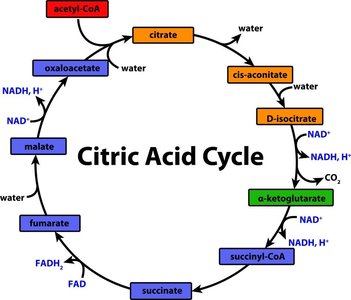
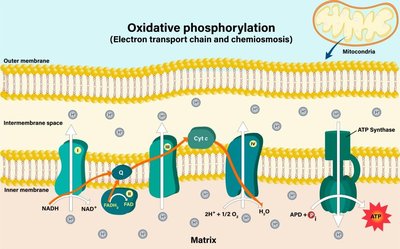
Mitochondria are the cell's powerplants, producing ATP via cellular respiration, which includes three main stages:
Glycolysis: Anaerobic breakdown of glucose into pyruvate, net gain of 2 ATP.
Krebs Cycle (Citric Acid Cycle): Acetyl-CoA enters the cycle, energy is extracted as NADH and FADH2, and CO2 is released.
Electron Transport Chain: Electrons from NADH and FADH2 are transferred through protein complexes, pumping protons and generating ATP via ATP synthase.
Other Organelles
Ribosomes: Sites of protein synthesis; free in cytosol or membrane-bound.
Rough Endoplasmic Reticulum: Produces proteins, covered in ribosomes.
Smooth Endoplasmic Reticulum: Lipid metabolism, detoxification, calcium storage.
Golgi Apparatus: Modifies and packages proteins and lipids.
Lysosomes: Digestive enzymes for pathogens and cell debris.
Peroxisomes: Neutralize harmful substances, especially free radicals.
Endomembrane System: Includes ER, Golgi, vesicles, lysosomes, nuclear envelope.
Cytoskeleton: Microfilaments (actin), intermediate filaments, microtubules for structure and movement.
Centrosomes and Centrioles: Organize microtubules, important in cell division.
Cilia, Flagella, Microvilli: Specialized structures for movement and absorption.
The Nucleus
Nuclear Structure
Nuclear Envelope: Double membrane with pores for molecular transport.
Nucleoli: Sites for ribosome production.
Chromatin: Relaxed DNA for gene expression.
Chromosomes: Condensed DNA for cell division.
The Cell Cycle and DNA Replication
Interphase and M Phase
The cell cycle consists of interphase (G1, S, G2) and M phase (mitosis and cytokinesis):
G1: Growth and protein synthesis.
S: DNA replication.
G2: Preparation for division.
Mitosis: Division of nucleus (prophase, metaphase, anaphase, telophase).
Cytokinesis: Division of cytoplasm.
DNA Replication
DNA replication occurs during S phase:
Uncoiling: Enzymes unwind DNA.
Separation: Strands separate at replication fork.
Assembly: DNA polymerase builds new strands (leading and lagging).
Cell division is regulated by surface area-to-volume ratio, chemical signals, and contact inhibition.
Protein Synthesis
RNA Types and Functions
mRNA: Carries genetic instructions.
rRNA: Forms ribosomes.
tRNA: Transfers amino acids.
Transcription and Translation
Protein synthesis involves two steps:
Transcription: DNA is transcribed to mRNA.
Translation: mRNA is decoded to build polypeptides.
Transcription Steps: Initiation, elongation, termination.
Translation Steps: Initiation, elongation, termination.
Cell Maintenance and Aging
Autophagy, Proteasomes, and Apoptosis
Autophagy: Cells digest and recycle components.
Ubiquitin-Proteasome Pathway: Targets misfolded proteins for destruction.
Apoptosis: Programmed cell death.
Stem Cells
Totipotent: Can become any cell type.
Pluripotent: Can become most cell types.
Multipotent: Can become a few cell types.
Progenitor cells: More limited than stem cells.
Hyperplasia increases cell numbers; atrophy decreases cell size.
Cell Aging Theories
Wear & Tear Theory: Environmental damage accumulates.
Mitochondrial Theory: Free radical damage impairs energy production.
Immune Theory: Immune system weakens with age.
Genetic Theory: Aging is programmed in genes.
Additional info: The included images visually reinforce the explanation of the Citric Acid Cycle and Electron Transport Chain, which are central to cellular metabolism and ATP production in mitochondria.
