 Indietro
Cells and Tissues: Structure, Classification, and Function
Guida di studio - Note intelligenti
 Appunti personalizzati basati sui tuoi materiali, ampliati con definizioni chiave, esempi e contesto.
Cell Diversity
Overview of Cell Types
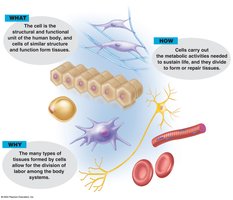
The human body contains over 200 distinct cell types, each specialized in structure and function. Cell diversity is essential for the wide range of physiological processes necessary for life.
Epithelial cells: Hexagonal shape, pack tightly to form protective sheets.
Muscle cells: Elongated, contractile fibers for movement.
Nerve cells: Long processes for communication.
Blood cells: Specialized for transport and immunity.
Examples of Cell Types and Their Functions
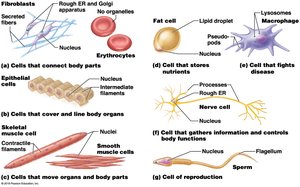
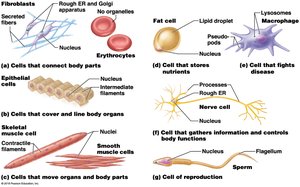
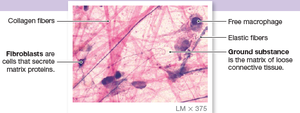
Fibroblasts: Connect body parts by secreting fibers.
Erythrocytes: Transport oxygen in blood.
Fat cells: Store nutrients.
Macrophages: Fight disease.
Nerve cells: Gather information and control body functions.
Skeletal and smooth muscle cells: Move organs and body parts.
Sperm cells: Reproduction.
Body Tissues
Classification of Tissues
Tissues are groups of cells with similar structure and function. The four basic tissue types are:
Epithelial tissue: Covers surfaces, lines cavities, forms glands.
Connective tissue: Supports, protects, binds, stores energy, provides immunity.
Muscle tissue: Generates force for movement.
Nervous tissue: Detects changes, transmits impulses, coordinates activities.
Epithelial Tissue
General Features
Epithelial tissue forms barriers, covers surfaces, lines cavities, and forms glands. It is avascular but has a nerve supply and regenerates easily.
Protection: Skin epithelium protects against pathogens and chemical damage.
Absorption: Digestive tract epithelium absorbs nutrients.
Filtration: Kidney epithelium filters substances.
Secretion: Glandular epithelium produces sweat, mucus, etc.
Types of Epithelial Tissue
Surface epithelium: Covers and lines surfaces.
Glandular epithelium: Forms glands.
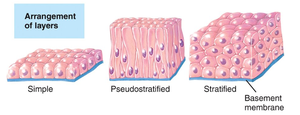
Classification by Layers
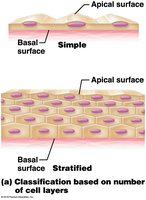
Epithelial tissues are classified by the number of cell layers:
Simple epithelium: Single layer, functions in absorption, secretion, filtration.
Stratified epithelium: Multiple layers, functions in protection.
Pseudostratified epithelium: Appears layered, but all cells touch the basement membrane.
Classification by Cell Shape
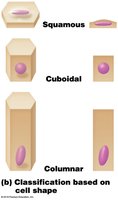
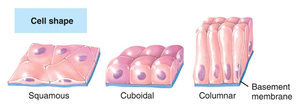
Squamous: Flattened, allows rapid passage of substances.
Cuboidal: Cube-shaped, functions in secretion and absorption.
Columnar: Tall, protects underlying tissues, specialized for secretion and absorption.
Transitional: Changes shape, found in urinary bladder.
Summary Table: Types of Epithelia
Type | Layers | Shape | Location | Function |
|---|---|---|---|---|
Simple Squamous | 1 | Flat | Lungs, capillaries, serous membranes | Filtration, diffusion |
Simple Cuboidal | 1 | Cube | Glands, kidney tubules, ovaries | Secretion, absorption |
Simple Columnar | 1 | Tall | Digestive tract, mucous membranes | Absorption, secretion |
Pseudostratified Columnar | 1 (appears multi) | Tall | Respiratory tract | Absorption, secretion |
Stratified Squamous | 2+ | Flat (apical) | Skin, mouth, esophagus | Protection |
Stratified Cuboidal/Columnar | 2+ | Cube/Column | Ducts of large glands | Protection |
Transitional | 2+ | Variable | Urinary bladder | Stretching |
Connective Tissue
General Features
Connective tissue supports, protects, and binds other tissues. It is characterized by an abundant extracellular matrix and variable blood supply.
Ground substance: Water, adhesion proteins, polysaccharides.
Fibers: Collagen, elastic, reticular.
Types of Connective Tissue
Bone: Hard matrix, osteocytes in lacunae, protects and supports.
Cartilage: Flexible, chondrocytes, types include hyaline, fibrocartilage, elastic.
Dense connective tissue: Strong, forms tendons and ligaments.
Loose connective tissue: Areolar (packing), adipose (fat storage).
Blood: Fluid matrix, transports nutrients, wastes, gases.
Histological Features of Connective Tissue
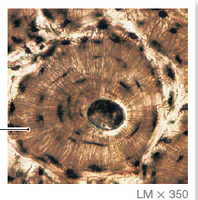
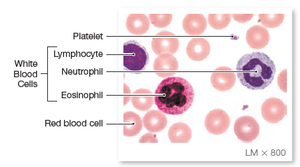
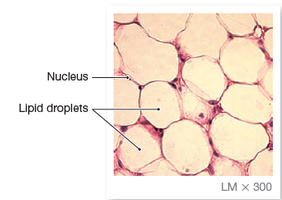
Muscle Tissue
Types of Muscle Tissue
Muscle tissue is excitable and contracts to produce movement. There are three main types:
Skeletal muscle: Large, multi-nucleated, striated, voluntary control.
Cardiac muscle: Striated, branched, mono-nucleated, involuntary, intercalated discs.
Smooth muscle: Small, non-striated, involuntary, found in organs and vessels.
Nervous Tissue
Structure and Function
Nervous tissue is excitable and transmits electrical signals. It consists of neurons and supporting neuroglia.
Neurons: Specialized for communication, have dendrites, axon, and cell body.
Neuroglia: Support, insulate, and protect neurons.
Summary Table: Major Tissue Types
Tissue Type | Main Function | Key Characteristics | Common Locations |
|---|---|---|---|
Epithelial | Protection, absorption, filtration, secretion | Cells tightly packed, avascular, regenerates | Skin, lining of organs, glands |
Connective | Support, protection, binding, transport | Extracellular matrix, variable blood supply | Bone, cartilage, blood, fat, tendons |
Muscle | Movement | Excitable, contractile fibers | Skeletal muscles, heart, organs |
Nervous | Communication, coordination | Excitable, neurons and neuroglia | Brain, spinal cord, nerves |
Additional info: Academic context was added to clarify cell and tissue functions, histological features, and classification criteria. Tables were inferred and expanded for completeness.
