 Indietro
Cells: The Living Units – Structure, Function, and Membrane Transport
Guida di studio - Note intelligenti
 Appunti personalizzati basati sui tuoi materiali, ampliati con definizioni chiave, esempi e contesto.
Cells: The Living Units
Introduction to Cells
Cells are the fundamental units of life, forming the basis for all structure and function in the human body. Understanding cell structure and function is essential for the study of anatomy and physiology.
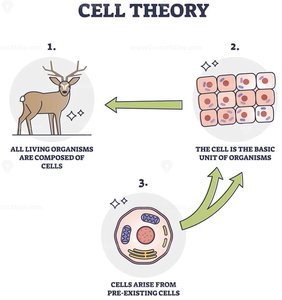
Cell Theory: All living organisms are composed of cells; the cell is the basic unit of life; cells arise from pre-existing cells.
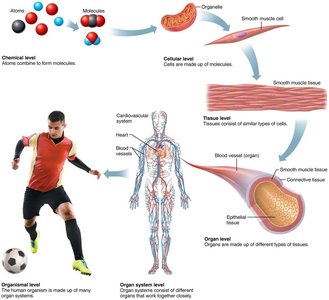
Structural Organization: The human body is organized from the chemical level (atoms, molecules) to the cellular, tissue, organ, organ system, and organismal levels.
Major Components of Human Cells
Basic Cell Structure
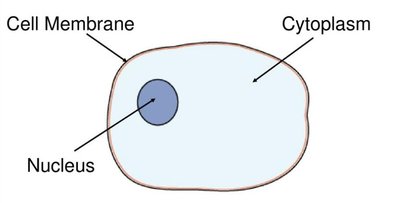
All human cells share three main components: the nucleus, cytoplasm, and plasma membrane.
Nucleus: Control center containing DNA.
Cytoplasm: Fluid matrix containing organelles and cytoskeleton.
Plasma Membrane: Flexible boundary that regulates entry and exit of substances.
Intracellular and Extracellular Environments
Cells exist in a dynamic environment, interacting with various extracellular materials.
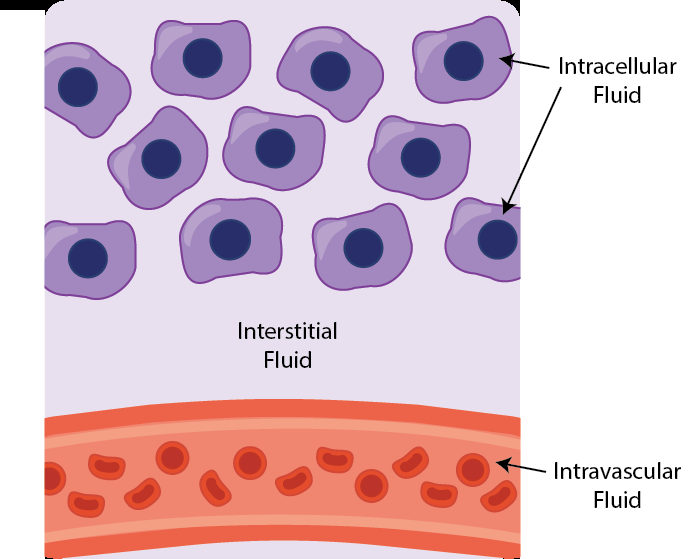
Intracellular Fluid (ICF): Fluid within cells.
Extracellular Fluid (ECF): Includes interstitial fluid (between cells), plasma (in blood), and cerebrospinal fluid (around nervous system organs).
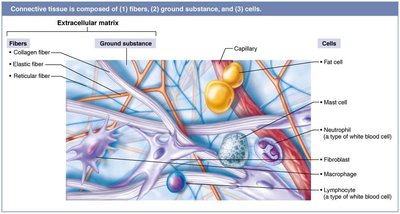
Extracellular Matrix (ECM): Network of protein fibers and polysaccharides that support and bind cells.
Cellular Organelles and Structures
Nucleus
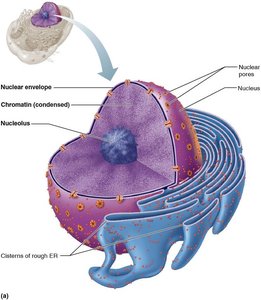
The nucleus is the largest organelle and serves as the cell's control center.
Nuclear Envelope: Double membrane with nuclear pores for regulated exchange.
Nucleolus: Site of ribosomal RNA synthesis.
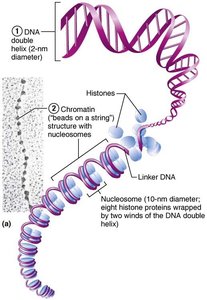
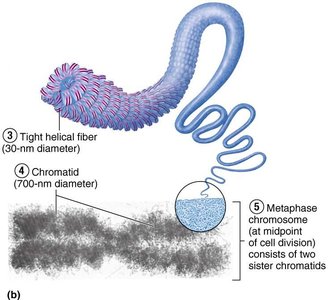
Chromatin: DNA and histone proteins; condenses into chromosomes during cell division.
Cytoplasm and Organelles
The cytoplasm contains cytosol, inclusions, and organelles, each with specialized functions.
Cytosol: Gel-like fluid where metabolic reactions occur.
Inclusions: Stored nutrients, pigments, and other substances.
Organelles: Specialized structures for cellular processes.
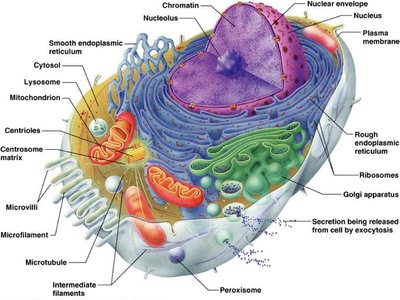
Major Organelles
Organelle | Structure | Function |
|---|---|---|
Mitochondria | Double membrane, inner folds (cristae) | ATP production via aerobic respiration |
Ribosomes | Nonmembranous, free or bound | Protein synthesis |
Endoplasmic Reticulum (ER) | Membranous network | Rough ER: protein synthesis; Smooth ER: lipid metabolism |
Golgi Apparatus | Stacked membranes | Modifies, sorts, and ships proteins |
Lysosomes | Membranous sacs | Digestive enzymes for breakdown of waste |
Peroxisomes | Membranous sacs | Detoxification of harmful substances |
Cytoskeleton | Protein filaments | Structural support, movement |
Centrioles | Microtubule pairs | Organize microtubules, cell division |
Endomembrane System
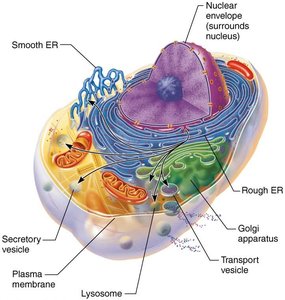
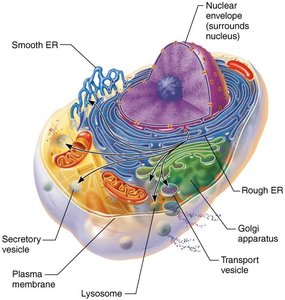
The endomembrane system is a network of organelles that produce, modify, and transport proteins and lipids.
Protein Synthesis: DNA is transcribed to mRNA in the nucleus, which is then translated by ribosomes into proteins.
Rough ER: Packages proteins into vesicles for transport.
Golgi Apparatus: Modifies and directs proteins to their final destinations (secretion, membrane, lysosomes).
Lysosomes & Peroxisomes: Digest and detoxify substances.
Smooth ER: Involved in lipid synthesis, detoxification, and calcium storage.
Cytoskeleton and Cellular Extensions
The cytoskeleton provides structural support and facilitates movement within and outside the cell.
Microfilaments: Actin filaments for cell shape and movement.
Intermediate Filaments: Provide tensile strength.
Microtubules: Hollow tubes for organelle movement and cell division.
Centrosome & Centrioles: Organize microtubules, form bases of cilia and flagella.
Cellular Extensions: Microvilli (increase surface area), cilia (move substances), flagella (cell movement).
Plasma Membrane Structure and Function
Plasma Membrane Overview
The plasma membrane is a selectively permeable barrier composed of a phospholipid bilayer with embedded proteins, cholesterol, and carbohydrates.
Physical Barrier: Separates intracellular and extracellular environments.
Selective Permeability: Regulates entry and exit of substances.
Communication: Contains receptors for signaling molecules.
Cell Recognition: Glycocalyx (carbohydrate coating) enables cell identification.
Membrane Components
Phospholipids: Form the main structure; hydrophilic heads face outward, hydrophobic tails inward.
Cholesterol: Stabilizes membrane, reduces permeability.
Proteins: Integral (embedded) and peripheral (surface) proteins serve as transporters, receptors, enzymes, and adhesion molecules.
Carbohydrates: Attach to proteins (glycoproteins) or lipids (glycolipids) to form the glycocalyx.
Membrane Proteins: Types and Functions
Integral Proteins: Span the membrane; function as channels, carriers, receptors, or enzymes.
Peripheral Proteins: Loosely attached; function as enzymes, motor proteins, or for cell-to-cell connections.
Major Functions: Transport, signal transduction, attachment, enzymatic activity, intercellular joining, and cell recognition.
Cell Junctions
Tight Junctions: Impermeable seals between cells.
Desmosomes: Anchoring junctions for mechanical stability.
Gap Junctions: Channels for communication between cells.
Membrane Transport Mechanisms
Passive Transport
Passive transport does not require energy and relies on concentration gradients.
Simple Diffusion: Movement of lipid-soluble molecules directly through the membrane.
Facilitated Diffusion: Movement via protein channels or carriers (for ions, glucose, etc.).
Osmosis: Diffusion of water through aquaporins or directly across the membrane.
Osmolarity: The concentration of solute particles in a solution. Water moves from low to high osmolarity.
Tonicity: The effect of a solution on cell volume:
Hypotonic: Lower solute concentration outside; cell swells.
Isotonic: Equal solute concentrations; cell remains unchanged.
Hypertonic: Higher solute concentration outside; cell shrinks.
Active Transport
Active transport requires ATP to move substances against their concentration gradients.
Primary Active Transport: Direct use of ATP (e.g., Na+-K+ pump).
Secondary Active Transport: Indirect use of ATP via ionic gradients.
Vesicular Transport: Bulk movement via vesicles (endocytosis, exocytosis, transcytosis).
Transport Type | Energy Required? | Example |
|---|---|---|
Simple Diffusion | No | O2, CO2 |
Facilitated Diffusion | No | Glucose, ions |
Osmosis | No | Water |
Primary Active Transport | Yes | Na+-K+ pump |
Secondary Active Transport | Yes (indirect) | Glucose/Na+ cotransport |
Endocytosis/Exocytosis | Yes | Phagocytosis, neurotransmitter release |
Membrane Potential
Resting Membrane Potential (RMP)
The resting membrane potential is the voltage difference across the plasma membrane, typically –50 to –100 mV (inside negative relative to outside).
Na+-K+ Pump: Maintains ionic gradients by pumping Na+ out and K+ in.
K+ Leak Channels: Allow K+ to move out, creating a negative charge inside.
Electrochemical Gradient: Combination of concentration and electrical gradients determines ion movement.
Equation for RMP (Goldman-Hodgkin-Katz):
Additional info: R = gas constant, T = temperature, F = Faraday's constant, P = permeability, [ion] = concentration.
Cell Life Cycle and Key Terms
Cell Cycle and Death
Interphase: Cell growth and DNA replication.
Mitotic Phase: Cell division (mitosis or meiosis).
Autophagy: Lysosomal digestion of cell components.
Apoptosis: Programmed cell death.
Word Roots (Selected)
Root | Meaning |
|---|---|
plasm | clear fluid |
retic | net, network |
som, soma | body |
phobic | afraid of |
philic | loving |
hydro | water |
glyco, gluco | sweet |
cyte | cell |
micro | small |
villus | shaggy |
osmo | pushing |
tono (tonic) | tension |
pseudo | false |
pod | foot |
Study Tips
Review notes and textbook multiple times.
Use summary tables for organelles and transport processes.
Quiz yourself and use flashcards for key terms and functions.
