 Indietro
Cells: The Living Units – Structure, Membrane, and Transport
Guida di studio - Note intelligenti
 Appunti personalizzati basati sui tuoi materiali, ampliati con definizioni chiave, esempi e contesto.
Cell Theory and Diversity
Overview of Cell Theory
The cell is the fundamental structural and functional unit of life. All organismal functions depend on the activities of individual and collective cells. The biochemical activities of cells are dictated by their shapes, forms, and specific subcellular structures. The continuity of life has a cellular basis, meaning all cells arise from pre-existing cells.
Cell: The smallest unit that can carry out all life processes.
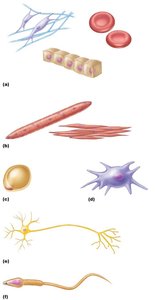
Cell Diversity: There are over 200 different types of human cells, each differing in size, shape, subcellular components, and function.
Examples: Erythrocytes (red blood cells), fibroblasts, epithelial cells, muscle cells, fat cells, macrophages, nerve cells, and sperm cells.
Generalized Cell Structure
Basic Parts of a Human Cell
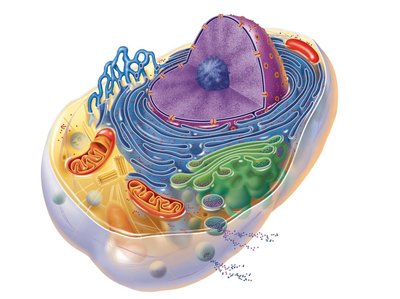
Despite their diversity, all human cells share three basic structural components:
Plasma membrane: The flexible outer boundary that separates the cell from its environment.
Cytoplasm: The intracellular fluid containing organelles.
Nucleus: The control center of the cell, containing genetic material (DNA).
Plasma Membrane Structure and Function
Fluid Mosaic Model
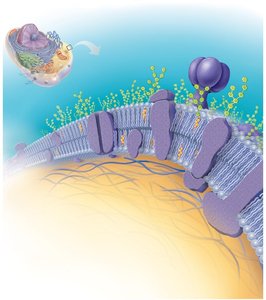
The plasma membrane is a dynamic structure composed of a lipid bilayer with embedded proteins. It separates the intracellular fluid (ICF) from the extracellular fluid (ECF), specifically the interstitial fluid (IF) that surrounds cells.
Lipid bilayer: Composed of phospholipids, glycolipids, and cholesterol.
Proteins: Integral and peripheral proteins perform various functions.
Glycocalyx: A carbohydrate-rich area on the cell surface important for cell recognition.
Membrane Lipids
Phospholipids (75%): Have polar, hydrophilic heads and nonpolar, hydrophobic tails, forming the basic structure of the membrane.
Glycolipids (5%): Lipids with attached sugar groups, found on the outer membrane surface.
Cholesterol (20%): Stabilizes the membrane and decreases its fluidity.
Membrane Proteins
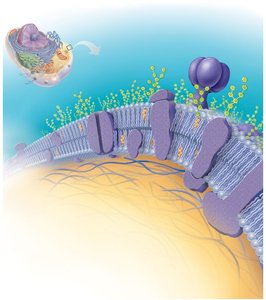
Membrane proteins account for about half the mass of the plasma membrane and are responsible for most of its specialized functions.
Integral proteins: Firmly inserted into the membrane, often spanning it (transmembrane). They function as transport proteins, enzymes, or receptors.
Peripheral proteins: Loosely attached to integral proteins, functioning as enzymes, motor proteins, or for cell-to-cell connections.
Functions of Membrane Proteins
Six Major Functions
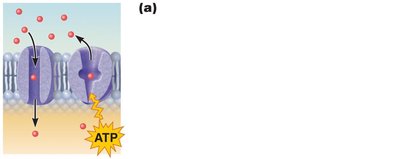
Transport: Proteins provide channels or actively pump substances across the membrane.
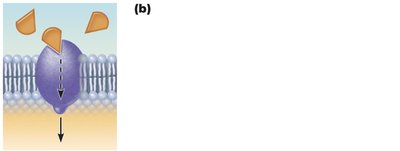
Receptors for Signal Transduction: Proteins act as receptors for hormones or other signaling molecules, initiating cellular responses.
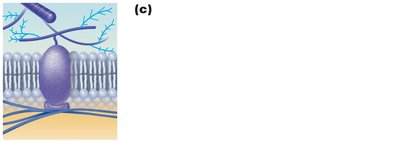
Attachment to Cytoskeleton and Extracellular Matrix: Proteins anchor the membrane to internal and external structures, maintaining cell shape and stabilizing protein location.
Enzymatic Activity: Some membrane proteins act as enzymes, catalyzing reactions at the membrane surface.
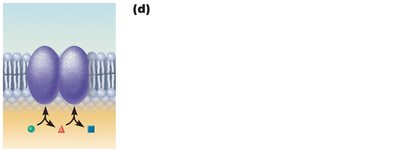
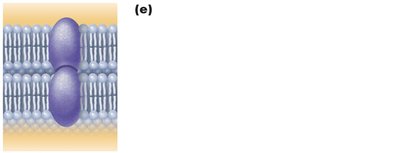
Intercellular Joining: Membrane proteins of adjacent cells may be hooked together, forming various types of cell junctions.
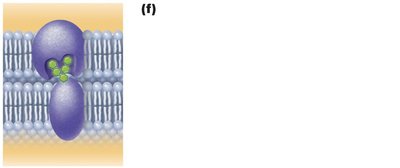
Cell-Cell Recognition: Glycoproteins serve as identification tags recognized by other cells.
The Glycocalyx
Role in Cell Recognition
The glycocalyx is a "sugar covering" at the cell surface, consisting of lipids and proteins with attached carbohydrates. Each cell type has a unique pattern of sugars, serving as specific biological markers for cell-to-cell recognition and allowing the immune system to distinguish between self and non-self cells. Cancerous cells often alter their glycocalyx to evade immune detection.
Cell Junctions
Types of Cell Junctions
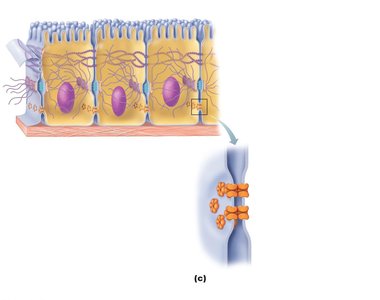
Cells can be free (e.g., blood cells, sperm) or bound together in communities. There are three main types of cell junctions:
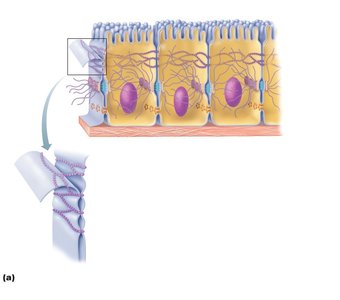
Tight Junctions: Integral proteins fuse to form impermeable junctions, preventing molecules from passing between cells. Common in epithelial linings (e.g., gastrointestinal tract).
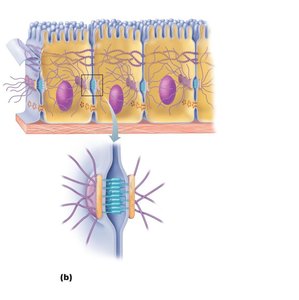
Desmosomes: Anchoring junctions that bind adjacent cells together like molecular "Velcro," providing mechanical stability (e.g., in skin and heart muscle).
Gap Junctions: Communicating junctions formed by connexons, allowing ions and small molecules to pass between cells (important in cardiac and smooth muscle).
Membrane Transport
Selective Permeability
The plasma membrane is selectively permeable, allowing some molecules to pass while restricting others. This property enables the cell to obtain necessary substances from the interstitial fluid and exclude unwanted materials, acting as a "gatekeeper."

Types of Membrane Transport
Passive Processes: Do not require cellular energy (ATP); substances move down their concentration gradient.
Active Processes: Require energy (ATP); substances move against their concentration gradient.
Passive Membrane Transport
Diffusion
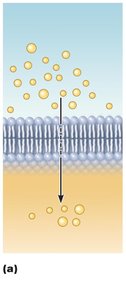
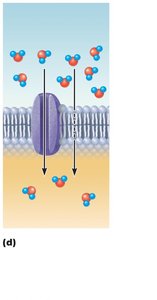
Diffusion is the movement of molecules from an area of higher concentration to an area of lower concentration, driven by kinetic energy. The speed of diffusion depends on molecule size and temperature. Molecules will diffuse through the membrane if they are lipid-soluble, small enough, or assisted by a carrier.
Simple Diffusion: Nonpolar, lipid-soluble substances (e.g., oxygen, carbon dioxide, fat-soluble vitamins) diffuse directly through the lipid bilayer.
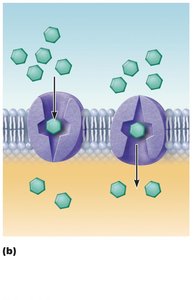
Facilitated Diffusion: Lipophobic molecules (e.g., glucose, amino acids, ions) are transported passively by binding to protein carriers or moving through water-filled channels.
Carrier-mediated: Specific polar molecules bind to transmembrane proteins, causing a shape change that transports the molecule across the membrane.
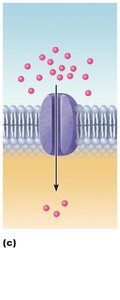
Channel-mediated: Aqueous channels formed by transmembrane proteins selectively transport ions or water. Channels can be leakage (always open) or gated (controlled by signals).
Osmosis
Osmosis is the movement of water (solvent) across a selectively permeable membrane. Water diffuses through the lipid bilayer or through specific water channels called aquaporins. Osmosis occurs when water concentration differs on the two sides of a membrane, and continues until hydrostatic and osmotic pressures are balanced.
Tonicity
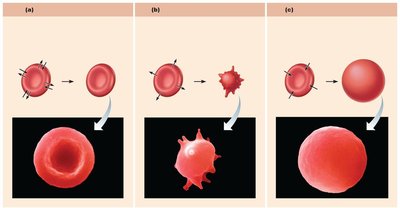
Tonicity refers to the ability of a solution to alter a cell's water volume:
Isotonic: Same solute concentration as cytosol; cells retain normal shape.
Hypertonic: Higher solute concentration than cytosol; cells lose water and shrink.
Hypotonic: Lower solute concentration than cytosol; cells gain water, swell, and may burst (lyse).
Summary Table: Passive Membrane Transport Processes
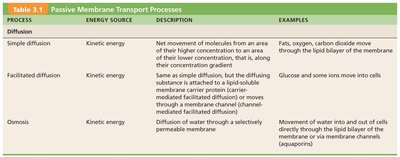
Process | Energy Source | Description | Examples |
|---|---|---|---|
Simple diffusion | Kinetic energy | Net movement of molecules from an area of higher concentration to an area of lower concentration, along their concentration gradient | Fats, oxygen, carbon dioxide move through the lipid bilayer of the membrane |
Facilitated diffusion | Kinetic energy | Same as simple diffusion, but the diffusing substance is attached to a lipid-soluble membrane carrier protein (carrier-mediated) or moves through a membrane channel (channel-mediated) | Glucose and some ions move into cells |
Osmosis | Kinetic energy | Diffusion of water through a selectively permeable membrane | Movement of water into and out of cells directly through the lipid bilayer or via membrane channels (aquaporins) |
Additional info: Understanding membrane transport is essential for comprehending how cells maintain homeostasis, communicate, and interact with their environment. Disruptions in these processes can lead to various diseases, including cystic fibrosis, diabetes, and neurological disorders.
