 Indietro
Cellular Activity: Membrane Structure, Transport, and Energy Transformations
Guida di studio - Note intelligenti
 Appunti personalizzati basati sui tuoi materiali, ampliati con definizioni chiave, esempi e contesto.
Cellular Activity
Membrane Structure & Function
The cell membrane is a dynamic structure essential for maintaining cellular integrity and regulating interactions with the environment. It is primarily composed of phospholipids and proteins, forming a fluid mosaic model. This model describes the membrane as a mosaic due to the embedded proteins and fluid because these proteins can move within the phospholipid bilayer.
Phospholipid bilayer: Provides a semi-permeable barrier, with hydrophobic tails facing inward and hydrophilic heads facing outward.
Membrane proteins: Include integrins, glycoproteins, and transport proteins. Integrins span the membrane, connecting the extracellular matrix to the cytoskeleton, strengthening the membrane framework.
Glycoproteins: Serve as identification tags for cell-cell recognition, crucial for immune responses.
Selective permeability: Membranes allow some substances (e.g., nonpolar molecules like CO2 and O2) to cross easily, while polar molecules (e.g., glucose) require specialized transport.
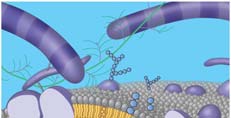
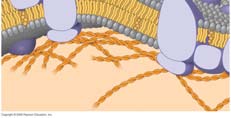
Membrane Proteins: Functions
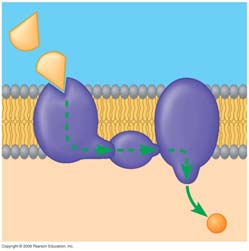
Membrane proteins perform various functions, including acting as enzymes, facilitating signal transduction, and transporting molecules across the membrane.
Enzymes: Catalyze reactions at the membrane surface.
Signal transduction: Receptors receive messenger molecules and activate intracellular responses.
Transport: Proteins move substances across the membrane, either passively or actively.
Transport Across Membranes
Passive Transport
Passive transport involves the movement of substances across the membrane without energy expenditure. The main types are diffusion and osmosis.
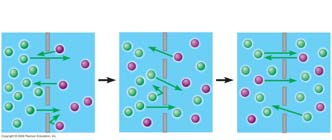
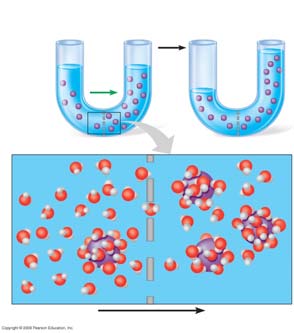
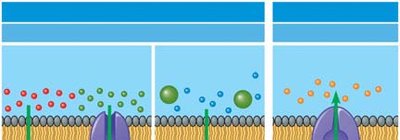
Diffusion: Particles move from areas of high concentration to low concentration, down their concentration gradient, until equilibrium is reached.
Facilitated diffusion: Some molecules require transport proteins to cross the membrane.
Osmosis: The diffusion of water across a selectively permeable membrane, driven by solute concentration differences.
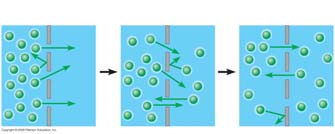
Tonicity and Water Balance
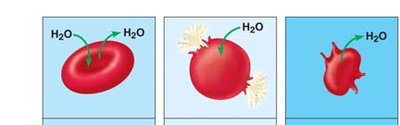
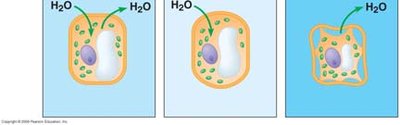
Tonicity describes the effect of a solution on cell volume, based on solute concentration.
Isotonic: Equal solute concentration inside and outside the cell; no net water movement.
Hypertonic: Higher solute concentration outside; cell loses water and shrivels.
Hypotonic: Higher solute concentration inside; cell gains water and may burst (lyse).
Active Transport
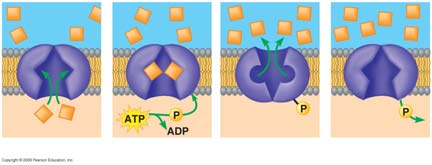
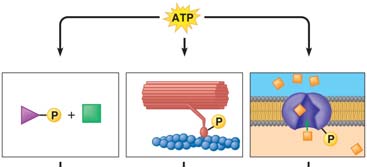
Active transport moves solutes against their concentration gradient, requiring energy (ATP). Transport proteins undergo shape changes to move substances across the membrane.
Mechanism: Solute binds to transport protein, ATP is hydrolyzed, protein changes shape, solute is released on the other side.
Importance: Maintains concentration gradients essential for cellular function.
Bulk Transport: Exocytosis & Endocytosis
Cells move large molecules or particles across membranes via vesicle-mediated processes.
Exocytosis: Exports bulky molecules (e.g., proteins, polysaccharides) by vesicle fusion with the membrane.
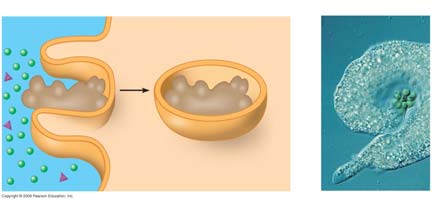
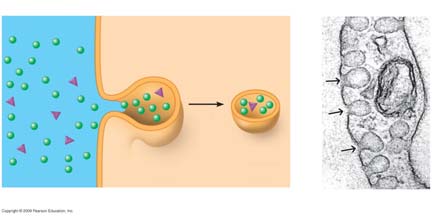
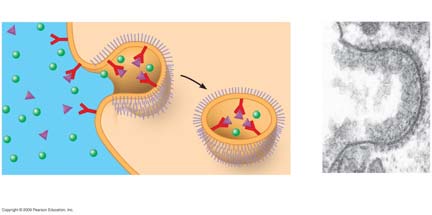
Endocytosis: Imports substances via vesicle formation. Includes phagocytosis (engulfment of particles), pinocytosis (uptake of fluids), and receptor-mediated endocytosis (specific molecule uptake).
Cellular Energy Transformations
Energy and Cellular Work
Cells perform thousands of chemical reactions to maintain life, requiring energy. Energy exists as potential (stored) or kinetic (motion).
Potential energy: Stored in chemical bonds (e.g., glucose).
Kinetic energy: Used for movement and work (e.g., water turning a turbine).
Laws of Thermodynamics
Energy transformations in cells are governed by two fundamental laws:
First law: Energy cannot be created or destroyed, only transformed.
Second law: Energy conversions increase disorder (entropy) in the universe.
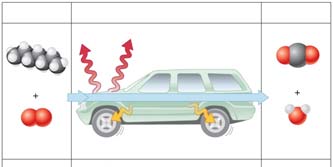
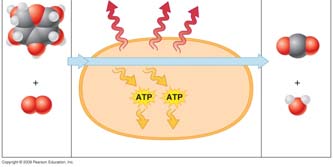
Metabolism and ATP
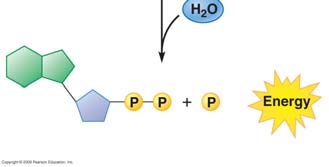
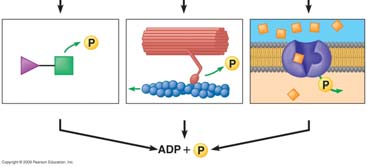
Metabolism encompasses all chemical reactions in the cell, including exergonic (energy-releasing) and endergonic (energy-consuming) reactions. ATP (adenosine triphosphate) is the cell's energy currency, driving cellular work through phosphorylation.
ATP structure: Adenine, ribose, and three phosphate groups.
Hydrolysis: ATP is hydrolyzed to ADP and a phosphate, releasing energy.
Energy coupling: Exergonic reactions provide energy for endergonic processes.
Enzymes and Cellular Reactions
Enzyme Function
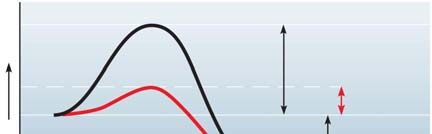
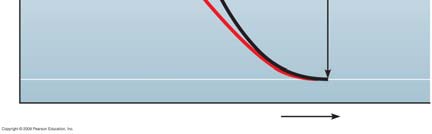
Enzymes are biological catalysts that speed up chemical reactions by lowering the activation energy (EA) barrier. Each enzyme is specific to its substrate, binding at the active site to facilitate the reaction.
Activation energy: The energy required to initiate a reaction.
Catalysis: Enzymes lower EA, increasing reaction rates without being consumed.
Substrate: The molecule upon which an enzyme acts.
Enzyme Mechanism
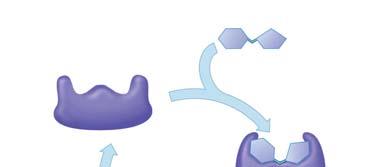
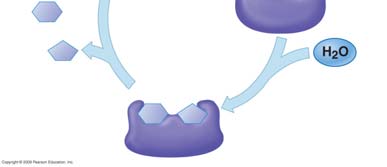
Enzymes have unique three-dimensional shapes, with an active site for substrate binding. The substrate undergoes a chemical change, resulting in product formation.
Induced fit: Enzyme changes shape to accommodate substrate.
Product release: After reaction, products are released and enzyme is ready for another cycle.
Enzyme Regulation
Enzyme activity is regulated by environmental conditions and inhibitors.
Temperature: Human enzymes function best at 37ºC; high temperatures denature enzymes.
pH: Optimal activity near neutral pH.
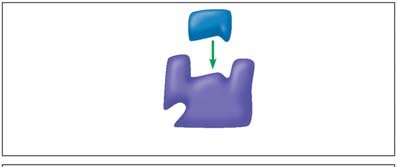
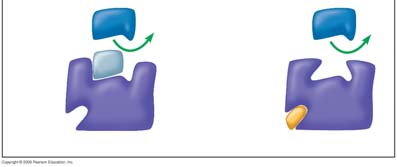
Inhibitors: Competitive inhibitors block the active site; noncompetitive inhibitors bind elsewhere, altering enzyme shape.
Feedback inhibition: End product of a pathway inhibits an enzyme, regulating metabolism.
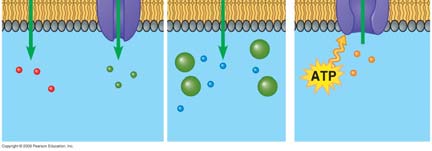
Summary Table: Types of Membrane Transport
The following table summarizes the main types of membrane transport:
Type | Energy Required | Direction | Example |
|---|---|---|---|
Passive Transport (Diffusion) | No | High to Low | O2, CO2 |
Facilitated Diffusion | No | High to Low | Glucose |
Osmosis | No | Water movement | Water balance |
Active Transport | Yes (ATP) | Low to High | Na+/K+ pump |
Bulk Transport (Exocytosis/Endocytosis) | Yes (ATP) | Varies | Protein secretion, phagocytosis |
Key Equations
Relevant equations for cellular transport and energy:
ATP Hydrolysis:
Diffusion:
Conclusion
Understanding membrane structure, transport mechanisms, and cellular energy transformations is fundamental to cell biology and physiology. These processes ensure cellular homeostasis, communication, and metabolic regulation, forming the basis for more advanced topics in Anatomy & Physiology.
