 Indietro
Chapter 1: Major Themes of Anatomy and Physiology
Guida di studio - Note intelligenti
 Appunti personalizzati basati sui tuoi materiali, ampliati con definizioni chiave, esempi e contesto.
Major Themes of Anatomy and Physiology
Anatomy and Physiology: Definitions and Scope
Anatomy and physiology are foundational sciences for understanding the structure and function of the human body. Anatomy is the study of the structure of body parts and their relationships, while physiology focuses on the functions of these parts.
Gross anatomy: Study of structures visible to the naked eye.
Microscopic anatomy: Study of structures not visible without magnification.
Developmental anatomy: Study of structural changes throughout the lifespan.
Subdivisions of Anatomy
Anatomy is divided into several specialized branches to facilitate detailed study:
Gross anatomy:
Regional anatomy: All structures in a specific region.
Systemic anatomy: Study by body systems.
Surface anatomy: Internal structures as related to the skin.
Microscopic anatomy:
Cytology: Study of cells.
Histology: Study of tissues.
Developmental anatomy:
Embryology: Study of changes before birth.
Specialized branches:
Pathological anatomy: Structural changes caused by disease.
Radiographic anatomy: Internal structures visualized by imaging techniques (X-rays, MRI, CT).
Levels of Structural Organization
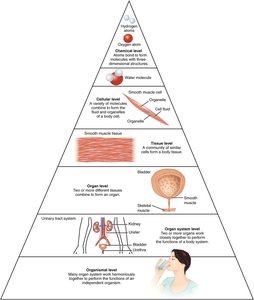
The human body is organized in a hierarchical manner, from the simplest chemical level to the complex organismal level:
Chemical: Atoms combine to form molecules.
Cellular: Cells are made of molecules.
Tissue: Groups of similar cells performing a common function.
Organ: Different tissues working together.
Organ system: Organs working closely together.
Organismal: The complete living being.
Organ Systems of the Body
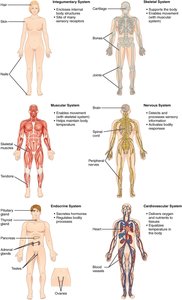
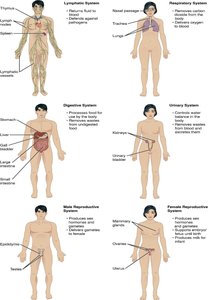
Organ systems work cooperatively to perform necessary life functions. Each system has specialized roles, and all cells depend on these systems for survival.
Integumentary system: Protection, sensory reception.
Skeletal system: Support, movement, protection.
Muscular system: Movement, heat production.
Nervous system: Control, communication.
Endocrine system: Hormonal regulation.
Cardiovascular system: Transport of nutrients and wastes.
Lymphatic system: Defense, fluid balance.
Respiratory system: Gas exchange.
Digestive system: Nutrient breakdown and absorption.
Urinary system: Waste removal, water balance.
Reproductive system: Production of offspring.
Necessary Life Functions
To sustain life, the body must perform several essential functions:
Maintaining boundaries: Separation of internal and external environments (e.g., skin, plasma membranes).
Movement: Locomotion and movement of substances (skeletal, cardiac, and smooth muscle).
Responsiveness: Ability to sense and respond to stimuli (e.g., withdrawal reflex).
Digestion: Breakdown and absorption of food.
Metabolism: All chemical reactions in cells (catabolism and anabolism). $\text{Metabolism} = \text{Catabolism} + \text{Anabolism}$
Excretion: Removal of metabolic wastes (urea, CO2, feces).
Reproduction: Cellular division and production of offspring.
Growth: Increase in size of body parts or organism.
Survival Needs
Survival depends on the availability of certain materials and conditions:
Nutrients: Carbohydrates, fats, proteins, minerals, vitamins.
Oxygen: Essential for ATP production.
Water: Most abundant chemical; site of reactions.
Normal body temperature: Affects reaction rates.
Appropriate atmospheric pressure: Necessary for breathing and gas exchange.
Homeostasis
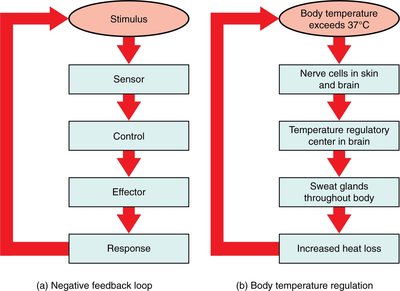
Homeostasis is the maintenance of a stable internal environment despite external changes. It requires continuous monitoring and regulation of internal conditions within normal ranges.
Disturbances increase risk of disease.
Components: Receptor (sensor), Control center, Effector.

Feedback Systems
Feedback systems regulate homeostasis:
Negative feedback: Reverses deviation from set point (e.g., temperature regulation, blood sugar control).
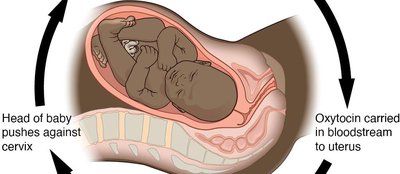
Positive feedback: Intensifies change, used when a definite endpoint is needed (e.g., childbirth).
Anatomical Terminology
Anatomical Position
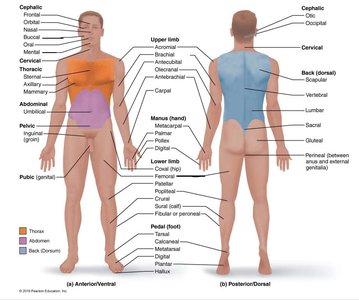
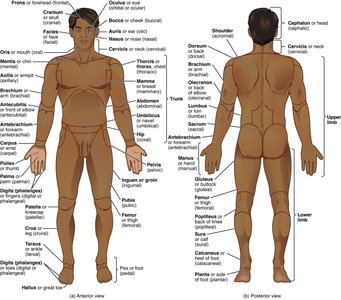
The anatomical position is the standard reference for describing locations and directions on the body. The person stands upright, facing forward, arms at sides, palms forward.
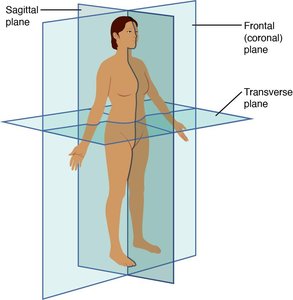
Body Planes
Body planes are imaginary lines used to divide the body:
Median (sagittal) plane: Divides left and right.
Frontal (coronal) plane: Divides front and back.
Transverse plane: Divides top and bottom.
Body Cavities
The body contains several cavities that house organs:
Dorsal cavity: Cranial and vertebral cavities.
Ventral cavity: Thoracic, abdominal, and pelvic cavities.
Membranes of the Anterior Body Cavity
Serous membranes cover the walls and organs of body cavities:
Parietal layer: Lines cavity walls.
Visceral layer: Covers organs.
Fluid-filled space between layers reduces friction.
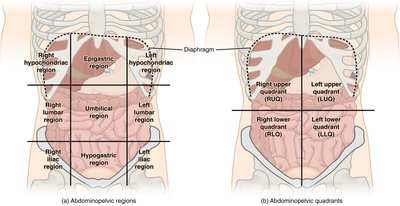
Abdominopelvic Regions and Quadrants
The abdominopelvic area is divided for clinical and anatomical reference:
Regions: Nine regions (e.g., epigastric, umbilical).
Quadrants: Four quadrants (RUQ, LUQ, RLQ, LLQ).
Orientation and Directional Terms
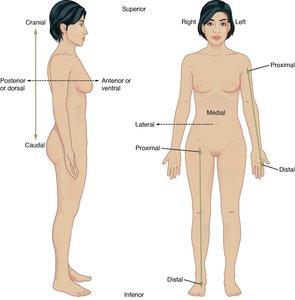
Directional terms describe the location of body parts relative to each other:
Superior (cranial): Toward the head.
Inferior (caudal): Toward the feet.
Anterior (ventral): Toward the front.
Posterior (dorsal): Toward the back.
Medial: Toward the midline.
Lateral: Away from the midline.
Proximal: Closer to the point of attachment.
Distal: Farther from the point of attachment.
Practice Examples
Apply directional terms to anatomical relationships:
The forehead is superior to the nose.
The heart is posterior to the sternum.
The mouth is medial to the ear.
The arms are lateral to the chest.
The knee is distal to the thigh.
The skin is superficial to the skeleton.
The right knee is proximal to the right ankle.
Summary Table: Levels of Structural Organization
Level | Description | Example |
|---|---|---|
Chemical | Atoms and molecules | Water, proteins |
Cellular | Basic unit of life | Muscle cell |
Tissue | Group of similar cells | Muscle tissue |
Organ | Two or more tissues | Bladder |
Organ system | Organs working together | Urinary system |
Organismal | All systems together | Human body |
Additional info: Expanded explanations and examples were added for clarity and completeness.
