 Indietro
Chapter 1: The Human Body – An Orientation (Anatomy & Physiology Study Notes)
Guida di studio - Note intelligenti
 Appunti personalizzati basati sui tuoi materiali, ampliati con definizioni chiave, esempi e contesto.
Chapter 1: The Human Body – An Orientation
Introduction to Anatomy & Physiology
Anatomy and physiology are foundational sciences that provide a framework for understanding the structure and function of the human body. This chapter introduces key concepts, terminology, and the organization of the body, setting the stage for deeper study in subsequent chapters.
Anatomy: The study of the structure of body parts and their relationships to one another. It includes gross (macroscopic) anatomy, microscopic anatomy, and developmental anatomy.
Gross anatomy includes regional anatomy, system anatomy, and surface anatomy.
Regional anatomy: Studies all structures in a particular area of the body.
System anatomy: Studies one body system at a time.
Surface anatomy: Studies internal structures in relation to the overlying skin.
Physiology: The study of the function of body parts and how they work together to sustain life. Subdivisions include renal physiology (kidney function) and neurophysiology (nervous system function).
Relationship: Anatomy is static (structure), while physiology is dynamic (function).
Example: The structure of alveoli in the lungs (anatomy) enables efficient gas exchange (physiology).
Characteristics of Life
Living organisms exhibit several essential characteristics that distinguish them from non-living matter. These characteristics are necessary for maintaining life and ensuring survival.
Maintaining boundaries: Separation between internal and external environments (e.g., skin).
Movement: Includes movement of the body and substances within the body.
Responsiveness: Ability to sense and respond to stimuli.
Digestion: Breakdown of food into absorbable molecules.
Metabolism: All chemical reactions in the body; includes catabolism and anabolism.
Excretion: Removal of waste products.
Reproduction: Production of offspring.
Growth: Increase in size and number of cells.
Levels of Structural Organization
The human body is organized in a hierarchical manner, from the simplest chemical level to the complex organismal level. Understanding these levels is crucial for studying anatomy and physiology.
Chemical level: Atoms combine to form molecules.
Cellular level: Cells are made up of molecules and organelles.
Tissue level: Groups of similar cells form tissues (e.g., muscle tissue).
Organ level: Organs consist of different types of tissues.
Organ system level: Organs work together in systems (e.g., cardiovascular system).
Organismal level: All organ systems combine to form the whole organism.
The body is organized from the smallest chemical level to the whole organism, and organ systems work together to keep individual cells alive.
Survival Needs
To maintain life, the body requires certain essential needs. These include:
Nutrients: Chemical substances used for energy and cell building.
Oxygen: Required for cellular respiration and energy production.
Water: Provides a medium for chemical reactions and transport.
Normal body temperature: Ensures optimal rates of metabolic reactions.
Atmospheric pressure: Necessary for proper gas exchange in the lungs.
Water is the most abundant chemical substance in the body and also provides a fluid medium for secretions and excretions.
Major Organ Systems
The human body consists of eleven major organ systems, each with specific functions that contribute to overall health and homeostasis.
Integumentary system: Protects the body; includes skin, hair, nails.
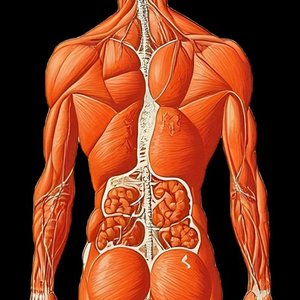
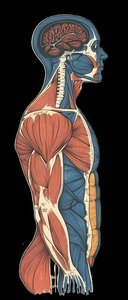
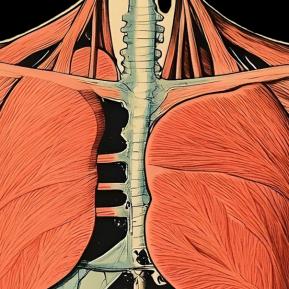
Muscular system: Enables movement; maintains posture.
Skeletal system: Provides support and protection; stores minerals.
Nervous system: Controls and coordinates body activities.
Endocrine system: Regulates processes via hormones.
Cardiovascular system: Transports blood, nutrients, gases, and wastes.
Lymphatic system: Defends against infection; returns fluid to blood.
Respiratory system: Facilitates gas exchange.
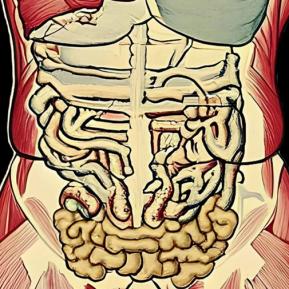
Digestive system: Breaks down food; absorbs nutrients.
Urinary system: Removes waste; regulates water and electrolytes.
Reproductive system: Produces offspring.
Homeostasis: Maintaining Internal Balance
Homeostasis is the process by which the body maintains stable internal conditions despite external changes. It is a dynamic equilibrium, constantly adjusted by various organ systems.
Key components: Receptor (sensor), control center, effector.
Negative feedback: Reduces or shuts off the original stimulus (e.g., regulation of body temperature, blood glucose).
Positive feedback: Enhances the original stimulus (e.g., labor contractions, blood clotting).
Disturbance of homeostasis: Increases risk of disease, contributes to aging, and may lead to destructive positive feedback mechanisms.
The receptor monitors the environment, the control center determines the appropriate response, and the effector carries out the response.
Negative feedback is the most commonly used feedback mechanism in the body.
Positive feedback usually controls events that do not require continuous adjustment.
Anatomical Terminology
Accurate communication in health sciences requires precise anatomical terminology, which is based on Greek and Latin roots, prefixes, and suffixes.
Examples: 'Lingual' (tongue), 'sublingual' (under the tongue), 'card' (heart), 'itis' (inflammation), 'pericarditis' (inflammation of the pericardium), 'cyte' (cell), 'osteocyte' (bone cell).
Standard anatomical position: Body erect, feet slightly apart, palms forward, thumbs away from body.
Directional terms: Describe location of one body structure relative to another (e.g., anterior, posterior, superior, inferior).
Body planes: Sagittal (right/left), frontal (anterior/posterior), transverse (superior/inferior).
Important directional terms from the slides:
Medial: Toward the body's midline.
Lateral: Away from the body's midline.
Intermediate: Between a more medial and a more lateral structure.
Proximal: Closer to the point where a limb attaches to the body.
Distal: Farther from the point where a limb attaches to the body.
Superficial: Toward the body surface.
Deep: Farther from the body surface.
Right and left always refer to the person's right and left, not the observer's.
Parasagittal plane: Divides the body into unequal right and left parts because the cut is off the midline.
The two major body divisions are:
Axial: Head, neck, and trunk.
Appendicular: Arms and legs/limbs.
Body Cavities and Membranes
The body contains internal cavities that protect organs and allow for their movement. These cavities are lined by membranes that provide lubrication and reduce friction.
Dorsal cavity: Includes cranial (brain) and vertebral (spinal cord) cavities, protected by meninges.
Ventral cavity: Includes thoracic (lungs, heart) and abdominopelvic (digestive organs, bladder, reproductive organs) cavities, separated by the diaphragm.
Thoracic cavity contains two pleural cavities, with each pleural cavity surrounding one lung.
The mediastinum is the central area of the thoracic cavity.
The pericardial cavity surrounds the heart.
The abdominal cavity contains the stomach, intestines, spleen, and liver.
The pelvic cavity contains the urinary bladder, reproductive organs, and rectum.
Serous membranes: Double-layered membranes (parietal and visceral) that cover organs and cavity walls; examples include pericardium (heart), pleurae (lungs), peritoneum (abdominopelvic cavity).
Other cavities: Oral, nasal, orbital, middle ear, and synovial (joint) cavities.
Synovial cavities are joint cavities and are not exposed to the environment.
Abdominopelvic quadrants: The four quadrants are mainly used by healthcare professionals to describe the location of organs or pain:
RUQ – Right upper quadrant
LUQ – Left upper quadrant
RLQ – Right lower quadrant
LLQ – Left lower quadrant Chapter 1 Slide Deck
Summary Table: Levels of Structural Organization
Level | Description | Example |
|---|---|---|
Chemical | Atoms and molecules | Water, proteins |
Cellular | Cells and organelles | Muscle cell |
Tissue | Groups of similar cells | Muscle tissue |
Organ | Different tissues | Heart |
Organ system | Organs working together | Cardiovascular system |
Organismal | All organ systems | Human body |
Key Equations (LaTeX Format)
Metabolism:
Homeostatic Control:
