 Indietro
Chapter 1: The Human Body – An Orientation (Anatomy & Physiology Study Guide)
Guida di studio - Note intelligenti
 Appunti personalizzati basati sui tuoi materiali, ampliati con definizioni chiave, esempi e contesto.
Introduction to Anatomy & Physiology
Form (Anatomy) Determines Function (Physiology)
Anatomy and physiology are foundational sciences for understanding the human body. Anatomy is the study of body structures and their relationships, while physiology is the science of how body parts function. The principle of complementarity states that structure and function are inseparable: what a body part can do depends on its form.
Anatomy: Study of body structure and how parts relate to one another.
Physiology: Study of body function; how parts work together to sustain life.
Complementarity of Structure and Function: Function always reflects structure.
Reference Standards: Reference male (~70 kg), reference female (~57 kg).
Anatomical Variation: Over 90% of structures match textbook descriptions; extreme variations are rare.
Sex vs. Gender: Sex is biological (chromosomes, hormones); gender is psychosocial (identity, expression).
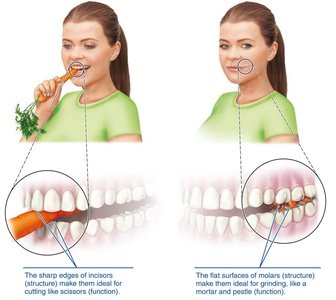
Topics of Anatomy
Anatomy is subdivided into several fields based on the scale and developmental stage of the structures studied.
Gross (Macroscopic) Anatomy: Study of large structures visible to the naked eye.
Regional Anatomy: Examines all structures in a specific area.
System Anatomy: Focuses on one organ system.
Surface Anatomy: Studies internal structures as they relate to the skin surface.
Microscopic Anatomy: Structures too small to see unaided (cytology: cells; histology: tissues).
Developmental Anatomy: Structural changes throughout life (embryology: before birth).
Studying Anatomy and Physiology
Understanding basic anatomical terminology and medical imaging techniques is essential for studying anatomy. Physiology often focuses on cellular and molecular events, requiring knowledge of chemical and physical principles.
Medical Imaging: X-ray, MRI, CT, ultrasound.
Physiology Subdivisions: Renal, neuro, cardiovascular physiology.
Principles: Electrical currents, pressure, lever systems.
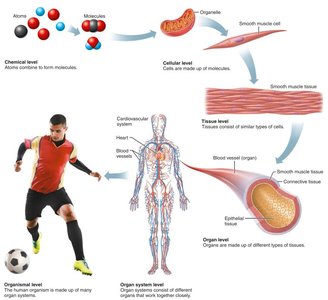
Levels of Structural Organization
The Body’s Organization Ranges From Atoms to the Entire Organism
The human body is organized into hierarchical levels, from the simplest chemical components to the complex organism.
Chemical Level: Atoms and molecules.
Cellular Level: Cells and their organelles.
Tissue Level: Groups of similar cells.
Organ Level: Two or more types of tissues.
Organ System Level: Organs working together.
Organismal Level: All organ systems combined.
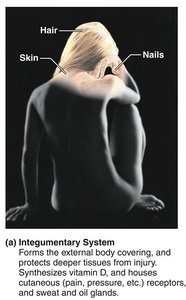
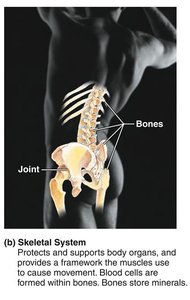
The Body’s Organ Systems and Their Major Functions
Overview of the 11 Organ Systems
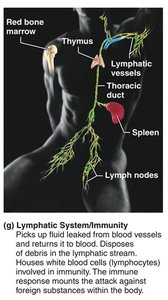
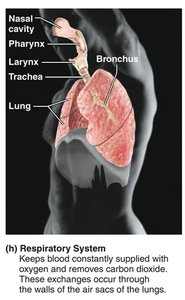
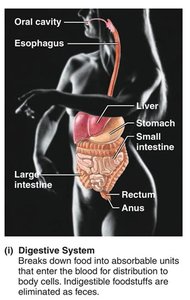
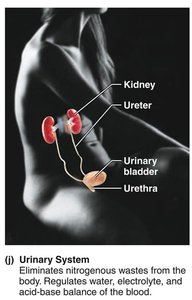
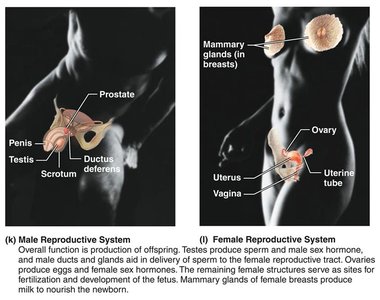
The human body contains 11 organ systems, each with distinct functions. The immune system is a functional system closely associated with the lymphatic system.
Integumentary
Skeletal
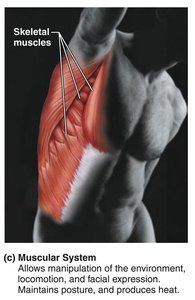
Muscular
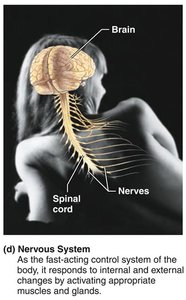
Nervous
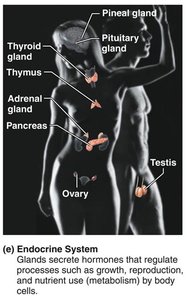
Endocrine
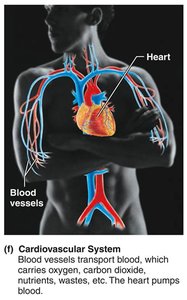
Cardiovascular
Lymphatic
Respiratory
Digestive
Urinary
Reproductive
Necessary Life Functions and Survival Needs
Vital Functional Activities
All living organisms carry out certain vital functions necessary for life.
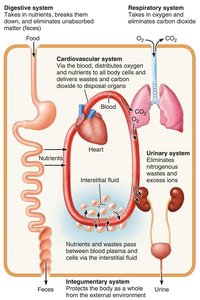
Maintaining Boundaries: Separation of internal and external environments (skin, plasma membranes).
Movement: Of body parts, cells, and substances.
Responsiveness: Sensing and reacting to stimuli.
Digestion: Breakdown of food for absorption.
Metabolism: All chemical reactions in cells (catabolism, anabolism, cellular respiration).
Excretion: Removal of wastes (urea, CO₂, feces).
Reproduction: Cell division and production of offspring.
Growth: Increase in size.
Survival Needs
Humans require several factors for survival, which must be present in appropriate amounts.
Nutrients: Carbohydrates, proteins, fats, minerals, vitamins.
Oxygen: Essential for metabolic reactions.
Water: Most abundant chemical; fluid base for reactions.
Normal Body Temperature: Necessary for proper chemical reactions (37°C/98.6°F).
Atmospheric Pressure: Required for breathing and gas exchange.
Homeostasis
Dynamic Equilibrium of the Internal Environment
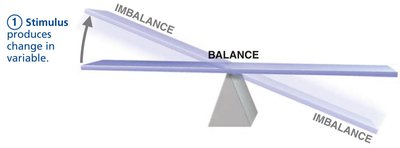
Homeostasis is the maintenance of relatively stable internal conditions despite continuous environmental changes. It is a dynamic state of equilibrium, maintained by all organ systems, especially the nervous and endocrine systems.
Law of Mass Balance: Total intake equals total loss.
Importance: Necessary for health; imbalance increases risk of disease.
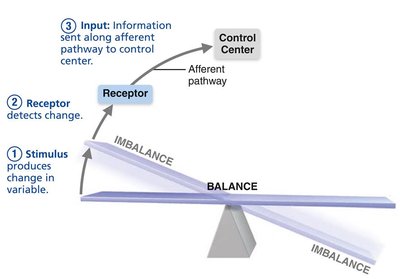
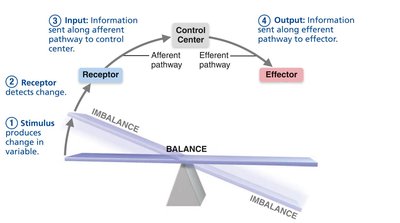
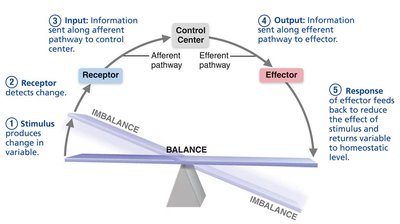
Homeostatic Control Mechanisms
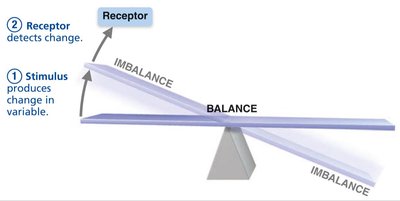
Homeostatic control involves three components: receptor, control center, and effector.
Receptor: Monitors environment and responds to stimuli.
Control Center: Determines set point and response.
Effector: Provides means to respond, reducing or enhancing stimulus.
Negative Feedback
Most homeostatic mechanisms are negative feedback, which reduce the effect of the original stimulus and return the variable to its set point.
Examples: Regulation of body temperature, blood glucose, heart rate.
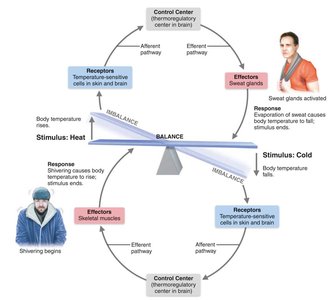
Positive Feedback
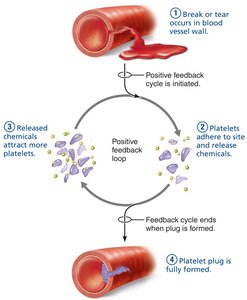
Positive feedback mechanisms intensify the initial stimulus, leading to an enhancement of the response. They are rare and usually control infrequent events.
Examples: Blood clotting, labor contractions.
Feedforward (Anticipatory) Response
Feedforward responses occur in anticipation of a change to the internal environment, such as the release of saliva before food ingestion.
Homeostatic Imbalance
Homeostatic imbalance refers to a disturbance of homeostasis, increasing risk of disease and contributing to aging. If negative feedback mechanisms are overwhelmed, destructive positive feedback may occur (e.g., heart failure).
Anatomical Position, Directional Terms, and Body Planes
Anatomical Position and Directional Terms
The anatomical position is the standard reference for describing body locations and directions. Directional terms allow precise location of body parts.
Anatomical Position: Body erect, facing forward, feet slightly apart, arms at sides, palms forward.
Directional Terms: Superior/inferior, anterior/posterior, ventral/dorsal, medial/lateral, intermediate, proximal/distal, superficial/deep.
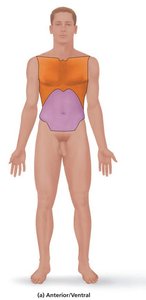
Orientation and Directional Terms
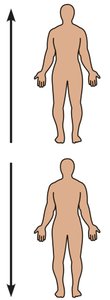
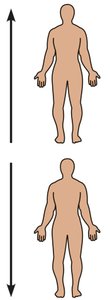
Directional terms describe one body structure in relation to another. The following table summarizes key terms:
Term | Definition | Example |
|---|---|---|
Superior (cranial) | Toward the head end or upper part | The head is superior to the abdomen. |
Inferior (caudal) | Away from the head end; toward lower part | The navel is inferior to the chin. |
Anterior (ventral) | Toward the front of the body | The breastbone is anterior to the spine. |
Posterior (dorsal) | Toward the back of the body | The heart is posterior to the breastbone. |
Medial | Toward the midline | The heart is medial to the arm. |
Lateral | Away from the midline | The arms are lateral to the chest. |
Intermediate | Between medial and lateral | The collarbone is intermediate between the breastbone and shoulder. |
Proximal | Closer to origin or point of attachment | The elbow is proximal to the wrist. |
Distal | Farther from origin or point of attachment | The knee is distal to the thigh. |
Superficial (external) | Toward or at the body surface | The skin is superficial to the skeletal muscles. |
Deep (internal) | Away from the body surface; more internal | The lungs are deep to the skin. |
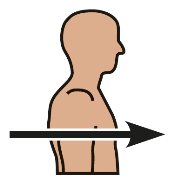
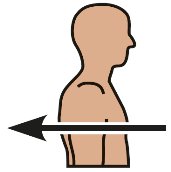
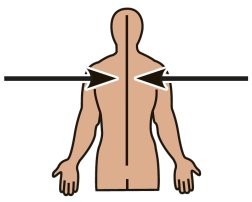
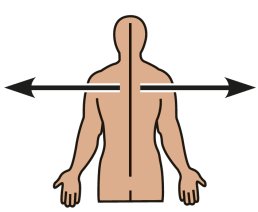
Regional Terms
The body is divided into axial (head, neck, trunk) and appendicular (limbs) parts. Regional terms designate specific areas within these divisions.
Body Planes and Sections
Body planes are flat surfaces along which the body or its organs may be divided. The three most common planes are:
Sagittal Plane: Divides body into right and left parts (midsagittal: midline; parasagittal: offset).
Frontal (Coronal) Plane: Divides body into anterior and posterior parts.
Transverse (Horizontal) Plane: Divides body into superior and inferior parts.
Oblique Section: Cuts at angles other than 90°; seldom used.
Body Cavities and Membranes
Major Body Cavities
The body contains two major closed cavities: dorsal and ventral. Cavities provide protection and house internal organs.
Dorsal Cavity: Cranial (brain) and vertebral (spinal cord); covered by meninges.
Ventral Cavity: Thoracic (heart, lungs) and abdominopelvic (digestive, urinary, reproductive organs); separated by diaphragm.
Serous Membranes
Serosae are thin, double-layered membranes covering surfaces in the ventral cavity. They produce serous fluid to decrease friction.
Parietal Serosa: Lines cavity walls.
Visceral Serosa: Covers organs.
Pleura: Lungs.
Peritoneum: Abdominopelvic organs.
Pericardium: Heart.
Abdominopelvic Regions and Quadrants
The abdominopelvic cavity can be divided into four quadrants (RUQ, LUQ, RLQ, LLQ) or nine regions (epigastric, umbilical, pubic, right/left hypochondriac, right/left lateral, right/left inguinal).
Clinical Example: Homeostatic Imbalance
Problems can occur when structures stray into neighboring cavities, such as a hiatal hernia (stomach protrudes through diaphragm into thoracic cavity), which may cause heartburn and require surgical repair.
Summary Table: Levels of Organization and Organ Systems
Level | Description |
|---|---|
Chemical | Atoms and molecules |
Cellular | Cells and organelles |
Tissue | Groups of similar cells |
Organ | Two or more tissue types |
Organ System | Organs working together |
Organismal | All organ systems combined |
Organ System | Main Function |
|---|---|
Integumentary | Protection, vitamin D synthesis |
Skeletal | Support, movement, blood cell formation |
Muscular | Movement, heat production |
Nervous | Control, response to stimuli |
Endocrine | Hormone secretion, regulation |
Cardiovascular | Transport of blood |
Lymphatic | Immunity, fluid return |
Respiratory | Gas exchange |
Digestive | Breakdown and absorption of food |
Urinary | Waste elimination, regulation |
Reproductive | Production of offspring |
Key Equations
Law of Mass Balance:
Homeostasis (Negative Feedback):
