 Indietro
Chapter 10: The Endocrine System – Guided Study Notes
Guida di studio - Note intelligenti
 Appunti personalizzati basati sui tuoi materiali, ampliati con definizioni chiave, esempi e contesto.
Endocrine System Overview
Functions of the Endocrine System
The endocrine system is a network of glands that produce and release hormones to regulate various bodily functions. It plays a critical role in maintaining homeostasis, growth, metabolism, reproduction, and response to stress.
Regulation of metabolism: Hormones control the rate of metabolic processes.
Growth and development: Hormones such as growth hormone (GH) influence tissue growth.
Reproductive functions: Hormones regulate sexual development and reproductive cycles.
Response to stress: Hormones mediate the body's adaptation to physical and emotional stress.
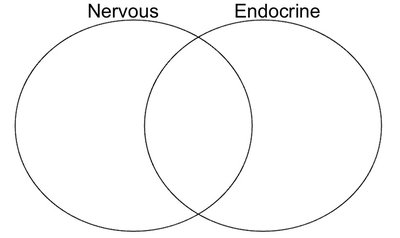
Comparison: Endocrine vs. Nervous System
Similarities and Differences
The nervous system and endocrine system are both essential for communication and regulation within the body, but they differ in their mechanisms and speed of action.
Nervous System: Uses electrical impulses and neurotransmitters for rapid, short-term responses.
Endocrine System: Uses hormones released into the bloodstream for slower, long-lasting effects.
Both: Maintain homeostasis, coordinate body functions, and respond to internal/external stimuli.
Hormones and Endocrine Glands
Key Terms
Hormone: A chemical messenger produced by endocrine glands, transported by the blood to target cells.
Target Cell: A cell with specific receptors for a hormone, enabling it to respond to that hormone.
Receptor: A protein on or within a target cell that binds to a hormone and initiates a response.
Characteristics of Endocrine Glands
Secrete hormones directly into the bloodstream (ductless).
Highly vascularized to facilitate hormone release.
Examples: pituitary, thyroid, adrenal, pancreas, gonads.
Types of Hormone Receptors
Membrane-bound receptors: Located on the cell surface; typically bind peptide or protein hormones.
Intracellular receptors: Located within the cell; bind steroid or thyroid hormones that can cross the cell membrane.
Hypothalamic Control of Endocrine Function
The hypothalamus is the highest level of endocrine control, integrating nervous and endocrine functions. It produces releasing and inhibiting hormones that regulate the pituitary gland, which in turn controls other endocrine glands.
Links nervous and endocrine systems.
Regulates homeostasis, stress response, and growth.
Major Endocrine Organs and Hormones
Anterior Pituitary Hormones
Hormone | Stimulus for Release | Target Tissue/Organ | General Effect |
|---|---|---|---|
Adrenocorticotropic hormone (ACTH) | CRH from hypothalamus | Adrenal cortex | Stimulates cortisol release |
Follicle stimulating hormone (FSH) | GnRH from hypothalamus | Ovaries/testes | Stimulates gamete production |
Growth hormone (GH) | GHRH from hypothalamus | Most tissues | Stimulates growth and metabolism |
Luteinizing hormone (LH) | GnRH from hypothalamus | Ovaries/testes | Stimulates sex hormone production |
Prolactin (PRL) | TRH from hypothalamus | Mammary glands | Stimulates milk production |
Posterior Pituitary Hormones
Hormone | Stimulus for Release | Target Tissue/Organ | General Effect |
|---|---|---|---|
Antidiuretic hormone (ADH) | Increased blood osmolarity | Kidneys | Promotes water reabsorption |
Oxytocin | Neural stimulation (e.g., childbirth) | Uterus, mammary glands | Stimulates uterine contractions and milk ejection |
Thyroid Hormones
Hormone | Stimulus for Release | Target Tissue/Organ | General Effect |
|---|---|---|---|
Thyroid hormone (T3/T4) | TSH from pituitary | Most cells | Increases metabolic rate |
Calcitonin | High blood calcium | Bones | Lowers blood calcium |
Parathyroid Hormone
Hormone | Stimulus for Release | Target Tissue/Organ | General Effect |
|---|---|---|---|
Parathyroid hormone (PTH) | Low blood calcium | Bones, kidneys, intestines | Raises blood calcium |
Adrenal Cortex Hormones
Hormone | Stimulus for Release | Target Tissue/Organ | General Effect |
|---|---|---|---|
Aldosterone | Low blood sodium, high potassium | Kidneys | Increases sodium reabsorption |
Cortisol | ACTH from pituitary | Most tissues | Stress response, increases blood glucose |
Androgens | ACTH from pituitary | Various tissues | Sex characteristics |
Adrenal Medulla Hormones
Hormone | Stimulus for Release | Target Tissue/Organ | General Effect |
|---|---|---|---|
Epinephrine/Norepinephrine | Sympathetic stimulation | Heart, muscles, etc. | Fight-or-flight response |
Pancreas Hormones
Hormone | Stimulus for Release | Target Tissue/Organ | General Effect |
|---|---|---|---|
Insulin | High blood glucose | Most cells | Lowers blood glucose |
Glucagon | Low blood glucose | Liver | Raises blood glucose |
Stress Responses
Sympathetic vs. Endocrine Stress Response
Sympathetic (Neural): Immediate, rapid response via nerve impulses; releases epinephrine/norepinephrine.
Endocrine (Hypothalamic-Pituitary): Slower, sustained response; involves release of cortisol and other hormones.
Both: Prepare the body for action, increase heart rate, mobilize energy stores.
Diabetes Mellitus
Type 1 vs. Type 2 Diabetes
Type 1 Diabetes: Autoimmune destruction of pancreatic beta cells; absolute insulin deficiency; requires insulin therapy.
Type 2 Diabetes: Insulin resistance and relative insulin deficiency; often associated with obesity; managed with lifestyle changes and medications.
Both: Result in elevated blood glucose and risk of complications.
Example: Hormonal Regulation of Blood Glucose
When blood glucose rises after a meal, insulin is released to promote glucose uptake by cells. When blood glucose falls, glucagon is released to stimulate glucose release from the liver.
Additional info: The endocrine system interacts closely with the nervous system, especially via the hypothalamus, to coordinate complex physiological responses.
