 Indietro
Chapter 10: The Muscular System – Structure, Function, and Levers
Guida di studio - Note intelligenti
 Appunti personalizzati basati sui tuoi materiali, ampliati con definizioni chiave, esempi e contesto.
Chapter 10: The Muscular System
Overview of Muscle Function
The muscular system is essential for movement, posture, and force generation in the human body. This chapter focuses on skeletal muscle, examining how muscles interact to produce movement, the criteria for naming muscles, and the principles of leverage.
Muscle Functional Groups
For any movement, muscles act in one of three ways. Muscles can only pull, not push, and their actions are reversed by opposing muscle groups.
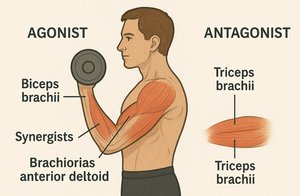
Prime Mover (Agonist): The muscle primarily responsible for a specific movement. Example: The pectoralis major is a prime mover of arm flexion.
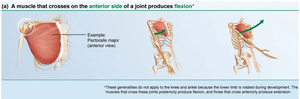
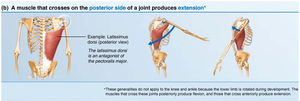
Antagonist: Opposes or reverses the action of the prime mover. When the prime mover is active, the antagonist may be stretched or relaxed. Example: The latissimus dorsi antagonizes the pectoralis major during arm flexion.
Synergist: Assists the prime mover by adding extra force or reducing unnecessary movement. Fixator: A type of synergist that stabilizes the origin of the prime mover. Example: Muscles holding the scapula stable during arm movements.
Criteria for Naming Skeletal Muscles
Skeletal muscles are named based on several criteria, often combined for descriptive clarity.
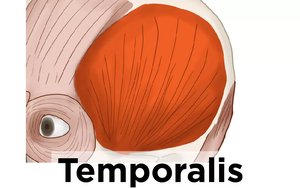
Location: Indicates the bone or region associated with the muscle. Example: Temporalis muscle is located over the temporal bone.
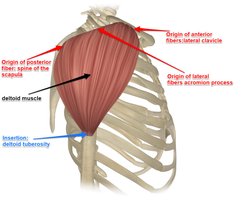
Shape: Describes the muscle's distinctive form. Example: Deltoid muscle (deltoid = triangle).
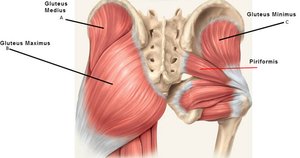
Size: Refers to relative size (maximus = largest, minimus = smallest, longus = long). Example: Gluteus maximus, gluteus minimus.
Direction of Fibers: Orientation of muscle fibers (rectus = straight, transversus = right angles, oblique = angles).
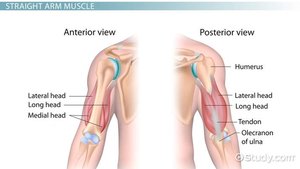
Number of Origins: Number of tendinous attachments (biceps = 2, triceps = 3).
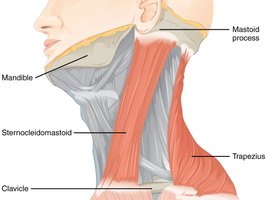
Location of Attachments: Named for origin and insertion points. Example: Sternocleidomastoid attaches to sternum, clavicle, and mastoid process.
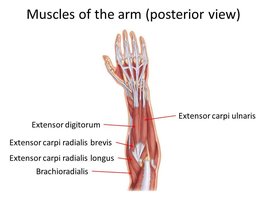
Muscle Action: Named for the action produced (flexor, extensor, abductor, adductor). Example: Adductor longus, extensor carpi radialis.
Fascicle Arrangement and Muscle Shape
The arrangement of fascicles (bundles of muscle fibers) determines muscle shape and functional capabilities. There are several common patterns:
Circular: Fascicles arranged in concentric rings, forming sphincters. Example: Orbicularis oris.
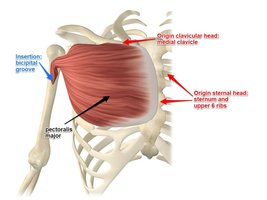
Convergent: Broad origin, fascicles converge toward a single tendon. Example: Pectoralis major.
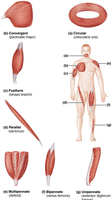
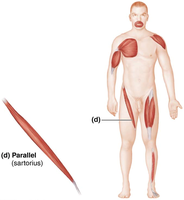
Parallel: Fascicles run parallel to the long axis of the muscle. Example: Sartorius.
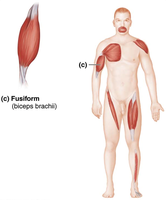
Fusiform: Spindle-shaped muscles with parallel fibers. Example: Biceps brachii.
Pennate: Fascicles attach obliquely to a central tendon, resembling a feather.
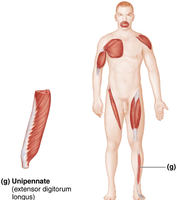
Unipennate: Fascicles attach to one side of the tendon. Example: Extensor digitorum longus.
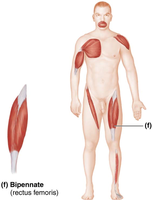
Bipennate: Fascicles attach to both sides of the tendon. Example: Rectus femoris.
Multipennate: Multiple feather-like fascicles insert into one tendon. Example: Deltoid.
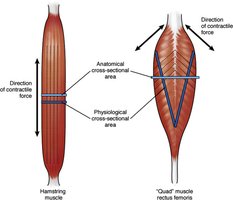
Fascicle Arrangement: Range of Motion and Power
Fascicle arrangement affects both the range of motion and the power of a muscle:
Long, parallel fibers: Greater range of motion, less power. Example: Sartorius.
Pennate muscles: More fibers per area, greater power, less range of motion. Example: Rectus femoris.
Principles of Leverage in Skeletal Muscle Movement
Skeletal muscles move bones using lever systems. Understanding levers is crucial for analyzing movement and force generation.
Lever: Rigid bar (usually a bone) that moves about a fixed point (fulcrum).
Fulcrum: The joint around which movement occurs.
Effort: Force applied by muscle contraction.
Load: Resistance moved, including bone, soft tissues, and external weight.
Example: Biceps curl: lever = forearm, fulcrum = elbow, effort = biceps, load = forearm and weight.
Power Levers vs Speed Levers
Levers can be classified based on their mechanical advantage:
Power Levers: Increase force, allow heavy loads to be moved with less effort, produce slower movement. Example: Squat (fulcrum: knee, effort: quadriceps, load: body weight).
Speed Levers: Increase speed and range of motion, require greater effort, produce faster movement. Example: Biceps curl.
Classes of Levers in the Human Body
Levers are classified based on the relative positions of effort, fulcrum, and load:
First Class Lever (L-F-E): Fulcrum is between load and effort. Can function as either power or speed lever. Example: Raising head from chest.
Second Class Lever (F-L-E): Load is between fulcrum and effort. Operates at mechanical advantage (power lever). Example: Standing on tiptoes.
Third Class Lever (F-E-L): Effort is between fulcrum and load. Operates at mechanical disadvantage (speed lever). Most common in the body. Example: Forearm flexion (biceps curl).
Summary Table: Lever Classes and Their Characteristics
Lever Class | Arrangement | Mechanical Advantage | Example |
|---|---|---|---|
First Class | Load – Fulcrum – Effort | Can be power or speed lever | Raising head from chest |
Second Class | Fulcrum – Load – Effort | Power lever (mechanical advantage) | Standing on tiptoes |
Third Class | Fulcrum – Effort – Load | Speed lever (mechanical disadvantage) | Biceps curl |
Key Terms and Concepts
Agonist: Muscle responsible for movement.
Antagonist: Muscle opposing the movement.
Synergist: Muscle assisting the agonist.
Fixator: Muscle stabilizing the origin of the agonist.
Fascicle: Bundle of muscle fibers.
Lever: Rigid bar moved by force.
Fulcrum: Fixed point of movement.
Effort: Force applied to the lever.
Load: Resistance moved by the lever.
Equations and Formulas
Mechanical Advantage:
Force and Movement:
Example Application
During a biceps curl, the biceps brachii acts as the agonist, the triceps brachii as the antagonist, and muscles like the brachioradialis and anterior deltoid act as synergists. The elbow joint serves as the fulcrum, the forearm as the lever, and the weight in the hand as the load.
Additional info: The notes above expand on brief points from the original material, providing definitions, examples, and academic context for clarity and completeness.
