 Indietro
Chapter 14: The Lymphatic System and Immunity – Study Guide
Guida di studio - Note intelligenti
 Appunti personalizzati basati sui tuoi materiali, ampliati con definizioni chiave, esempi e contesto.
The Lymphatic System and Immunity
Overview of the Lymphatic System
The lymphatic system is a crucial component of the body's defense mechanisms, responsible for protecting against infection and disease, and maintaining fluid balance. It consists of lymphatic vessels, lymphoid tissues, organs, and specialized cells called lymphocytes.
Functions: Defends against pathogens, returns tissue fluids to the bloodstream, and recirculates lymph to maintain homeostasis.
Pathogens: Disease-causing organisms such as viruses, bacteria, fungi, and parasites.
Lymphocytes: Primary cells of the lymphatic system, essential for resistance to infection.
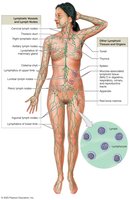
Components of the Lymphatic System
The lymphatic system is composed of vessels, tissues, organs, and cells that work together to defend the body and maintain fluid balance.
Lymphatic vessels: Carry lymph from peripheral tissues to veins; similar to plasma but with lower protein concentration.
Lymphoid tissues: Collections of loose connective tissue and lymphocytes (e.g., tonsils).
Lymphoid organs: More complex structures containing large numbers of lymphocytes (e.g., lymph nodes, spleen, thymus).
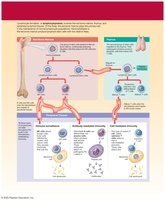
Primary lymphoid tissues: Sites of lymphocyte formation and maturation (red bone marrow, thymus).
Secondary lymphoid tissues: Sites where lymphocytes are activated and cloned (appendix, spleen, lymph nodes, tonsils, MALT).
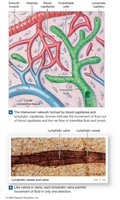
Lymphatic Capillaries and Vessels
Lymphatic capillaries are the smallest vessels, beginning as blind pockets in tissues. Their unique structure allows for one-way flow of lymph, preventing return to interstitial fluid.
Capillaries: Lined by overlapping endothelial cells acting as one-way valves.
Flow: Lymph moves through vessels with valves, aided by skeletal muscle contraction, and empties into lymphatic ducts (thoracic and right lymphatic duct).
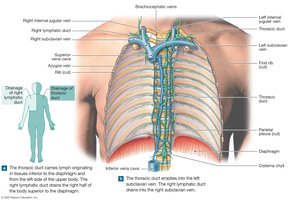
Lymphoid Tissues and Organs
Lymphoid tissues and organs are specialized structures that house lymphocytes and facilitate immune responses.
Tonsils: Protect against pathogens entering through the mouth and nose.
Lymph nodes: Filter lymph, destroy pathogens, and activate T and B cells.
Thymus: Site of T cell maturation; produces thymosin hormones.
Spleen: Filters blood, removes abnormal cells, initiates immune responses, and stores iron.
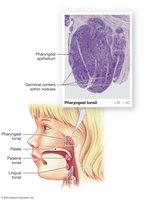
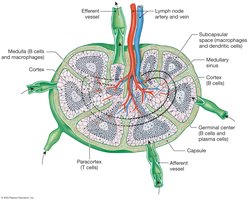
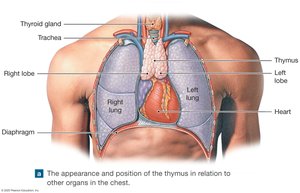
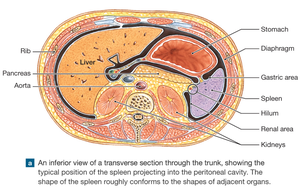
Body Defenses: Innate and Adaptive Immunity
Innate (Nonspecific) Defenses
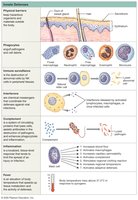
Innate defenses are present at birth and provide general protection against a wide range of threats. They do not distinguish between different pathogens.
Physical barriers: Skin, hair, and mucous membranes prevent entry of pathogens.
Phagocytes: Cells that engulf and destroy pathogens (neutrophils, eosinophils, macrophages).
Immune surveillance: NK cells monitor tissues and destroy abnormal cells.
Interferons: Cytokines that inhibit viral replication and activate immune cells.
Complement system: Plasma proteins that enhance antibody action and promote inflammation.
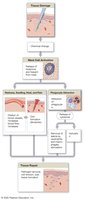
Inflammation: Localized response to injury, characterized by swelling, redness, heat, and pain.
Fever: Elevated body temperature due to pyrogens, increasing metabolism and inhibiting pathogens.
Adaptive (Specific) Defenses
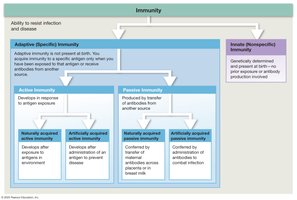
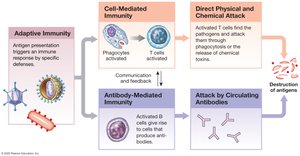
Adaptive immunity is not present at birth and develops in response to specific antigens. It involves the coordinated activities of T and B lymphocytes.
Cell-mediated immunity: T cells defend against pathogens inside cells.
Antibody-mediated (humoral) immunity: B cells produce antibodies to target pathogens in body fluids.
Active immunity: Developed after exposure to antigens (natural or artificial).
Passive immunity: Acquired by transfer of antibodies (natural or artificial).
Properties: Specificity, versatility, memory, and tolerance.
Lymphocytes and Immune Response
Types of Lymphocytes
Lymphocytes are produced in the red bone marrow and are essential for both innate and adaptive immunity. There are three main types:
T cells: Provide cell-mediated immunity; include cytotoxic, helper, regulatory, and memory T cells.
B cells: Provide antibody-mediated immunity; differentiate into plasma cells and memory B cells.
NK cells: Provide innate immunity by attacking infected and cancerous cells.
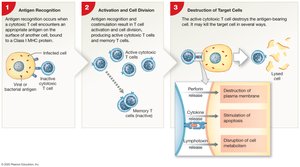
T Cell Activation and Function
T cells are activated by antigen presentation and differentiate into various subtypes to carry out immune functions.
Cytotoxic T cells (CD8): Destroy infected or abnormal cells.
Helper T cells (CD4): Stimulate other immune cells via cytokines.
Memory T cells: Provide rapid response upon re-exposure to the same antigen.
Regulatory T cells: Suppress immune responses to prevent overactivity.
B Cell Activation and Antibody Production
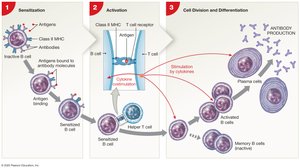
B cells are activated by antigen binding and helper T cell stimulation, leading to antibody production and memory cell formation.
Sensitization: Antigen binds to B cell, is displayed on surface with MHC proteins.
Activation: Helper T cell stimulates B cell via cytokines.
Differentiation: B cell divides into plasma cells (produce antibodies) and memory B cells.
Antibody Structure and Function
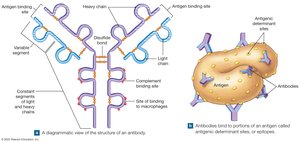
Antibodies are Y-shaped proteins composed of two heavy and two light chains, with variable segments forming antigen-binding sites. They bind to specific antigenic determinant sites (epitopes).
Classes: IgG, IgM, IgA, IgE, IgD – each with distinct roles in immunity.
Functions: Neutralization, precipitation/agglutination, complement activation, attraction/enhancement of phagocytes, stimulation of inflammation.
Primary and Secondary Immune Responses
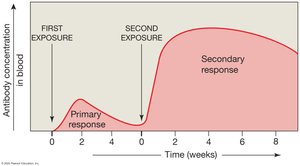
The immune system responds to antigen exposure with a primary response (initial exposure) and a secondary response (subsequent exposures), which is faster and stronger due to memory cells.
Primary response: Slow, takes 1-2 weeks to peak.
Secondary response: Rapid and robust, increases with each exposure.
Immune Disorders and Regulation
Abnormal Immune Responses
Immune disorders arise from abnormal responses, including autoimmune diseases, immunodeficiency, and allergies.
Autoimmune disorders: Immune system attacks normal body cells (e.g., rheumatoid arthritis, type 1 diabetes).
Immunodeficiency diseases: Failure of immune system development or function (e.g., SCID, AIDS).
Allergies: Excessive or inappropriate immune responses to antigens (allergens).
Anaphylaxis: Severe, potentially deadly allergic reaction.
Effects of Stress and Aging
Chronic stress and aging can reduce immune effectiveness, increasing susceptibility to infection and cancer.
Stress: Long-term glucocorticoid secretion depresses immune function.
Aging: Reduced T and B cell responsiveness, slower antibody production, increased infection and cancer risk.
Integration with Other Body Systems
The lymphatic system interacts with other systems, providing defense and maintaining fluid balance. It is particularly important for endocrine and nervous system regulation of immunity.
Endocrine: Thymic hormones and cytokines stimulate metabolism during immune response.
Nervous: Adjusts immune sensitivity; emotional stress can decrease immune response.
Summary Table: Classes of Antibodies
Class | Main Function | Location/Notes |
|---|---|---|
IgG | Largest class; provides passive immunity to fetus | Crosses placenta |
IgM | First antibody produced; blood type reactions | Circulates in blood |
IgA | Found in exocrine secretions | Tears, saliva, mucus |
IgE | Inflammatory and allergic responses | Stimulates basophils and mast cells |
IgD | Attaches to B cells; aids sensitization | B cell surface |
Summary Table: Cells That Participate in Tissue Defenses
Cell Type | Main Function | Notes |
|---|---|---|
Phagocytes | Engulf pathogens and debris | Neutrophils, eosinophils, macrophages |
NK cells | Immune surveillance | Attack infected/cancerous cells |
T cells | Cell-mediated immunity | Cytotoxic, helper, regulatory, memory |
B cells | Antibody-mediated immunity | Plasma cells, memory B cells |
*Additional info: Academic context and explanations have been expanded for clarity and completeness. Tables have been recreated based on logical inference from the original content.*
