 Indietro
Chapter 17: Blood – Structure, Function, and Physiology
Guida di studio - Note intelligenti
 Appunti personalizzati basati sui tuoi materiali, ampliati con definizioni chiave, esempi e contesto.
Blood and Its Functions
Overview of Blood Functions
Blood is a life-sustaining transport vehicle and a vital component of the cardiovascular system. It performs three primary functions: transport, regulation, and protection.
Transport: Blood carries oxygen and nutrients to tissues, removes metabolic wastes to kidneys and lungs, and transports hormones from endocrine organs.
Regulation: Blood helps maintain body temperature, normal pH (using buffers and bicarbonate ions), and adequate fluid volume.
Protection: Blood prevents blood loss (via clotting mechanisms) and infection (by carrying immune agents).
Composition of Blood
Blood as a Connective Tissue
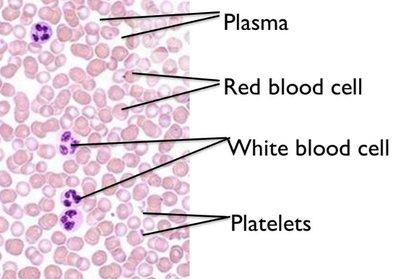
Blood is the only fluid tissue in the body, classified as a connective tissue. Its matrix is the nonliving fluid called plasma, and its living cells are called formed elements.
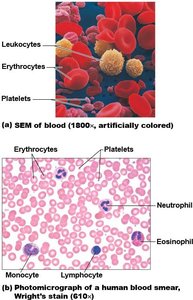
Formed Elements: Erythrocytes (red blood cells, RBCs), leukocytes (white blood cells, WBCs), and platelets.
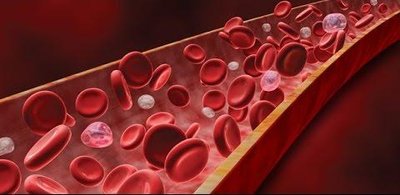
Cells are suspended in plasma.
Blood Layers After Centrifugation
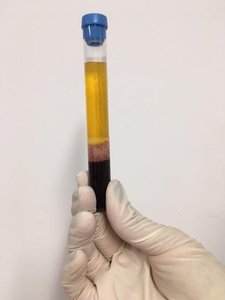
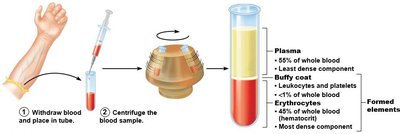
When blood is spun in a centrifuge, it separates into three layers:
Erythrocytes: Bottom layer (~45% of whole blood), measured as hematocrit.
Buffy coat: Middle thin layer (<1%), contains WBCs and platelets.
Plasma: Top layer (~55%), straw-colored fluid.
Blood Plasma
Plasma is a straw-colored, sticky fluid that makes up about 90% water and contains over 100 dissolved solutes.
Solutes: Nutrients, gases, hormones, wastes, proteins, inorganic ions.
Plasma Proteins: Most abundant solutes, mainly produced by the liver.
Albumin: Constitutes 60% of plasma proteins; functions as a carrier, blood buffer, and contributes to osmotic pressure.
Formed Elements of Blood
Types and Characteristics
The formed elements include RBCs, WBCs, and platelets.
RBCs: Anucleate, lack organelles, specialized for gas transport.
WBCs: Complete cells, involved in immunity.
Platelets: Cell fragments, essential for clotting.
Most formed elements survive only a few days and originate in bone marrow.
Erythrocytes (Red Blood Cells)
Structure and Function
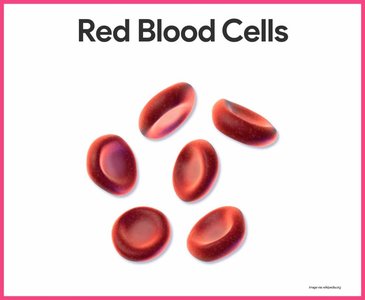
Erythrocytes are small, biconcave, anucleate cells filled with hemoglobin, optimized for gas transport.
Biconcave shape: Maximizes surface area for gas exchange.
Hemoglobin: Makes up 97% of cell content; enables efficient oxygen transport.
Anaerobic metabolism: RBCs do not consume the oxygen they carry.
Hemoglobin Structure and Function
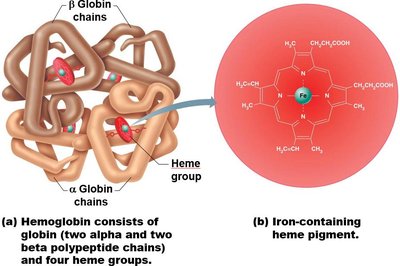
Hemoglobin is a protein dedicated to respiratory gas transport.
Structure: Composed of four polypeptide chains (globin) and four heme groups.
Heme: Each heme contains an iron atom that binds one O2 molecule.
Capacity: Each hemoglobin molecule can transport four O2 molecules.
Production of Erythrocytes (Erythropoiesis)
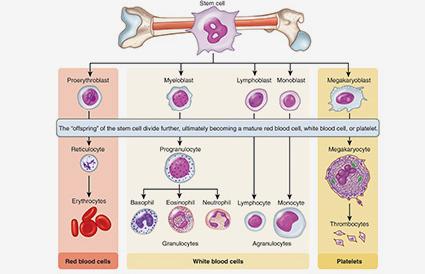
Hematopoiesis and Erythropoiesis
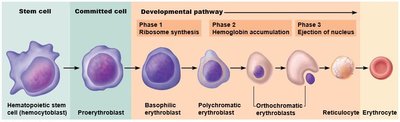
Hematopoiesis is the formation of all blood cells, occurring in red bone marrow. Erythropoiesis is the specific process of RBC formation, taking about 15 days.
Stem Cells: Hematopoietic stem cells (hemocytoblasts) give rise to all formed elements.
Stages: Hematopoietic stem cell → myeloid stem cell → proerythroblast → basophilic erythroblast → polychromatic erythroblast → orthochromatic erythroblast → reticulocyte → mature erythrocyte.
Regulation and Requirements of Erythropoiesis
Homeostatic Control
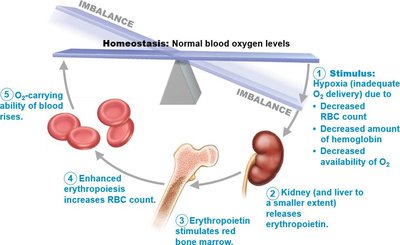
The balance between RBC production and destruction is tightly regulated.
Too few RBCs: Leads to tissue hypoxia.
Too many RBCs: Increases blood viscosity.
Hormonal Control: Erythropoietin (EPO) stimulates RBC formation, released by kidneys in response to hypoxia.
Dietary Requirements: Amino acids, lipids, carbohydrates, iron, vitamin B12, and folic acid are essential for erythropoiesis.
Fate and Destruction of Erythrocytes
Life Span and Breakdown
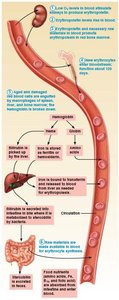
RBCs have a life span of 100–120 days. Being anucleate, they cannot synthesize new proteins or divide.
Destruction: Old RBCs become fragile and are trapped in the spleen.
Breakdown: Heme, iron, and globin are separated. Iron is stored for reuse, globin is metabolized to amino acids, and heme is degraded to bilirubin.
Bilirubin: Secreted into bile, degraded to urobilinogen in intestines, and excreted as stercobilin in feces.
White Blood Cells (Leukocytes)
Types of White Blood Cells
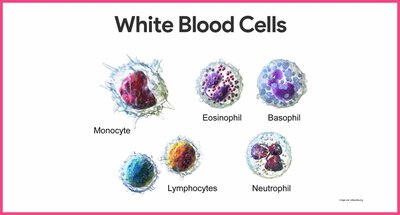
White blood cells are crucial for immune defense and are classified into several types:
Monocyte
Eosinophil
Basophil
Lymphocytes
Neutrophil
Summary Table: Blood Components
Main Purpose: Classification and Properties of Blood Components
Component | Structure | Main Function |
|---|---|---|
Plasma | Straw-colored fluid, 90% water | Transport of solutes, regulation |
Erythrocytes (RBCs) | Biconcave, anucleate | Oxygen and CO2 transport |
Leukocytes (WBCs) | Complete cells | Immune defense |
Platelets | Cell fragments | Blood clotting |
Additional info:
Blood is classified as a connective tissue due to its matrix (plasma) and cellular components.
Hematocrit is a clinical measure of RBC percentage in blood, important for diagnosing anemia and polycythemia.
Albumin is the most abundant plasma protein and plays a key role in maintaining blood osmotic pressure.
