 Indietro
Chapter 2: Molecular Interactions – Study Notes for Anatomy & Physiology
Guida di studio - Note intelligenti
 Appunti personalizzati basati sui tuoi materiali, ampliati con definizioni chiave, esempi e contesto.
Molecular Interactions
Overview
This chapter explores the foundational molecular interactions that underpin physiological processes. Understanding the structure and function of biomolecules, types of chemical bonds, and protein interactions is essential for grasping cellular and systemic physiology.
Biomolecules and Bonds
Organic Molecules and Biomolecules
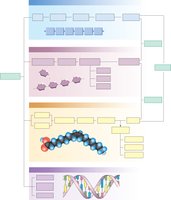
Organic molecules contain carbon and are the basis of life. Biomolecules are organic molecules found in living organisms and are classified into four major groups:
Carbohydrates
Lipids
Proteins
Nucleotides
Most biomolecules contain carbon (C), hydrogen (H), and oxygen (O).
Lipids and Lipid-Related Molecules
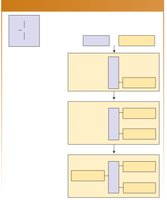
Lipids are hydrophobic molecules that play structural and energy storage roles. The backbone of most lipids is glycerol, a 3-carbon molecule. Lipids are formed by combining glycerol with fatty acids:
Monoglyceride: Glycerol + 1 fatty acid
Diglyceride: Glycerol + 2 fatty acids
Triglyceride: Glycerol + 3 fatty acids (most common form in the body)
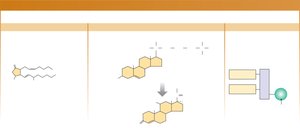
Lipid-related molecules include:
Phospholipids: 2 fatty acids + phosphate group; key in cell membranes
Steroids: Four linked carbon rings; cholesterol is the precursor
Eicosanoids: Modified 20-carbon fatty acids; regulate physiological functions (e.g., prostaglandins)
Carbohydrates
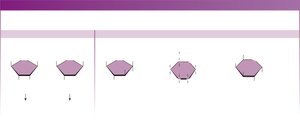
Carbohydrates are composed of carbon, hydrogen, and oxygen. They are classified by the number of sugar units:
Monosaccharides: Simple sugars (e.g., glucose, fructose, galactose, ribose, deoxyribose)
Disaccharides: Two monosaccharides joined (e.g., sucrose, maltose, lactose)
Polysaccharides: Long chains of monosaccharides (e.g., glycogen, starch, cellulose, chitin)
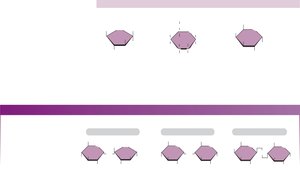
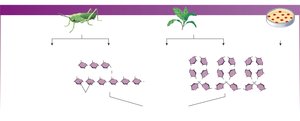
Polysaccharides serve as energy storage (glycogen in animals, starch in plants) and structural components (cellulose in plants, chitin in invertebrates).
Proteins and Amino Acids
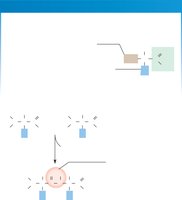
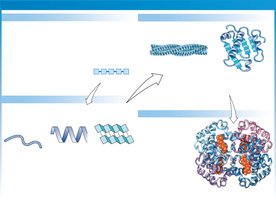
Proteins are polymers of amino acids. Each amino acid has a carboxyl group (–COOH), an amino group (–NH2), a hydrogen, and a variable "R" group. The sequence of amino acids determines protein structure and function.
Peptide bond: Joins amino acids via dehydration synthesis
Primary structure: Sequence of amino acids
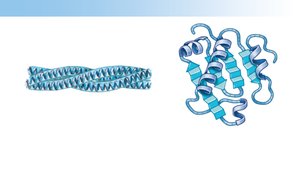
Secondary structure: Alpha helices and beta sheets formed by hydrogen bonds
Tertiary structure: Three-dimensional folding
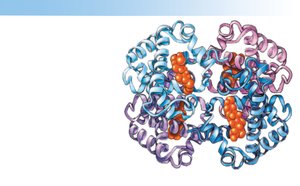
Quaternary structure: Multiple polypeptide subunits (e.g., hemoglobin)

Nucleotides and Nucleic Acids
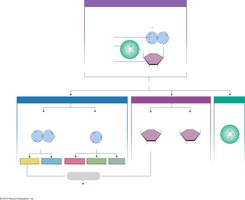
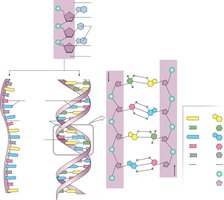
Nucleotides are composed of a phosphate group, a 5-carbon sugar (ribose or deoxyribose), and a nitrogenous base (purine or pyrimidine). They are the building blocks of nucleic acids (DNA and RNA) and serve as energy carriers (ATP, NAD, FAD) and signaling molecules (cAMP).


Functional Groups
Functional groups are combinations of elements that frequently occur in biological molecules and move between molecules as single units. Common functional groups include amino (–NH2), carboxyl (–COOH), hydroxyl (–OH), and phosphate (–H2PO4).

Important Ions in the Body
Ions are charged atoms or molecules. Cations have lost electrons and are positively charged; anions have gained electrons and are negatively charged. Key physiological ions include sodium (Na+), potassium (K+), calcium (Ca2+), chloride (Cl–), bicarbonate (HCO3–), and phosphate (HPO42–).
Cations | Anions |
|---|---|
Sodium (Na+) | Chloride (Cl–) |
Potassium (K+) | Bicarbonate (HCO3–) |
Calcium (Ca2+) | Phosphate (HPO42–) |
Hydrogen (H+) | Sulfate (SO42–) |
Magnesium (Mg2+) |

Atoms, Isotopes, and Ions
Atomic Structure
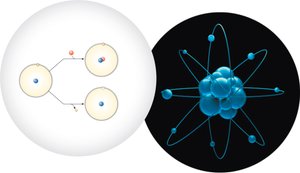
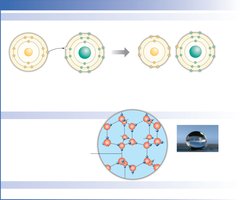
Atoms consist of protons (determine element), neutrons (determine isotope), and electrons (involved in bonding and energy transfer). Isotopes are atoms with different numbers of neutrons; ions are atoms that have gained or lost electrons.
Covalent and Noncovalent Bonds
Covalent bonds involve sharing electrons and are strong. Noncovalent bonds include:
Ionic bonds: Electrostatic attraction between ions
Hydrogen bonds: Weak attraction between H and O, N, or F
Van der Waals forces: Weak, nonspecific attractions
Noncovalent Interactions and Biological Solutions
Hydrophilic and Hydrophobic Interactions
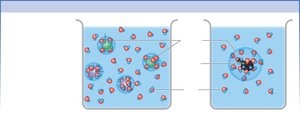
Biological solutions are water-based (aqueous). Solubility depends on molecular polarity:
Hydrophilic: Polar or ionic molecules; dissolve in water
Hydrophobic: Nonpolar molecules; do not dissolve in water
Molecular Shape
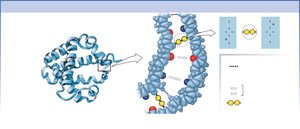
The shape of biomolecules is determined by covalent bond angles, ionic bonds, hydrogen bonds, and van der Waals forces. Molecular shape is critical for function, especially in proteins.
pH and Hydrogen Ions
Acids, Bases, and Buffers
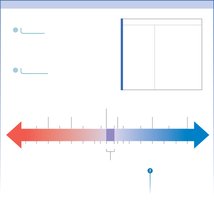
Hydrogen ions (H+) in solution can alter molecular shape and function. pH is a measure of H+ concentration:
pH < 7: Acidic
pH > 7: Alkaline (basic)
Acids release H+; bases decrease H+ by combining with it
Buffers moderate changes in pH (e.g., bicarbonate)
The pH equation is:
Protein Interactions
Types of Protein Functions
Proteins serve diverse functions:
Enzymes: Catalyze biochemical reactions
Membrane transporters: Move substances across membranes
Signal molecules: Communicate between cells
Receptors: Bind signal molecules
Binding proteins: Bind and transport molecules
Immunoglobulins: Antibodies
Regulatory proteins: Control cellular processes
Protein Binding and Specificity
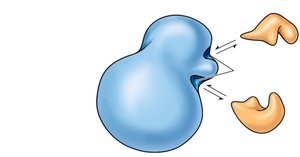
Proteins are selective about the molecules they bind (ligands). Binding requires molecular complementarity and often follows the induced-fit model.
Factors Affecting Protein Binding
Protein binding and activity are influenced by:
Isoforms: Closely-related proteins with different ligand affinities
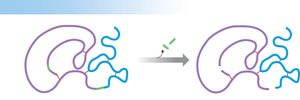
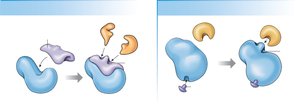
Activation: Proteolytic activation (removal of peptide fragments), cofactors (ions or small organic groups)
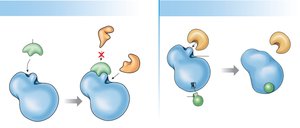
Modulation: Chemical modulators (competitive inhibitors, irreversible antagonists, allosteric and covalent modulators)
Physical modulators: Temperature and pH
Factor | Effect |
|---|---|
Cofactors | Required for ligand binding |
Proteolytic activation | Converts inactive to active form |
Competitive inhibitor | Competes with ligand at binding site |
Irreversible inhibitor | Binds permanently to binding site |
Allosteric modulator | Binds away from binding site; changes activity |
Covalent modulator | Binds covalently; changes activity |
pH and temperature | Alter protein shape; may cause denaturation |

Protein Activity and Regulation
The body regulates protein concentration (up-regulation and down-regulation). Reaction rate depends on protein and ligand concentration, reaching a maximum at saturation.
Temperature and pH can denature proteins, causing loss of function.
Reaction rate increases with protein or ligand concentration until saturation.
Summary Table: Protein Structure Levels
Structure Level | Description |
|---|---|
Primary | Sequence of amino acids |
Secondary | Alpha helices and beta sheets (hydrogen bonds) |
Tertiary | Three-dimensional folding |
Quaternary | Multiple polypeptide subunits |
Key Equations
pH Equation:
Alternative pH Equation:
Additional info: These notes expand on brief points with academic context, definitions, and examples to ensure completeness and clarity for exam preparation.
