 Indietro
Chapter 21: The Immune System – Innate and Adaptive Body Defenses
Guida di studio - Note intelligenti
 Appunti personalizzati basati sui tuoi materiali, ampliati con definizioni chiave, esempi e contesto.
Immunity: Overview
Definition and Systems
Immunity is the resistance to disease, provided by the immune system through two intrinsic systems: the innate (nonspecific) defense system and the adaptive (specific) defense system. These systems work together to protect the body from pathogens and abnormal cells.
Innate Defense System: Provides immediate, nonspecific protection. Includes surface barriers and internal defenses.
Adaptive Defense System: Provides specific, targeted responses and develops memory for future protection.
Innate defenses are divided into two lines:
First line: External body membranes (skin and mucosae)
Second line: Antimicrobial proteins, phagocytes, and other cells; inflammation is a key mechanism
Adaptive defenses constitute the third line, attacking particular foreign substances and taking longer to react.
Innate Defenses
Surface Barriers
The skin and mucous membranes act as physical and chemical barriers to pathogens. Keratin in the skin resists acids, bases, enzymes, and toxins. Protective chemicals include skin acidity, lipids in sebum, dermcidin in sweat, HCl in stomach mucosae, lysozyme in saliva and tears, and mucus.
Respiratory modifications: Mucus-coated hairs in the nose and cilia in the upper respiratory tract sweep away pathogens.
Internal Defenses: Cells and Chemicals
If pathogens breach surface barriers, internal defenses are activated. These include phagocytes (macrophages and neutrophils), natural killer (NK) cells, inflammation, antimicrobial proteins (interferons and complement), and fever.
Macrophages: Free macrophages wander tissues; fixed macrophages reside in organs.
Neutrophils: Become phagocytic upon encountering infectious material.
NK cells: Target cells lacking "self" receptors, induce apoptosis, and enhance inflammation.
Inflammatory Response
Triggered by injury or infection, inflammation prevents spread of damaging agents, disposes of debris, and sets the stage for repair. Cardinal signs: redness, heat, swelling, pain, and sometimes impairment of function.
Inflammatory mediators: Histamine, kinins, prostaglandins, leukotrienes, complement, released by various cells.
Vasodilation and permeability: Increases blood flow (hyperemia) and capillary permeability, causing edema.
Exudate: Protein-rich fluid moves foreign material into lymphatics and delivers clotting proteins.
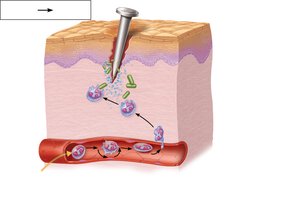
Phagocyte Mobilization
Phagocytes (neutrophils and macrophages) migrate to inflamed sites in four steps:
Leukocytosis: Neutrophils released from bone marrow.
Margination: Neutrophils cling to capillary walls.
Diapedesis: Neutrophils squeeze out of capillaries.
Chemotaxis: Neutrophils follow chemical signals to the site.
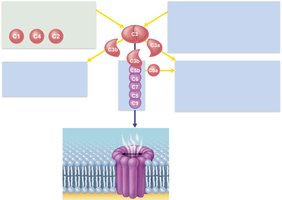
Antimicrobial Proteins
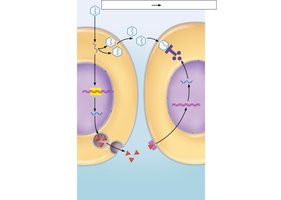
Interferons (IFNs) and complement proteins attack microorganisms and hinder their reproduction.
Interferons: Secreted by virus-infected cells, stimulate neighboring cells to produce antiviral proteins.
Complement: A group of ~20 blood proteins that destroy foreign substances, amplify inflammation, and cause cell lysis.
Fever
Fever is a systemic response to infection. Pyrogens reset the body's thermostat. Moderate fever benefits include sequestering iron and zinc and increasing metabolic rate for repair.
Adaptive Defenses
Characteristics
The adaptive immune system is specific, systemic, and has memory. It includes humoral (antibody-mediated) and cellular (cell-mediated) immunity.
Antigens
Antigens are substances that provoke an immune response. Complete antigens have immunogenicity and reactivity. Haptens are incomplete antigens that become immunogenic when attached to body proteins.
Antigenic determinants: Specific regions of antigens recognized by antibodies and lymphocyte receptors.
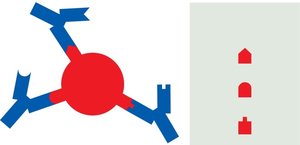
Self-Antigens: MHC Proteins
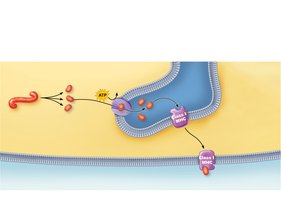
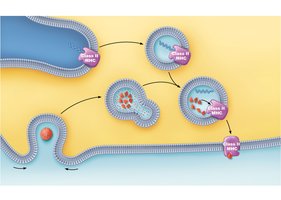
MHC proteins are self-antigens on cell surfaces, unique to individuals. Class I MHC is on all cells; Class II MHC is on immune cells. MHC displays peptides for immune recognition.
Cells of the Adaptive Immune System
B lymphocytes (B cells) mediate humoral immunity; T lymphocytes (T cells) mediate cellular immunity. Antigen-presenting cells (APCs) engulf antigens and present them to T cells.
Lymphocyte Development
Lymphocytes originate in red bone marrow. B cells mature in bone marrow; T cells mature in thymus. Mature lymphocytes are immunocompetent and self-tolerant.
T Cell Selection
T cells undergo positive selection (must recognize self-MHC) and negative selection (must not recognize self-antigens) in the thymus.
B Cell Maturation
B cells mature in bone marrow; self-reactive B cells are eliminated, edited, or inactivated.
Antigen Receptor Diversity
Lymphocytes generate diverse antigen receptors through gene recombination, allowing recognition of many foreign substances.
Antigen-Presenting Cells (APCs)
APCs include dendritic cells, macrophages, and B cells. They present antigen fragments to T cells, activating them.
Humoral Immunity
Antigen Challenge and Clonal Selection
The first encounter between an antigen and a naive B cell triggers clonal selection. Activated B cells proliferate, forming plasma cells (which secrete antibodies) and memory cells (which provide immunological memory).
Immunological Memory
Primary response occurs on first exposure, with a lag period and peak antibody levels in 10 days. Secondary response is faster and stronger, with higher antibody levels and affinity.
Active and Passive Humoral Immunity
Active: B cells produce antibodies after exposure (natural infection or vaccination).
Passive: Antibodies are delivered (placenta, milk, or injection); protection is immediate but temporary.
Antibody Structure and Function
Antibodies (immunoglobulins) are Y-shaped proteins with variable regions for antigen binding and constant regions determining class and function (IgM, IgA, IgD, IgG, IgE).
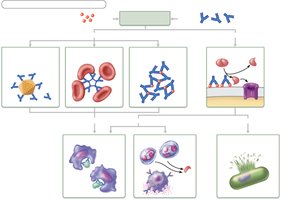
Antibody Targets and Mechanisms
Neutralization: Antibodies block harmful sites on pathogens.
Agglutination: Antibodies cause clumping of cell-bound antigens.
Precipitation: Antibodies cross-link soluble antigens for phagocytosis.
Complement fixation: Antibodies trigger complement activation, leading to cell lysis.
Cell-Mediated Immunity
T Cell Types and Activation
T cells defend against intracellular antigens. CD4 cells become helper T cells; CD8 cells become cytotoxic T cells. T cell activation requires antigen binding and co-stimulation.
MHC and Antigen Recognition
Class I MHC presents endogenous antigens to cytotoxic T cells; Class II MHC presents exogenous antigens to helper T cells.
Helper T Cells
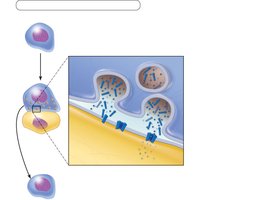
Helper T cells activate B cells, other T cells, and macrophages. They are essential for both humoral and cell-mediated immunity.
Cytotoxic T Cells
Cytotoxic T cells kill infected or abnormal cells by releasing perforins and granzymes, inducing apoptosis.
Regulatory T Cells
Regulatory T cells suppress immune responses, preventing autoimmunity.
Immune Disorders
Immunodeficiencies
Conditions where immune cells, phagocytes, or complement behave abnormally. Example: AIDS, caused by HIV, which destroys helper T cells.
Autoimmune Diseases
Immune system attacks self-tissues. Examples: multiple sclerosis, type I diabetes, lupus, rheumatoid arthritis.
Hypersensitivities
Immune responses to harmless threats cause tissue damage. Types include immediate (allergies), subacute, and delayed hypersensitivity.
Anaphylactic Shock
Severe allergic reaction causing systemic histamine release, bronchoconstriction, vasodilation, and hypotensive shock. Treated with epinephrine.
Developmental Aspects
Newborns have TH2 lymphocytes; TH1 system develops with antigen exposure. Immune function declines with age and stress.
