 Indietro
Chapter 22: The Respiratory System – Structure, Function, and Clinical Concepts
Guida di studio - Note intelligenti
 Appunti personalizzati basati sui tuoi materiali, ampliati con definizioni chiave, esempi e contesto.
The Respiratory System: Overview
Respiratory Functions
The respiratory system is essential for gas exchange, pH regulation, vocalization, olfactory reception, and air conditioning. It warms, humidifies, and filters incoming air, maintaining homeostasis and supporting cellular metabolism.
Gas Exchange: Oxygen (O2) is absorbed and carbon dioxide (CO2) is expelled.
pH Homeostasis: Regulates blood pH by controlling CO2 levels.
Vocalization: Air movement through the larynx produces sound.
Olfactory Reception: Specialized epithelium detects odors.
Air Conditioning: Air is warmed, humidified, and filtered before reaching the lungs.
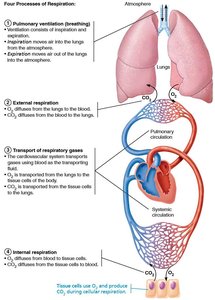
Major Respiratory Organs
Upper Respiratory System
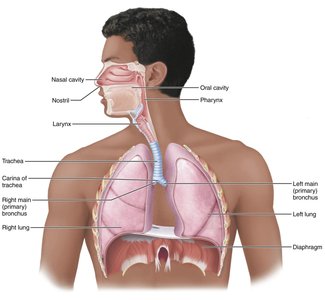
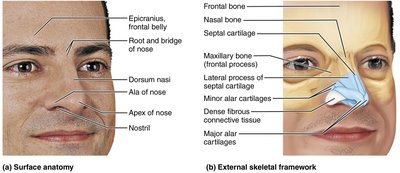
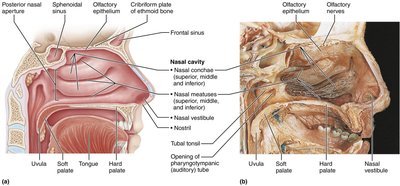
The upper respiratory tract includes the nose, paranasal sinuses, and pharynx. These structures filter, warm, and moisten air, and provide resonance for speech.
Nose: Supported by bone and cartilage, lined with mucosa, contains olfactory epithelium.
Paranasal Sinuses: Air-filled cavities that lighten the skull and condition air.
Pharynx: Connects nasal cavity to larynx and oral cavity to esophagus; houses tonsils for immune defense.
Lower Respiratory System
The lower respiratory tract consists of the larynx, trachea, bronchial tree, alveoli, lungs, and pleurae. These structures conduct air, protect against aspiration, and facilitate gas exchange.
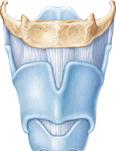
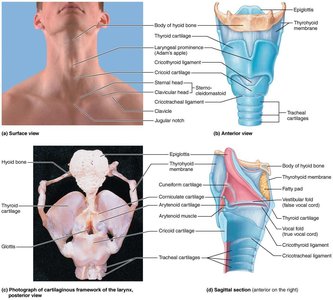
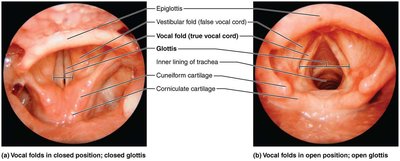
Larynx: Connects pharynx to trachea, houses vocal folds, prevents food entry.
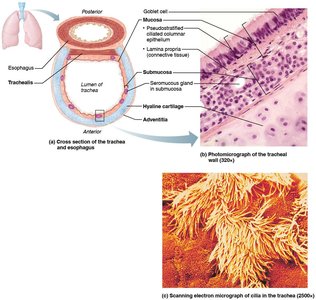
Trachea: Flexible tube with C-shaped cartilage rings, cleans and conditions air.
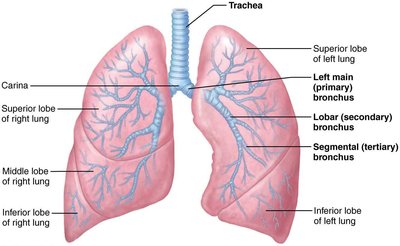
Bronchial Tree: Branching airways from main bronchi to bronchioles; smooth muscle controls airflow.
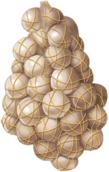
Alveoli: Microscopic chambers for gas exchange; surfactant reduces surface tension.
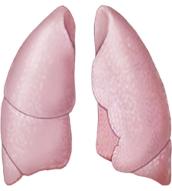
Lungs: Paired organs with elastic stroma, house respiratory passages.
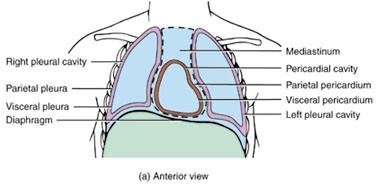
Pleurae: Serous membranes compartmentalize and lubricate lungs.
Functional Zones of the Respiratory System
Conducting Zone
The conducting zone includes all rigid airways from the nose to terminal bronchioles. It conditions air and protects lower structures.
Rigid Structures: Cartilage rings and plates provide support.
Smooth Muscle: Increases distally, controlling airway diameter.
Respiratory Zone
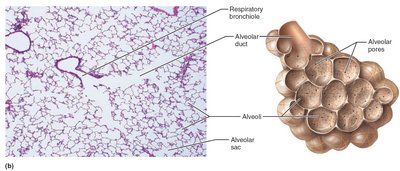
The respiratory zone begins with respiratory bronchioles and includes alveolar ducts and sacs. It is the site of gas exchange.
No Cartilage: Allows for gas diffusion.
Alveoli: Main site for O2 and CO2 exchange.
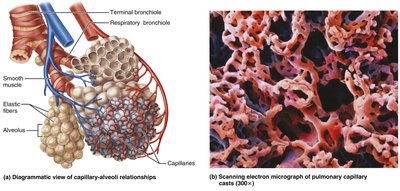
Alveoli and the Respiratory Membrane
Structure and Function
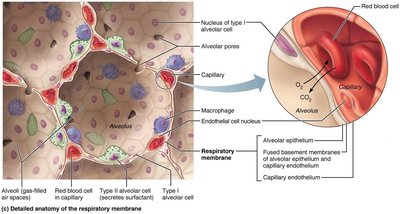
Alveoli are lined with simple squamous epithelium and surrounded by capillaries. The respiratory membrane consists of alveolar and capillary walls fused by a basement membrane.
Type I Alveolar Cells: Form the thin wall for gas exchange.
Type II Alveolar Cells: Secrete surfactant to reduce surface tension.
Macrophages: Provide immune defense.
ACE Secretion: Endothelial cells produce angiotensin converting enzyme.
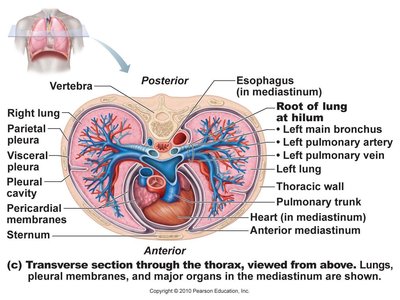
Lung Anatomy and Pleurae
Lung Structure
The lungs are divided into lobes and are supplied by pulmonary and bronchial circulations. The hilum is the entry/exit point for vessels and bronchi.
Pulmonary Circulation: Delivers blood for gas exchange.
Bronchial Circulation: Supplies lung tissue with oxygenated blood.
Respiratory Pressures and Mechanics
Pleural Pressure and Pneumothorax
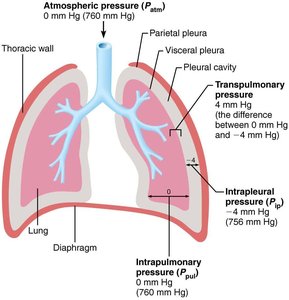
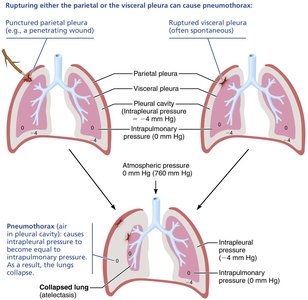
Pressure differences between the pleural cavity and alveoli keep the lungs inflated. Pneumothorax occurs when air enters the pleural space, causing lung collapse (atelectasis).
Transpulmonary Pressure: Difference between intrapulmonary and intrapleural pressures.
Pneumothorax: Loss of negative pressure leads to atelectasis.
Boyle’s Law and Breathing Mechanics
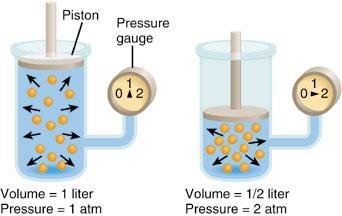
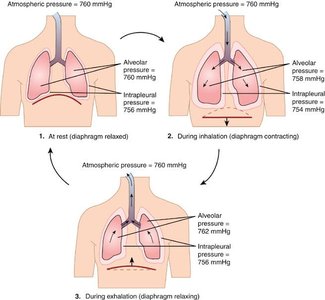
Boyle’s Law states that pressure and volume are inversely related in a closed system. This principle governs the mechanics of breathing.
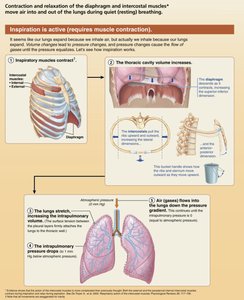
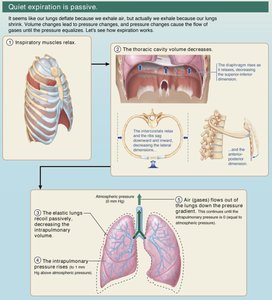
Inspiration: Diaphragm contracts, thoracic volume increases, pressure decreases, air enters.
Expiration: Diaphragm relaxes, thoracic volume decreases, pressure increases, air exits.
Boyle’s Law Equation:
Pulmonary Ventilation: Factors and Measurements
Factors Affecting Ventilation
Airway Resistance: Diameter of bronchioles affects airflow; asthma increases resistance.
Alveolar Surface Tension: Surfactant prevents alveolar collapse; deficiency leads to respiratory distress syndrome (RDS).
Lung Compliance: Elasticity and stretchiness; fibrosis reduces compliance.
Respiratory Volumes and Capacities
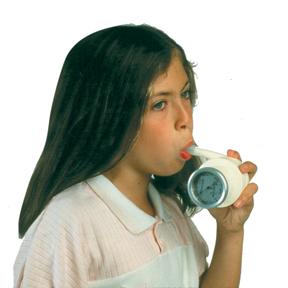
Spirometry measures lung function, including forced vital capacity (FVC) and forced expiratory volume in 1 second (FEV1).
Obstructive Disease: FEV1 < 80% of FVC (e.g., asthma, COPD).
Restrictive Disease: FVC reduced, FEV1 may be normal (e.g., fibrosis).
Gas Exchange and Laws
Partial Pressures and Gas Laws
Gas exchange is driven by partial pressure gradients. Dalton’s Law and Henry’s Law describe the behavior of gases in mixtures and solutions.
Dalton’s Law: Total pressure is the sum of partial pressures.
Henry’s Law: Gas solubility in liquid is proportional to partial pressure.
Dalton’s Law Equation:
Ventilation-Perfusion Coupling
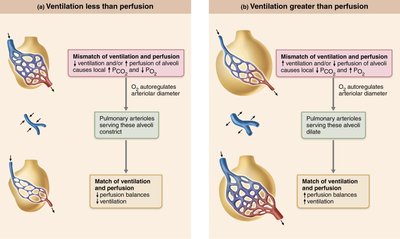
Local autoregulatory mechanisms match airflow (ventilation) to blood flow (perfusion) in the lungs.
Oxygen and Carbon Dioxide Transport
Oxygen-Hemoglobin Dissociation Curve
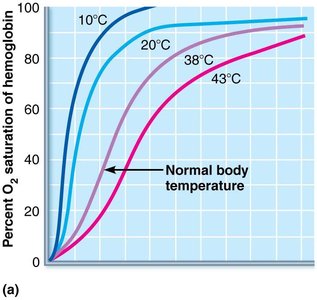
The relationship between O2 partial pressure and hemoglobin saturation is sigmoidal. Factors such as temperature, pH, and CO2 shift the curve.
Right Shift: Increased temperature, CO2, or decreased pH promotes O2 release to tissues.
Left Shift: Carbon monoxide poisoning increases hemoglobin affinity for O2, reducing release.
CO2 Transport
Dissolved in Plasma: Small percentage.
Bound to Hemoglobin: As carbaminohemoglobin.
Bicarbonate Ion: Majority transported as HCO3- after conversion by carbonic anhydrase.
Respiratory Regulation and Clinical Concepts
Respiratory Centers in the Brain Stem
Breathing is regulated by neural and chemical influences in the brain stem, including pontine and medullary centers.
Voluntary Control: Pontine centers override rate for speech, sleep, exercise.
Chemoreceptors: Respond to CO2, H+, and O2 levels.
Acid-Base Balance
Respiratory Acidosis: High CO2, low pH; increase RR to correct.
Respiratory Alkalosis: Low CO2, high pH; decrease RR to correct.
Clinical Disorders
COPD: Chronic obstructive pulmonary disease; dyspnea, reduced airflow.
Asthma: Inflammation and bronchospasm; triggered by allergens, cold air, exercise.
Tuberculosis: Bacterial infection; formation of tubercles.
Lung Cancer: Most cases due to smoking; poor prognosis.
Sleep Apnea: Obstructive or central; affects breathing during sleep.
Cystic Fibrosis: Genetic disorder affecting mucus production.
Summary Table: Upper and Lower Respiratory Structures
Structure | Description | Function |
|---|---|---|
Nose | Bone/cartilage, mucosa, olfactory epithelium | Filters, warms, moistens air; smell |
Paranasal Sinuses | Air-filled cavities in cranial bones | Lighten skull; condition air |
Pharynx | Connects nasal cavity to larynx | Passageway for air/food; immune defense |
Larynx | Cartilage framework, vocal folds | Air passage; voice production |
Trachea | Flexible tube, C-shaped cartilage | Air passage; cleans, warms, moistens air |
Bronchial Tree | Main bronchi to bronchioles | Air passageways; conditions air |
Alveoli | Microscopic chambers, surfactant | Gas exchange; prevents collapse |
Lungs | Paired organs, elastic tissue | House respiratory passages |
Pleurae | Serous membranes | Lubricate, compartmentalize lungs |
Key Equations
Boyle’s Law:
Dalton’s Law:
Additional info:
Surfactant is critical for preventing alveolar collapse, especially in premature infants (IRDS).
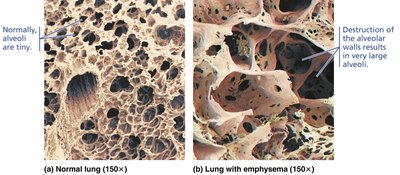
Emphysema reduces surface area for gas exchange, leading to hypoxia.
Ventilation-perfusion mismatch can cause hypoxemic hypoxia.
