 Indietro
Chapter 23: The Digestive System – Anatomy, Digestion, Absorption, and Regulation
Guida di studio - Note intelligenti
 Appunti personalizzati basati sui tuoi materiali, ampliati con definizioni chiave, esempi e contesto.
The Digestive System: Overview
Major Functions and Processes
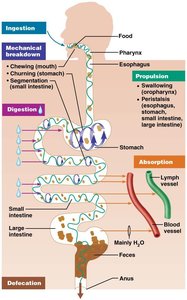
The digestive system is responsible for breaking down food, absorbing nutrients, and eliminating waste. It consists of a series of organs forming the alimentary canal, supported by accessory structures. The main processes include ingestion, mechanical breakdown, propulsion, digestion, absorption, and defecation.
Ingestion: Intake of food into the mouth.
Mechanical Breakdown: Physical processing of food (chewing, churning, segmentation).
Propulsion: Movement of food through the GI tract via swallowing and peristalsis.
Digestion: Chemical breakdown of macronutrients by enzymes.
Absorption: Uptake of nutrients into blood or lymph.
Defecation: Elimination of indigestible substances as feces.
Anatomy of the Digestive System
Alimentary Canal and Accessory Organs
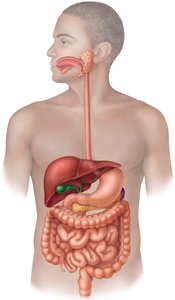
The alimentary canal extends from the mouth to the anus and includes the oral cavity, pharynx, esophagus, stomach, small intestine (duodenum, jejunum, ileum), and large intestine. Accessory organs such as the liver, pancreas, and gallbladder aid digestion by producing enzymes and bile.
Oral Cavity: Site of ingestion and initial mechanical breakdown.
Esophagus: Transports food to the stomach.
Stomach: Churns food and begins protein digestion.
Small Intestine: Main site for digestion and absorption.
Large Intestine: Absorbs water and forms feces.
Accessory Organs: Liver (produces bile), pancreas (produces digestive enzymes), gallbladder (stores bile).
Sphincters and Valves
Sphincters are muscular rings that regulate the passage of food and prevent backflow. Key sphincters include the lower esophageal sphincter (LES), pyloric sphincter, hepatopancreatic sphincter, ileocecal valve, internal anal sphincter (IAS), and external anal sphincter (EAS).
Physical Propulsion: Peristalsis
Definition and Role
Peristalsis is a series of wave-like muscle contractions that move food through the digestive tract. It is a form of propulsion, not chemical digestion, and occurs in the esophagus, stomach, and intestines.
Swallowing: Initiates movement from mouth to esophagus.
Peristalsis: Propels food through the GI tract.
Chemical Digestion of Macronutrients
Enzymes and Sites of Action
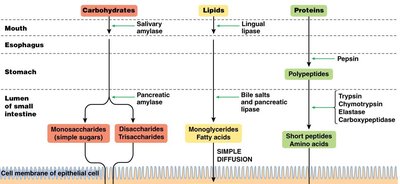
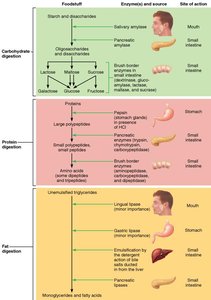
Chemical digestion involves breaking down carbohydrates, proteins, and lipids into absorbable units using specific enzymes. Most digestion occurs in the small intestine due to the abundance of enzymes.
Amylase: Digests polysaccharides (starch) into disaccharides.
Lactase: Breaks down lactose into glucose and galactose.
Lipase: Hydrolyzes triglycerides into monoglycerides and free fatty acids.
Pepsin: Initiates protein digestion in the stomach.
Trypsin: Continues protein digestion in the small intestine.
Protein Digestion
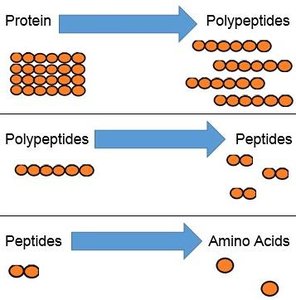
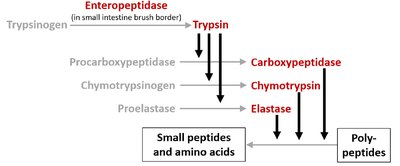
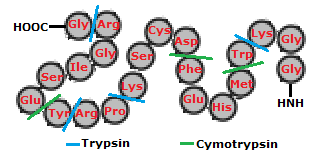
Proteins are broken down in stages: first into polypeptides, then into peptides, and finally into amino acids. Proteases such as pepsin, trypsin, chymotrypsin, elastase, and carboxypeptidase are involved.
Pepsin: Active in the stomach, breaks proteins into polypeptides.
Trypsin, Chymotrypsin, Elastase: Produced by the pancreas, active in the small intestine.
Carboxypeptidase, Aminopeptidase, Dipeptidase: Further break down peptides in the small intestine.
Lipid Digestion
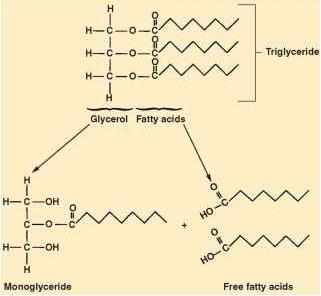
Lipids, mainly triglycerides, are broken down by lipases into monoglycerides and free fatty acids. Bile salts from the liver emulsify fats, increasing surface area for enzyme action. Lipid digestion primarily occurs in the small intestine.
Triglycerides: Composed of glycerol and three fatty acids.
Lipase: Catalyzes the breakdown of triglycerides.
Bile Salts: Amphipathic molecules that emulsify fats; not enzymes.
Carbohydrate Digestion
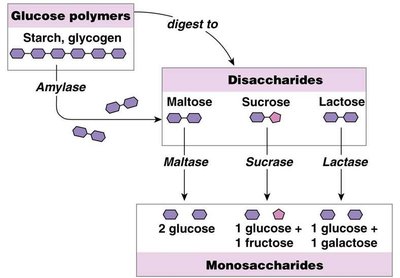
Carbohydrates are digested by amylase and brush border enzymes into monosaccharides. Amylase acts on starch and glycogen, producing disaccharides, which are further broken down by maltase, sucrase, and lactase.
Amylase: Salivary and pancreatic amylase break down starch.
Brush Border Enzymes: Maltase, sucrase, lactase act on disaccharides.
Monosaccharides: Glucose, fructose, galactose are absorbed.
Lactose Intolerance and Ethnic Variation
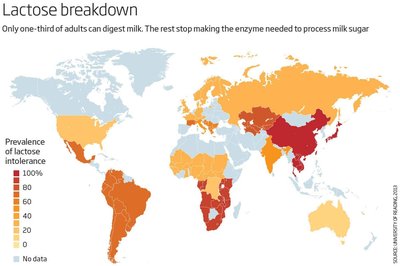
Lactose intolerance is the inability to digest lactose due to decreased lactase production after infancy. It is more common in certain populations, such as those in China and India, and may be considered normal variation rather than a disorder.
Lactase Persistence: Continued production of lactase into adulthood.
Terminology: "Lactase-persistent" vs. "lactose-intolerant" reflects normal variation.
Enzyme Activity and pH
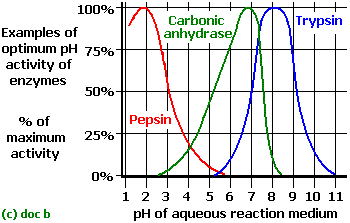
Enzyme activity depends on substrate, pH, and temperature. Most digestive enzymes are active near neutral pH, except pepsin, which is active in acidic conditions (pH 2-3).
Pepsin: Optimal activity at low pH.
Trypsin: Optimal activity at neutral to slightly basic pH.
Absorption of Nutrients
Sites and Mechanisms of Absorption
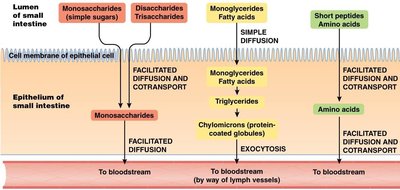
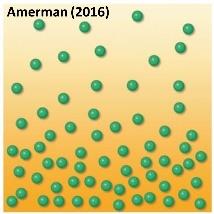
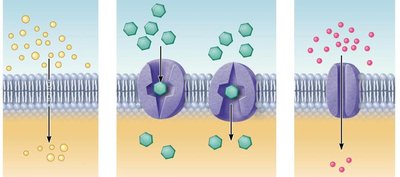
Most macronutrient absorption occurs in the small intestine. Nutrients cross cell membranes by various mechanisms: simple diffusion, facilitated diffusion, active transport, and exocytosis.
Monosaccharides: Absorbed by facilitated diffusion and cotransport.
Amino Acids: Absorbed by facilitated diffusion and cotransport.
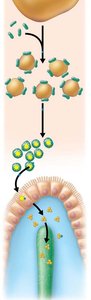
Fatty Acids and Monoglycerides: Absorbed by simple diffusion; triglycerides are packaged into chylomicrons for transport via lymph.
Lipid Absorption and Chylomicrons
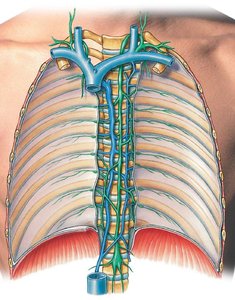
Lipids are packaged into chylomicrons, which are protein-coated globules, to travel through the extracellular fluid. Chylomicrons are amphipathic and enter the lymphatic system before reaching the bloodstream.
Chylomicrons: Enable transport of hydrophobic lipids in aqueous environments.
Lymphatic Entry: Lipids first enter the lymph before reaching the blood.
Regulation of Digestive Processes
Nervous and Hormonal Regulation
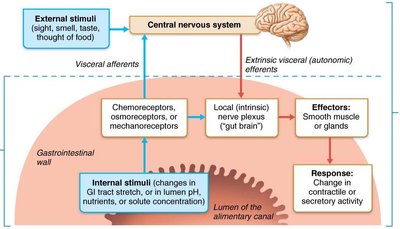
Digestive activities are regulated by the nervous and endocrine systems. The enteric nervous system ("gut brain") controls local reflexes, while the central nervous system modulates longer reflexes. Hormones such as CCK and secretin regulate enzyme and bile secretion.
Short Reflexes: Local responses to stimuli in the GI tract.
Long Reflexes: CNS-mediated responses to external stimuli.
Hormones: CCK stimulates bile and enzyme release; secretin stimulates bicarbonate secretion.
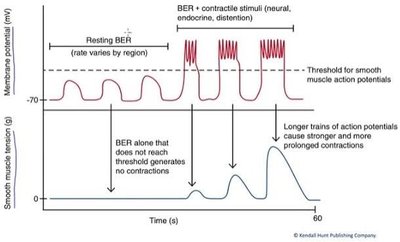
Basal Electrical Rhythm (BER) and Smooth Muscle Activity
GI smooth muscles exhibit a basal electrical rhythm, but only contract when action potentials reach threshold. Most of the time, GI muscles are relaxed unless stimulated by neural, endocrine, or mechanical signals.
BER: Sets the pace for contractions but does not always cause them.
Contraction: Requires additional stimuli to reach threshold.
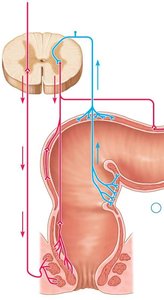
Defecation Reflex
The defecation reflex is triggered by distension of the rectum, leading to contraction of smooth muscle and relaxation of sphincters. It involves both short (local) and long (CNS-mediated) reflexes.
Stimulus: Rectal distension.
Motor Response: Contraction of rectal muscles, relaxation of sphincters.
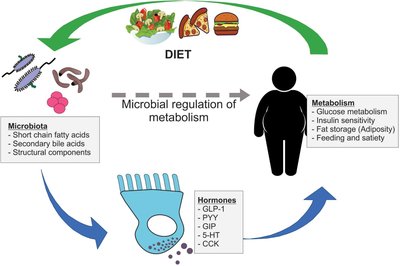
Microbiome and Digestion
The gut microbiome plays a crucial role in digestion and metabolism. Microbial regulation affects hormone release, nutrient absorption, and overall health.
Microbiota: Produce short-chain fatty acids, secondary bile acids, and influence hormone secretion.
Metabolic Effects: Impact glucose metabolism, fat storage, and satiety.
Summary Table: Key Digestive Enzymes
Enzyme | Substrate | Product | Where Produced | Where Active |
|---|---|---|---|---|
Amylase | Polysaccharides | Disaccharides | Pancreas, Salivary glands | Small intestine, Oral cavity |
Lactase | Lactose | Galactose + Glucose | Brush border of small intestine | Small intestine |
Lipase | Triglycerides | Monoglycerides + Free Fatty Acids | Pancreas, Tongue, Stomach | Small intestine, Oral cavity, Stomach |
Pepsin | Proteins, Peptides | Smaller Peptides | Stomach (chief cells) | Stomach |
Trypsin | Proteins, Peptides | Smaller Peptides | Pancreas | Small intestine |
Additional info:
Digestive enzyme activity is highly dependent on environmental conditions such as pH and temperature.
Transport mechanisms for absorption include simple diffusion, facilitated diffusion, active transport, and exocytosis.
The gut microbiome is an emerging area of research with implications for health and disease.
