 Indietro
Chapter 24
Guida di studio - Note intelligenti
 Appunti personalizzati basati sui tuoi materiali, ampliati con definizioni chiave, esempi e contesto.
Nutrition, Metabolism, and Energy Balance
Introduction
This chapter explores the essential nutrients required for human health, the metabolic pathways that convert these nutrients into energy, and the mechanisms that regulate energy balance and body temperature. Understanding these processes is fundamental for students of Anatomy & Physiology, as they underpin cellular function, tissue maintenance, and overall homeostasis.
Part 1 – Nutrients
Macronutrients and Micronutrients
Nutrients are substances in food necessary for growth, maintenance, and repair. They are classified into five categories:
Macronutrients: Carbohydrates, lipids, and proteins (major dietary components)
Micronutrients: Vitamins and minerals (required in smaller amounts but equally essential)
Water: Also essential, making up a significant portion of food volume
Essential nutrients must be obtained from the diet because the body cannot synthesize them in sufficient quantities. The energy value of nutrients is measured in kilocalories (kcal):
Carbohydrates and proteins: 4 kcal/g
Lipids: 9 kcal/g
Dietary guidelines (e.g., USDA's MyPlate) emphasize balanced intake from fruits, vegetables, grains, protein, and dairy, while limiting excess calories and processed foods.
Carbohydrates
Dietary Sources
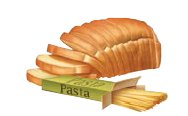
Primarily from plants (grains, vegetables, fruits)
Simple sugars (mono- and disaccharides): fruits, honey, milk
Starch (polysaccharide): grains, vegetables
Fiber: Insoluble (cellulose) for digestive health; soluble (pectin) for cholesterol reduction
Uses in the Body
Glucose is the primary fuel for ATP production, especially for neurons and red blood cells
Excess glucose is stored as glycogen or converted to fat
Other roles: building nucleic acids and cell surface molecules
Dietary Requirements
Recommended: 45–65% of total calories, mainly from complex carbohydrates
Excess refined sugars can lead to obesity and nutritional deficiencies
Lipids
Dietary Sources
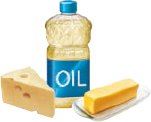
Triglycerides: saturated (animal fats), unsaturated (plant oils), trans fats (processed foods)
Cholesterol: animal products
Essential fatty acids: linoleic (omega-6) and linolenic (omega-3) acids
Uses in the Body
Energy storage, insulation, and protection (adipose tissue)
Structural components: phospholipids (cell membranes, myelin), cholesterol (membranes, hormones)
Prostaglandins: regulatory molecules
Absorption of fat-soluble vitamins
Dietary Requirements
Fats: 20–35% of total calories; limit saturated fats to <10%
Cholesterol: body can synthesize as needed; dietary intake should be minimized in those at risk for cardiovascular disease
Proteins
Dietary Sources
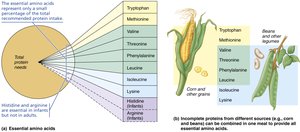
Complete proteins: animal products, soybeans (contain all essential amino acids)
Incomplete proteins: legumes, nuts, grains (lacking one or more essential amino acids)
Combining different plant sources can provide all essential amino acids
Uses in the Body
Structural: keratin, collagen, elastin, muscle proteins
Functional: enzymes, hormones
Protein synthesis depends on availability of all amino acids, adequate caloric intake, and hormonal regulation
Nitrogen Balance
Positive: synthesis > breakdown (growth, pregnancy, repair)
Negative: breakdown > synthesis (stress, starvation, illness)
Dietary Requirements
0.8 g protein per kg body weight per day (varies with age, size, metabolic rate)
Vitamins
Vitamins are organic compounds required in small amounts, mainly as coenzymes. Most must be ingested, except:
Vitamin D (synthesized in skin)
Vitamins B and K (produced by intestinal bacteria)
Provitamins (e.g., beta-carotene) can be converted to active vitamins
Types:
Water-soluble: B complex, C (not stored, excess excreted)
Fat-soluble: A, D, E, K (stored in body, excess can be toxic)
Some vitamins (A, C, E, selenium) act as antioxidants, neutralizing free radicals.
Minerals
Minerals are inorganic elements required for various physiological functions:
Major minerals: calcium, phosphorus, potassium, sulfur, sodium, chlorine, magnesium
Trace minerals: iron, iodine, etc.
Roles: bone and teeth structure, electrolyte balance, oxygen transport (iron in hemoglobin), hormone synthesis (iodine in thyroid hormones)
Balance of intake and excretion is crucial to prevent toxicity.
Part 2 – Metabolism
Overview of Metabolism
Metabolism is the sum of all biochemical reactions in the body, divided into:
Anabolism: Building larger molecules from smaller ones (e.g., protein synthesis)
Catabolism: Breaking down complex molecules into simpler ones (e.g., glycolysis)
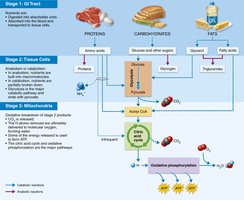
Three stages of nutrient processing:
Digestion and absorption (GI tract)
Anabolism and catabolism in tissue cells (cytoplasm)
Oxidative breakdown in mitochondria (producing ATP)
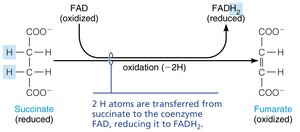
Redox Reactions and Coenzymes
Oxidation-reduction (redox) reactions are central to energy transfer:
Oxidation: Loss of electrons (often as hydrogen atoms)
Reduction: Gain of electrons
Enzymes: dehydrogenases (remove H), oxidases (transfer O)
Coenzymes: NAD+ (nicotinamide adenine dinucleotide), FAD (flavin adenine dinucleotide) accept electrons and become reduced
ATP Synthesis Mechanisms
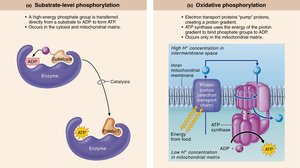
Substrate-level phosphorylation: Direct transfer of phosphate to ADP (in glycolysis and Krebs cycle)
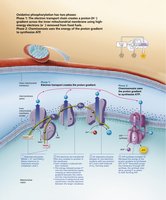
Oxidative phosphorylation: Indirect, via electron transport chain and chemiosmosis in mitochondria (produces most ATP)
Carbohydrate Metabolism
Cellular Respiration
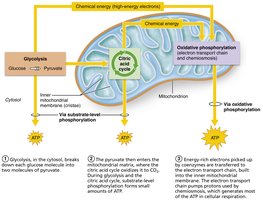
Glucose is catabolized in three main pathways:
Glycolysis (cytosol)
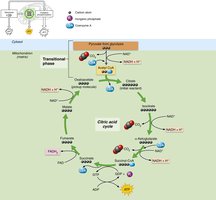
Citric Acid Cycle (Krebs cycle, mitochondrial matrix)
Oxidative Phosphorylation (inner mitochondrial membrane)
Glycolysis
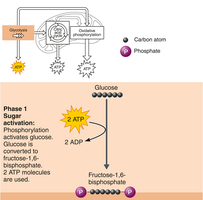
Occurs in the cytosol, converting one glucose to two pyruvate molecules in three phases:
Phase 1: Sugar activation (phosphorylation of glucose)
Phase 2: Sugar cleavage (splitting into two 3-carbon fragments)
Phase 3: Sugar oxidation and ATP formation (production of ATP and NADH)
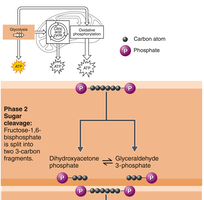
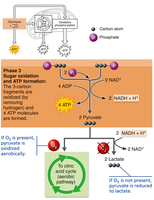
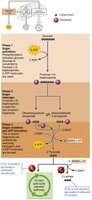
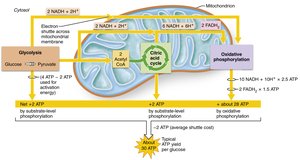
Net products per glucose: 2 pyruvate, 2 ATP (net), 2 NADH. If oxygen is insufficient, pyruvate is converted to lactate.
Krebs (Citric Acid) Cycle
Occurs in the mitochondrial matrix. Pyruvate is converted to acetyl CoA, which enters the cycle. Each turn produces:
2 CO2
3 NADH, 1 FADH2
1 ATP (via substrate-level phosphorylation)
Electron Transport Chain (ETC) and Oxidative Phosphorylation
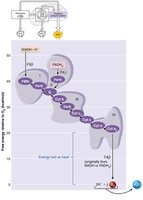
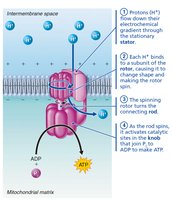
ETC uses reduced coenzymes (NADH, FADH2) to transfer electrons through a series of proteins, creating a proton gradient that drives ATP synthesis via ATP synthase (chemiosmosis). Oxygen is the final electron acceptor, forming water.
ATP Yield
Complete oxidation of one glucose molecule yields about 30–32 ATP:
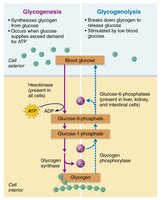
Glycogenesis, Glycogenolysis, and Gluconeogenesis
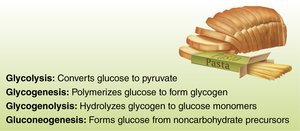
Glycogenesis: Synthesis of glycogen from glucose (storage form in liver and muscle)
Glycogenolysis: Breakdown of glycogen to release glucose
Gluconeogenesis: Formation of glucose from noncarbohydrate sources (e.g., amino acids, glycerol)
Lipid Metabolism
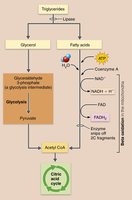
Oxidation of Glycerol and Fatty Acids
Triglycerides are hydrolyzed to glycerol and fatty acids
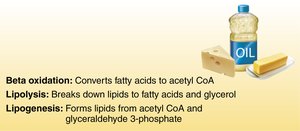
Glycerol enters glycolysis; fatty acids undergo beta oxidation to form acetyl CoA
Lipogenesis and Lipolysis
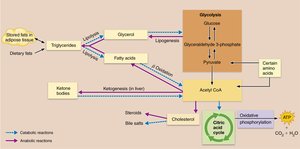
Lipogenesis: Formation of triglycerides from excess acetyl CoA and glycerol
Lipolysis: Breakdown of triglycerides to fatty acids and glycerol
Excess acetyl CoA (when carbohydrate intermediates are low) leads to ketone body formation (ketogenesis)
Protein and Amino Acid Metabolism
Degradation of Amino Acids
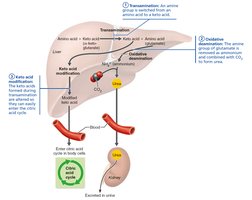
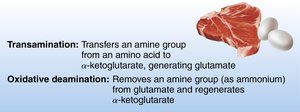
Transamination: Transfer of amine group to alpha-ketoglutarate, forming glutamate
Oxidative deamination: Removal of amine group as ammonia (converted to urea in liver)
Keto acid modification: Conversion of keto acids to metabolites that enter the citric acid cycle
Protein Synthesis
Amino acids are used to build structural and functional proteins
Nonessential amino acids can be synthesized from keto acids
Excess amino acids are not stored but converted to energy or fat
Catabolic-Anabolic Balance and Nutrient Pools
Body maintains a dynamic balance between breakdown and synthesis of organic molecules
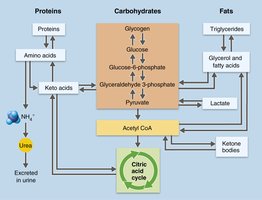
Nutrient pools (amino acids, carbohydrates, fats) are interconvertible
Liver, adipose tissue, and skeletal muscle are key regulators
Part 3 – Energy Balance and Regulation
Fed (Absorptive) State
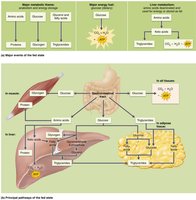
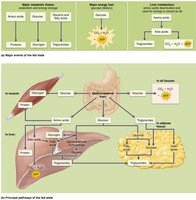
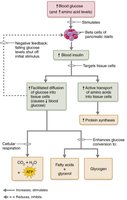
Occurs during and shortly after eating. Anabolism exceeds catabolism; nutrients are stored. Insulin is the main regulatory hormone, promoting glucose uptake, glycogen and fat synthesis, and protein synthesis.
Fasting (Postabsorptive) State
Occurs when the GI tract is empty. Catabolism of glycogen, fat, and protein provides energy. Glucagon and sympathetic nervous system activity are the main regulators, promoting glycogenolysis, gluconeogenesis, and lipolysis to maintain blood glucose.
Liver Functions in Metabolism
Processes nutrients, regulates blood cholesterol, synthesizes plasma proteins, detoxifies substances
Key organ in interconversion of nutrients and metabolic homeostasis
Cholesterol Metabolism and Lipoproteins
Cholesterol is essential for membranes, hormones, and vitamin D
Lipoproteins transport cholesterol and triglycerides in blood:
VLDL: liver to tissues (triglycerides)
LDL: cholesterol to tissues ("bad cholesterol")
HDL: cholesterol from tissues to liver ("good cholesterol")
Chylomicrons: dietary lipids from intestine
Energy Balance and Body Temperature Regulation
Energy Balance
Energy intake (food) must equal energy output (work, heat, storage) for weight stability
Excess intake leads to weight gain; deficit leads to weight loss
Regulation of Food Intake
Short-term signals: neural (GI tract distension), nutrient levels, gut hormones (insulin, CCK, ghrelin)
Long-term signals: leptin (from adipose tissue) reflects energy stores
Hypothalamic centers integrate signals to regulate hunger and satiety
Basal Metabolic Rate (BMR) and Total Metabolic Rate (TMR)
BMR: Energy needed for basic body functions at rest
TMR: Total energy expenditure, including activity and thermogenesis
Influenced by age, sex, body composition, temperature, stress, and thyroid hormone (thyroxine)
Body Temperature Regulation
Core temperature is tightly regulated by the hypothalamus
Heat is exchanged via radiation, conduction, convection, and evaporation
Heat-promoting mechanisms: vasoconstriction, shivering, increased metabolism
Heat-loss mechanisms: vasodilation, sweating
Clinical Correlations and Developmental Aspects
Disorders: diabetes mellitus, metabolic syndrome, phenylketonuria, galactosemia, glycogen storage diseases
Obesity: BMI > 30, associated with increased risk of chronic diseases
Nutrition is critical throughout life, especially during growth and aging
Summary Table: Key Metabolic Pathways
Pathway | Function |
|---|---|
Glycolysis | Converts glucose to pyruvate, producing ATP and NADH |
Krebs Cycle | Oxidizes acetyl CoA, producing CO2, NADH, FADH2, and ATP |
Electron Transport Chain | Uses NADH/FADH2 to generate ATP via oxidative phosphorylation |
Glycogenesis | Stores excess glucose as glycogen |
Glycogenolysis | Releases glucose from glycogen stores |
Gluconeogenesis | Forms glucose from noncarbohydrate sources |
Lipogenesis | Forms triglycerides from acetyl CoA and glycerol |
Lipolysis | Breaks down triglycerides to fatty acids and glycerol |
Beta Oxidation | Converts fatty acids to acetyl CoA |
Transamination/Oxidative Deamination | Removes amine groups from amino acids for energy use |
Additional info: This summary integrates and expands upon the provided lecture and textbook content, ensuring a comprehensive, exam-ready overview of human nutrition, metabolism, and energy balance for Anatomy & Physiology students.
