 Indietro
Chapter 24: Nutrition, Metabolism, and Energy Balance – Study Notes
Guida di studio - Note intelligenti
 Appunti personalizzati basati sui tuoi materiali, ampliati con definizioni chiave, esempi e contesto.
Nutrition and Metabolism
Body Weight Regulation
Body weight is maintained through a balance between energy intake and energy output, governed by homeostatic mechanisms. Heredity accounts for 30-50% of individual variation, while lifestyle factors such as diet and exercise contribute to the rest.
Homeostatic Set Point: The body tends to maintain a stable weight unless disrupted by significant changes in intake or activity.
Heredity: Genetic factors influence metabolism and fat storage.
Behavior: Eating habits and physical activity are major determinants of weight.
Calories and Energy Content
Calories measure the energy content of food. One calorie is the amount of heat required to raise the temperature of 1 gram of water by 1°C. Food energy is typically measured in kilocalories (kcal).
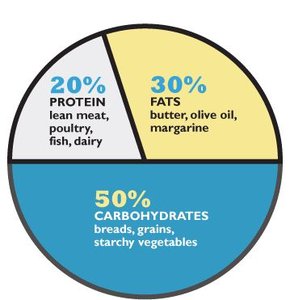
Fats: 9 kcal/g
Carbohydrates: 4 kcal/g
Proteins: 4 kcal/g
Nutrients
Nutrients are substances required for growth, repair, and maintenance of the body. They are classified as macronutrients and micronutrients.
Macronutrients: Needed in large amounts (carbohydrates, fats, proteins).
Micronutrients: Needed in small amounts (minerals, vitamins).
Essential Nutrients: Cannot be synthesized by the body and must be obtained from the diet (certain amino acids, fatty acids, minerals, vitamins).

Recommended Daily Allowances (RDA)
RDA provides safe estimates of daily intake for nutrients to meet standard needs.
Carbohydrates
Structure and Function
Carbohydrates, also known as saccharides, are organic compounds with the formula (CH2O). They serve as the primary energy source for the body.
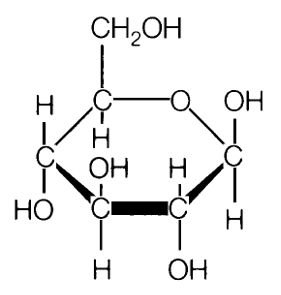
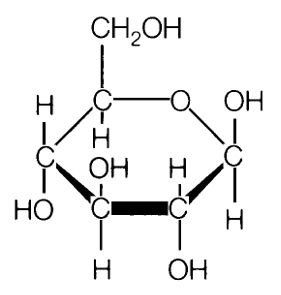
Blood Glucose: The main form of carbohydrate in the blood (C6H12O6).
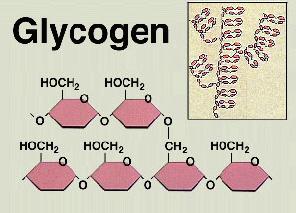
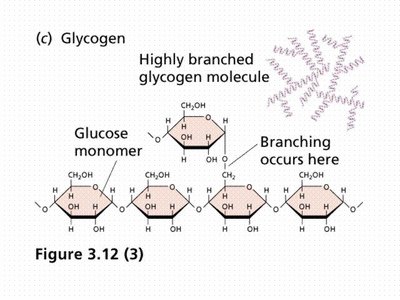
Glycogen: A polymer of glucose used for energy storage in liver and muscle.
Regulation: Blood glucose is regulated by insulin and glucagon.
Dietary Sources and RDA
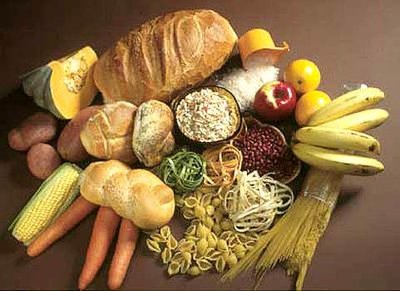
Most dietary carbohydrates are derived from plants. The RDA for carbohydrates is higher than for any other nutrient due to their rapid metabolism.
Sources: Grains, legumes, fruits, root vegetables.
Types: Sucrose (table sugar), fructose (fruits, corn syrup), maltose (cereal), lactose (milk).
Recommendation: Intake should focus on complex carbohydrates rather than simple sugars.
Carbohydrate Metabolism
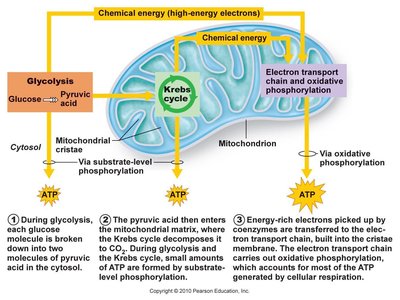
Dietary carbohydrates are metabolized quickly, providing fuel for cellular activities. The process involves the transfer of energy from glucose to ATP.
Equation:
Cellular Respiration: Involves glycolysis, Krebs cycle, and electron transport chain.
Glycogenesis, Glycogenolysis, and Gluconeogenesis
These processes regulate glucose storage and production.
Glycogenesis: Synthesis of glycogen from glucose, stimulated by insulin.
Glycogenolysis: Breakdown of glycogen to glucose, stimulated by glucagon.
Gluconeogenesis: Synthesis of glucose from non-carbohydrate sources when glycogen stores are depleted.
Dietary Fiber
Dietary fiber is a fibrous material that resists digestion and is important for gastrointestinal health.
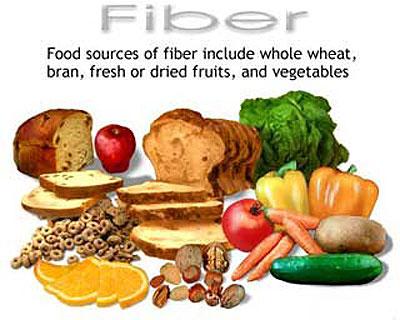
Sources: Oats, beans, peas, carrots, brown rice, fruits.
Functions: Absorbs water, softens stool, increases bulk, stimulates peristalsis, decreases blood cholesterol.
RDA: 30 g/day
Lipids
Types and Functions
Lipids include fats, phospholipids, and steroids. They are the body's main energy storage form and serve diverse functions.
Energy Storage: Lipids are hydrophobic and provide compact energy storage.
Protein Sparing: Fat is catabolized before protein.
Fat-Soluble Vitamins: Vitamins A, D, E, K are absorbed with dietary fat.
Structural Role: Phospholipids and cholesterol are components of plasma membranes.
Chemical Precursors: Cholesterol is a precursor for steroids, bile salts, and vitamin D.
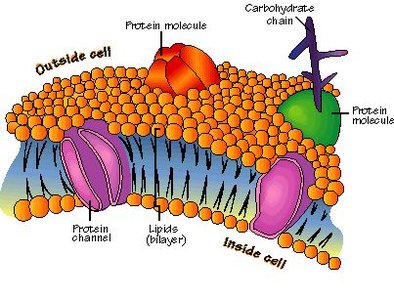
Fat Requirements and Sources
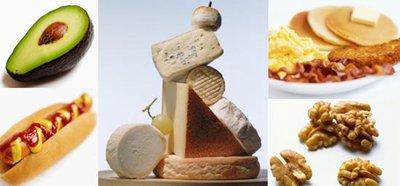
Most fatty acids are synthesized by the body, but essential fatty acids must be consumed.
Saturated Fats: Animal origin (meat, egg yolks, dairy).
Unsaturated Fats: Plant origin (nuts, seeds, vegetable oils).
Cholesterol: Found in egg yolks, cream, shellfish, organ meats.
Recommendation: Less than 30% of daily calorie intake should come from fat.
Lipid Metabolism: Lipolysis and Lipogenesis
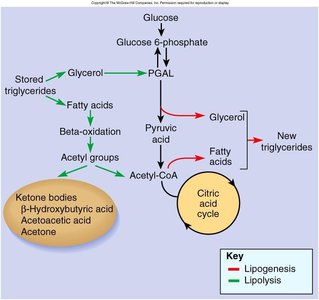
Triglycerides are stored in adipocytes. Lipolysis is the breakdown of fat for fuel, while lipogenesis is the synthesis of fat from other sources.
Lipolysis: Glycerol enters glycolysis; fatty acids are broken down for energy.
Lipogenesis: Amino acids and sugars are used to make fatty acids and glycerol.
Ketosis
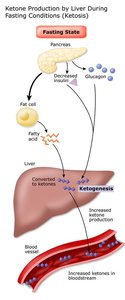
Ketosis occurs when fat is broken down for energy in the absence of sufficient glucose, leading to the production of ketone bodies.
Ketone Bodies: β-hydroxybutyric acid, acetoacetic acid, acetone.
Clinical Relevance: Common in diabetics and during fasting.
Serum Lipoproteins
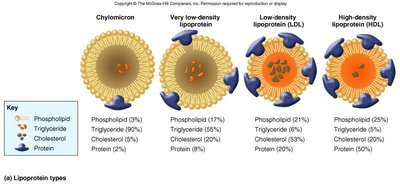
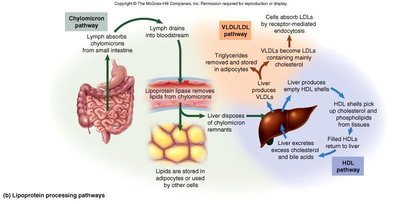
Lipids are transported in the blood as lipoproteins, which are categorized by density.
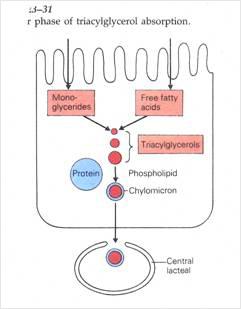
Chylomicrons: Formed in the small intestine, transport dietary fats.
VLDL: Produced by the liver, transport lipids to adipose tissue.
LDL: Deliver cholesterol to cells for membrane repair or steroid synthesis.
HDL: Remove cholesterol from arteries and deliver it to the liver for elimination.
Desirable Lipoprotein Levels
High HDL and low LDL levels are desirable for cardiovascular health.
Total Cholesterol: Should be maintained below 200 mg/dL.
Recommendations: Exercise regularly, avoid smoking, saturated fats, coffee, and stress.
Proteins
Structure and Functions
Proteins make up 12-15% of body mass, primarily in skeletal muscle. They serve structural, functional, and regulatory roles.
Functions: Muscle contraction, cell membranes, fibrous proteins (collagen, keratin), globular proteins (antibodies, enzymes), plasma proteins (osmolarity, viscosity).
Protein Requirements and Sources
The RDA for protein is 44-60 g/day. Nutritional value depends on the proportions of amino acids.
Essential Amino Acids: 8 cannot be synthesized and must be obtained from the diet.
Complete Proteins: Animal sources (meat, eggs, dairy) supply all essential amino acids.
Plant Proteins: Must be combined for completeness (e.g., beans and rice).
Protein Metabolism
Amino acids are used to synthesize new proteins. For use as fuel, they must be deaminated, producing ammonia, which is converted to urea by the liver and excreted in urine.
Minerals
Functions and Sources
Minerals are inorganic elements essential for various physiological functions.
Calcium and Phosphorus: Bones and teeth.
Phosphorus: Phospholipids, ATP, nucleic acids.
Iron: Hemoglobin and myoglobin.
Chlorine: Component of stomach acid (HCl).
Electrolytes: Govern nerve and muscle cell function.
Vitamins
Classification and Functions
Vitamins are organic compounds required in small amounts for normal metabolism.
Water-Soluble Vitamins: C, B complex; absorbed with water.
Fat-Soluble Vitamins: A, D, E, K; absorbed with dietary lipids.
Synthesis: Some vitamins are synthesized from precursors in the body.
Appetite Regulation
Hormonal Control
Appetite is regulated by several hormones that signal hunger and satiety.
Leptin: Secreted by adipocytes; decreases appetite.
Ghrelin: Produced by stomach; stimulates hunger.
Peptide YY (PYY): Secreted by ileum; induces satiety.
Insulin: Secreted by pancreatic beta cells; weakly decreases appetite.
Obesity and Appetite Regulation
Obesity is often associated with leptin receptor defects, making the body unresponsive to leptin despite high levels. Ghrelin is a key hormone in hunger regulation, and manipulating its activity may help treat obesity.
Obesity and Body Mass Index (BMI)
Definition and Calculation
Obesity is defined as being 20% above the recommended norm for age, sex, and weight. BMI is used to assess body weight relative to height.
BMI Formula:
BMI Ranges: 20-25 optimal, >25 overweight, >30 obese.
Absorptive and Postabsorptive States
Absorptive State
Occurs during and after a meal, lasting about 4 hours. Nutrients are absorbed and used for energy.
Carbohydrates: Glucose used for ATP synthesis; excess stored as glycogen or fat.
Fats: Taken up by fat cells.
Amino Acids: Used for protein synthesis.
Regulation: Insulin increases cellular uptake of glucose and stimulates glycolysis, glycogenesis, lipogenesis, and protein synthesis.
Postabsorptive State
Occurs between meals when the stomach and small intestine are empty. Stored fuels are used to maintain blood glucose.
Carbohydrates: Glucose from glycogen reserves or synthesized from other compounds.
Fat: Glucose from adipocytes.
Protein: Used as fuel when glycogen and fat reserves are depleted.
Regulation: Glucagon stimulates glycogenolysis and gluconeogenesis to raise glucose levels.
Metabolic Rate
Definition and Factors
Metabolic rate is the amount of energy used by the body in a given period (kcal/hr or kcal/day). Basal metabolic rate (BMR) is measured under relaxed, awake, fasting conditions at comfortable temperature.
Adult Male BMR: 2000 kcal/day (slightly less for females).
Factors Affecting MR: Size, gender, age, pregnancy, anxiety, fever, eating, thyroid hormones, depression, exercise, muscle/fat mass, activity level, body temperature.
