 Indietro
Chapter 3: Cells – The Living Units (Anatomy & Physiology Study Notes)
Guida di studio - Note intelligenti
 Appunti personalizzati basati sui tuoi materiali, ampliati con definizioni chiave, esempi e contesto.
Cells: The Smallest Living Units
Introduction to Cells
Cells are the fundamental structural and functional units of all living organisms. They carry out essential life processes and are the smallest units capable of independent existence. Understanding cell structure and function is foundational to the study of anatomy and physiology.
Cell Theory: All living things are composed of cells; cells are the basic units of life; new cells arise from pre-existing cells.
Types of Cells: Eukaryotic (with nucleus and organelles) and prokaryotic (without nucleus).
Cellular Diversity: Cells vary in size, shape, and function, reflecting their specialized roles in the body.
Generalized Cell Structure
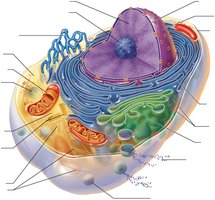
The generalized cell consists of three main parts: the plasma membrane, cytoplasm, and nucleus. Each component plays a distinct role in cellular function.
Plasma Membrane: Surrounds the cell, controlling entry and exit of substances.
Cytoplasm: Contains organelles and cytosol, where metabolic reactions occur.
Nucleus: Houses genetic material and directs cellular activities.
The Plasma Membrane
Structure of the Plasma Membrane
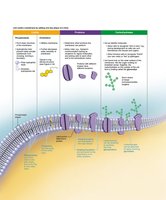
The plasma membrane is a selectively permeable barrier composed primarily of lipids and proteins. It maintains cellular integrity and mediates communication with the environment.
Phospholipid Bilayer: Provides fluidity and forms the basic structure.
Membrane Proteins: Integral and peripheral proteins perform various functions.
Glycocalyx: Carbohydrate-rich area for cell recognition and protection.
Membrane Lipids
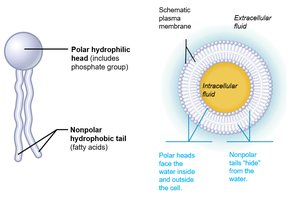
Phospholipids are amphipathic molecules with hydrophilic heads and hydrophobic tails, forming a bilayer that separates intracellular and extracellular environments.
Cholesterol: Stabilizes membrane fluidity.
Glycolipids: Contribute to cell recognition.
Membrane Proteins
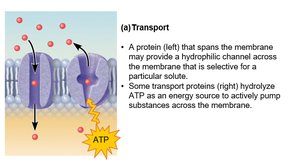
Membrane proteins are essential for transport, communication, and structural support. They are classified by their functions:
Transport: Channels and carriers move substances across the membrane.
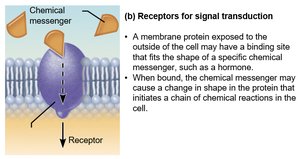
Receptors: Bind signaling molecules and initiate cellular responses.
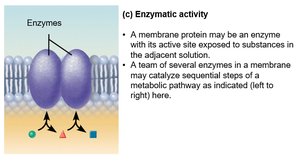
Enzymatic Activity: Catalyze reactions at the membrane surface.
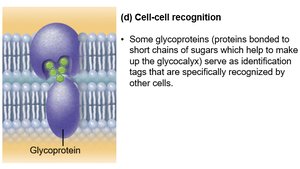
Cell-Cell Recognition: Glycoproteins serve as identification tags.
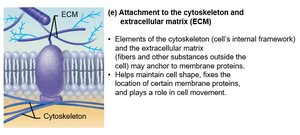
Attachment: Anchor the cell to the cytoskeleton and extracellular matrix.
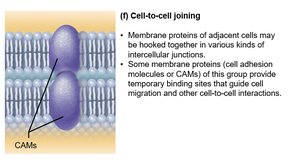
Cell Joining: Form junctions between adjacent cells.
Cell Junctions
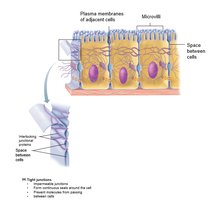
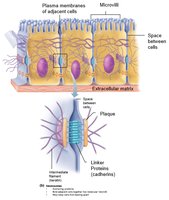
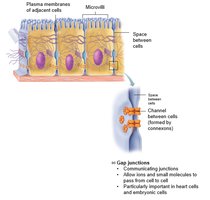
Cell junctions are specialized structures that connect adjacent cells, providing communication and structural integrity. The main types are:
Tight Junctions: Prevent passage of substances between cells.
Desmosomes: Provide mechanical strength by anchoring cells together.
Gap Junctions: Allow ions and small molecules to pass directly between cells.
Membrane Transport
Passive Membrane Transport
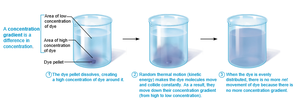
Passive transport involves the movement of substances across the membrane without energy input, driven by concentration gradients.
Diffusion: Movement of molecules from high to low concentration.
Facilitated Diffusion: Uses carrier or channel proteins for transport of specific molecules.
Osmosis: Diffusion of water across a selectively permeable membrane.
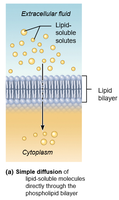
Simple Diffusion
Lipid-soluble molecules pass directly through the phospholipid bilayer.
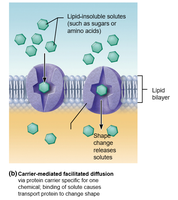
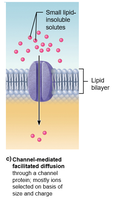
Facilitated Diffusion
Carrier-mediated and channel-mediated facilitated diffusion allow transport of lipid-insoluble molecules and ions.
Osmosis
Osmosis is the movement of water through a membrane, often via aquaporins, from areas of low solute concentration to high solute concentration.
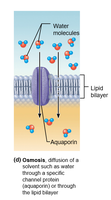
Osmosis and Pressure
Hydrostatic and Osmotic Pressure
Hydrostatic pressure is the force exerted by a fluid against a membrane, while osmotic pressure is the tendency of water to move into a solution due to its solute concentration. When these pressures are equal, no net movement of water occurs.
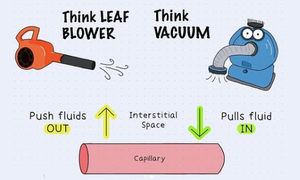
Cytoplasm and Organelles
Cytoplasmic Organelles
Organelles are specialized structures within the cytoplasm that perform distinct functions necessary for cell survival.
Mitochondria: Powerhouse of the cell, site of ATP production.
Endoplasmic Reticulum (ER): Rough ER synthesizes proteins; smooth ER synthesizes lipids and detoxifies chemicals.
Golgi Apparatus: Modifies, sorts, and packages proteins and lipids for secretion or use within the cell.
Peroxisomes: Detoxify harmful substances.
Lysosomes: Digest cellular waste and foreign materials.
Ribosomes: Sites of protein synthesis.
Cytoskeleton and Cellular Extensions
Cytoskeleton
The cytoskeleton is a network of protein filaments that provides structural support, facilitates movement, and organizes cellular contents.
Microfilaments: Composed of actin, involved in cell movement and shape.
Intermediate Filaments: Provide mechanical strength.
Microtubules: Maintain cell shape and are involved in intracellular transport.
Cellular Extensions
Cells may possess extensions such as cilia and flagella for movement, and microvilli for increased surface area.
The Nucleus
Nucleus Structure and Function
The nucleus is the control center of the cell, containing DNA and directing cellular activities through gene expression.
Nuclear Envelope: Double membrane surrounding the nucleus.
Nucleolus: Site of ribosome synthesis.
Chromatin: DNA and associated proteins.
Key Takeaways
Cells are the basic units of life, with specialized structures and functions.
The plasma membrane regulates transport and communication.
Organelles perform essential cellular processes.
Cell junctions and the cytoskeleton maintain tissue integrity and function.
