 Indietro
Chapter 3: Cells – The Living Units (Anatomy & Physiology Study Notes)
Guida di studio - Note intelligenti
 Appunti personalizzati basati sui tuoi materiali, ampliati con definizioni chiave, esempi e contesto.
Cells: The Living Units
Introduction to Cells
Cells are the fundamental structural and functional units of all living organisms. They carry out essential life processes and are the smallest units considered alive. Understanding cell structure and function is foundational to anatomy and physiology.
Cell Theory: All living things are composed of cells; cells are the basic unit of life; new cells arise from pre-existing cells.
Types of Cells: Human body contains many specialized cell types, each adapted for specific functions.
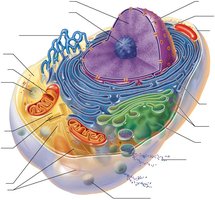
Generalized Cell Structure: Most cells share common structural features, including a plasma membrane, cytoplasm, and nucleus.
Structure of the Plasma Membrane
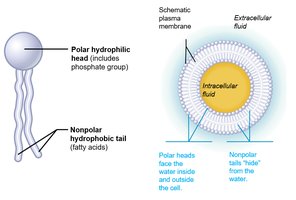
The plasma membrane is a selectively permeable barrier that surrounds the cell, controlling the movement of substances in and out. It is composed primarily of lipids, proteins, and carbohydrates.
Phospholipid Bilayer: The basic structure consists of two layers of phospholipids with hydrophilic heads facing outward and hydrophobic tails inward.
Membrane Proteins: Integral and peripheral proteins perform various functions, including transport, signaling, and cell recognition.
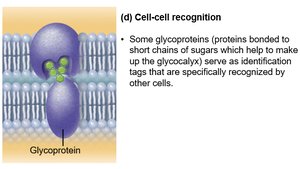
Glycocalyx: A carbohydrate-rich area on the cell surface important for cell recognition and protection.
Membrane Proteins and Their Functions
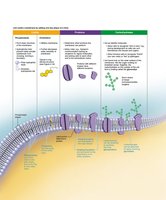
Membrane proteins are essential for the diverse functions of the plasma membrane. They are classified based on their roles:
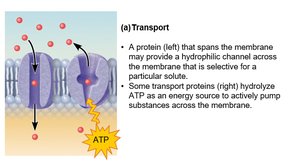
Transport: Proteins form channels or pumps to move substances across the membrane.
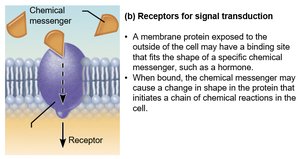
Receptors: Proteins bind signaling molecules and initiate cellular responses.
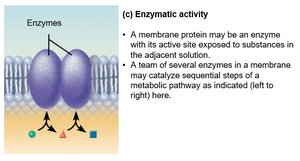
Enzymatic Activity: Proteins catalyze reactions at the membrane surface.
Cell-Cell Recognition: Glycoproteins serve as identification tags for cell recognition.
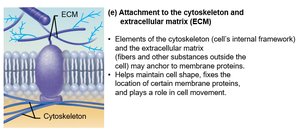
Attachment: Proteins anchor the membrane to the cytoskeleton and extracellular matrix.
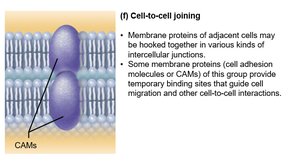
Cell-to-Cell Joining: Proteins form junctions between adjacent cells.
Cell Junctions
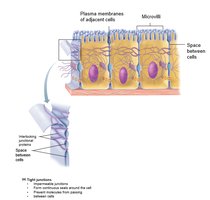
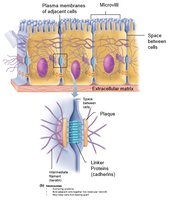
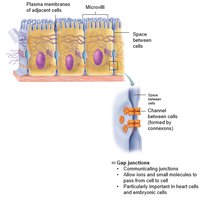
Cell junctions are specialized structures that connect adjacent cells, providing structural integrity and facilitating communication.
Tight Junctions: Prevent passage of substances between cells.
Desmosomes: Provide mechanical strength by anchoring cells together.
Gap Junctions: Allow direct communication between cells via channels.
Membrane Transport
Passive Membrane Transport
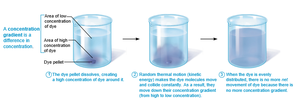
Passive transport involves the movement of substances across the membrane without energy input, driven by concentration gradients.
Diffusion: Movement of molecules from high to low concentration.
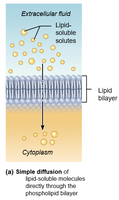
Simple Diffusion: Direct movement of lipid-soluble molecules through the bilayer.
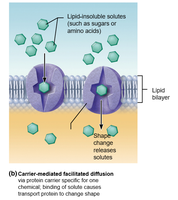
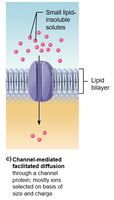
Facilitated Diffusion: Movement of lipid-insoluble molecules via carrier or channel proteins.
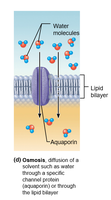
Osmosis: Diffusion of water across a selectively permeable membrane.
Osmosis and Membrane Permeability
Osmosis is influenced by membrane permeability to solutes and water. The movement of water is determined by osmolarity differences and can result in changes in cell volume.
Freely Permeable Membrane: Both solute and water move until equilibrium is reached.
Selectively Permeable Membrane: Only water moves, leading to volume changes.
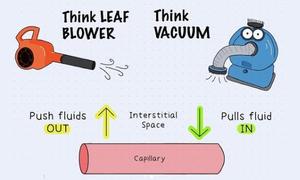
Hydrostatic Pressure: Balances osmotic pressure, preventing further net movement of water.
Active Membrane Transport
Active Transport
Active transport requires energy (usually ATP) to move substances against their concentration gradients. It is essential for maintaining cellular homeostasis.
Primary Active Transport: Direct use of ATP to transport molecules.
Secondary Active Transport: Uses energy from gradients established by primary transport.
Vesicular Transport
Vesicular transport involves the movement of large particles, macromolecules, and fluids across the membrane via vesicles. Types include endocytosis and exocytosis.
Endocytosis: Cell takes in materials by engulfing them in vesicles.
Exocytosis: Cell expels materials by fusing vesicles with the plasma membrane.
Cytoplasm and Organelles
Cytoplasmic Organelles
Organelles are specialized structures within cells that perform distinct functions necessary for cell survival.
Mitochondria: Powerhouse of the cell, site of ATP production.
Endoplasmic Reticulum (ER): Rough ER synthesizes proteins; smooth ER synthesizes lipids and detoxifies.
Golgi Apparatus: Modifies, sorts, and packages proteins and lipids for secretion or use within the cell.
Peroxisomes: Detoxify harmful substances.
Lysosomes: Digest cellular waste and foreign materials.
Ribosomes: Sites of protein synthesis.
Cytoskeleton and Cellular Extensions
Cytoskeleton
The cytoskeleton is a network of protein filaments that provides structural support, facilitates movement, and organizes cell contents.
Microfilaments: Composed of actin, involved in cell movement and shape.
Intermediate Filaments: Provide mechanical strength.
Microtubules: Maintain cell shape, facilitate intracellular transport, and form centrioles.
Cellular Extensions
Cells may possess extensions such as cilia and flagella for movement, or microvilli for increased surface area.
The Nucleus
Nucleus
The nucleus is the control center of the cell, containing genetic material (DNA) and directing cellular activities.
Nuclear Envelope: Double membrane surrounding the nucleus.
Nucleolus: Site of ribosome synthesis.
Chromatin: DNA and associated proteins.
Key Takeaways
Cells are the basic units of life, with specialized structures and functions.
The plasma membrane regulates transport and communication.
Organelles perform essential cellular processes.
Membrane transport mechanisms are vital for maintaining homeostasis.
