 Indietro
Chapter 4: Tissues – Structure, Function, and Classification
Guida di studio - Note intelligenti
 Appunti personalizzati basati sui tuoi materiali, ampliati con definizioni chiave, esempi e contesto.
Tissues: An Overview
Definition and General Features
Tissues are groups of similar cells that work together to perform a common function. They are supported by an extracellular matrix (ECM), which includes interstitial fluid and various proteins that provide structural and biochemical support.
Four basic tissue types: Epithelial, Connective, Muscle, and Nervous tissue
Extracellular matrix: Non-cellular material found between cells, crucial for tissue integrity and function
Epithelial Tissue
General Characteristics
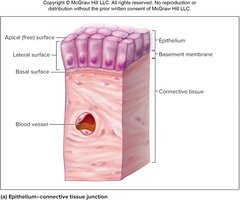
Epithelial tissue covers body surfaces, lines cavities, and forms glands. It is specialized for protection, absorption, filtration, excretion, secretion, and sensory reception.
Polarity: Has an apical (free) surface and a basal surface attached to a basement membrane
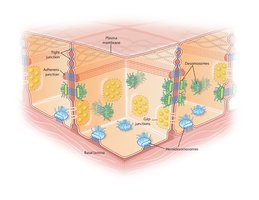
Specialized contacts: Cells are tightly joined by junctions (tight junctions, desmosomes, gap junctions)
Supported by connective tissue: The basement membrane anchors epithelium to underlying tissues
Avascular but innervated: Contains no blood vessels but is supplied by nerve fibers
Regenerative: High capacity for renewal via mitosis
Cell Junctions in Epithelial Tissue
Cell junctions are specialized structures that connect epithelial cells, providing mechanical strength and communication.
Tight junctions: Seal adjacent cells to prevent passage of molecules
Adherens junctions: Connect actin filaments between cells
Desmosomes: Anchor intermediate filaments, providing strong adhesion
Hemidesmosomes: Attach cells to the basement membrane
Gap junctions: Allow passage of ions and small molecules between cells
Classification of Epithelial Tissue
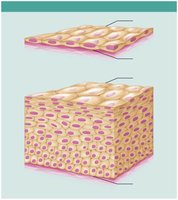
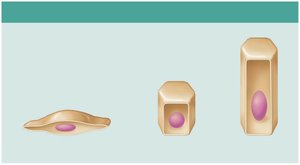
Epithelial tissues are classified based on the number of cell layers and the shape of the cells.
Number of layers:
Simple: One layer of cells
Stratified: Multiple layers of cells
Pseudostratified: Appears layered but all cells touch the basement membrane
Cell shape:
Squamous: Flat and scale-like
Cuboidal: Cube-shaped
Columnar: Tall and column-like
Transitional: Changes shape (found in urinary tract)
Types of Epithelial Tissue
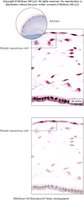
Simple Squamous Epithelium: Allows rapid exchange of substances; found in alveoli and blood vessels (endothelium, mesothelium)
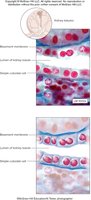
Simple Cuboidal Epithelium: Specialized for absorption and secretion; found in kidney tubules and ducts of exocrine glands
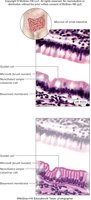
Simple Columnar Epithelium: Absorption and secretion; may be ciliated or nonciliated (e.g., digestive tract)
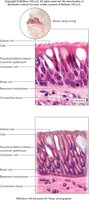
Pseudostratified Columnar Epithelium: Appears layered, often ciliated, secretes and moves mucus; lines respiratory tract
Stratified Squamous Epithelium: Multiple layers for protection; keratinized (skin) or nonkeratinized (esophagus, vagina)
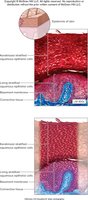
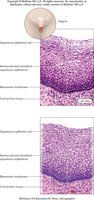
Stratified Cuboidal Epithelium: Protection and secretion; found in ducts of sweat glands
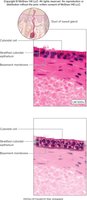
Stratified Columnar Epithelium: Protection and secretion; found in male urethra and salivary ducts
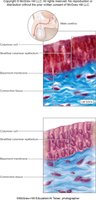
Transitional Epithelium: Stretches to accommodate fluctuation in urinary tract volume
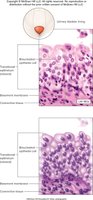
Glandular Epithelium
Glands are specialized epithelial structures that produce and secrete substances. They are classified as endocrine (ductless, secrete hormones into blood) or exocrine (secrete via ducts to surfaces).
Unicellular glands: Goblet and mucus cells
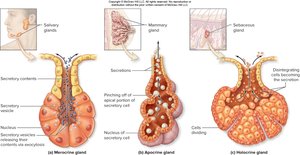
Multicellular glands: Classified by structure (simple/compound, tubular/acinar) and mode of secretion (merocrine, apocrine, holocrine)
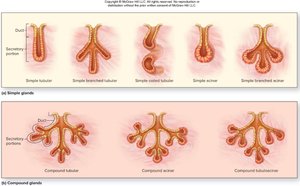
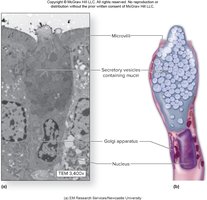
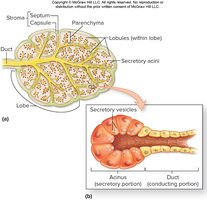
Mode of Secretion | Description | Example |
|---|---|---|
Merocrine | Secretion by exocytosis | Salivary glands |
Apocrine | Apical portion of cell pinches off | Mammary glands |
Holocrine | Entire cell disintegrates | Sebaceous glands |
Connective Tissue
General Characteristics
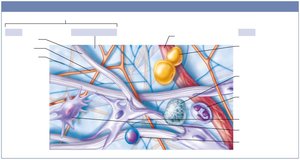
Connective tissue (CT) supports, binds, and protects other tissues and organs. It is characterized by abundant ECM, which consists of fibers and ground substance, and various cell types.
Varying vascularity: From avascular (cartilage) to highly vascular (bone)
Three main components: Cells, fibers, ground substance
Cells of Connective Tissue
Fibroblasts, chondroblasts, osteoblasts: Build ECM
Fibroclasts, osteoclasts: Break down ECM
Cytes: Mature, less active cells (e.g., osteocytes)
Other cells: Immune cells (macrophages, lymphocytes, mast cells, neutrophils), adipocytes
Fibers and Ground Substance
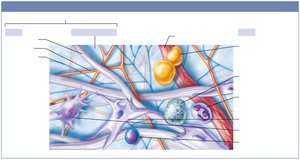
Collagen fibers: Strong, resist tension
Elastic fibers: Stretch and recoil
Reticular fibers: Form supportive networks
Classification of Connective Tissue
Connective tissue is classified into four main types: connective tissue proper, cartilage, bone, and blood.
Connective tissue proper: Loose (areolar, adipose, reticular) and dense (regular, irregular, elastic)
Cartilage: Hyaline, elastic, fibrocartilage (avascular, poor regeneration)
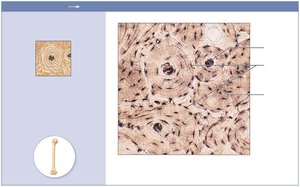
Bone (osseous tissue): Highly vascular, supports and protects, site of hematopoiesis
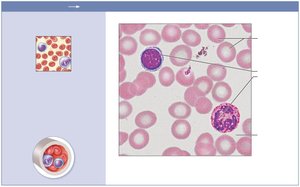
Blood: Fluid matrix (plasma), transports substances
Muscle Tissue
Types and Functions
Muscle tissue is specialized for contraction and movement. There are three types:
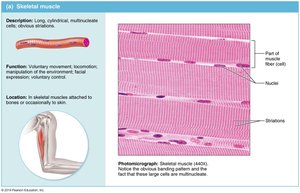
Skeletal muscle: Striated, multinucleate, voluntary; attached to bones, responsible for body movement
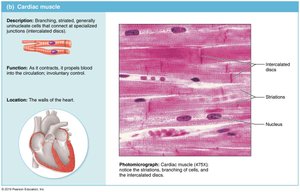
Cardiac muscle: Striated, uninucleate, involuntary; found in heart, contains intercalated discs and gap junctions
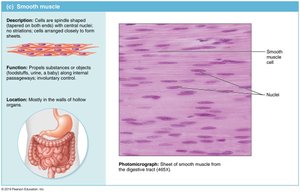
Smooth muscle: Non-striated, uninucleate, involuntary; found in walls of hollow organs (except heart)
Nervous Tissue
Structure and Function
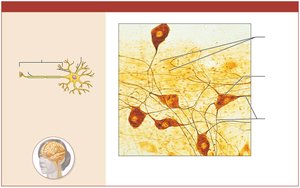
Nervous tissue is specialized for communication via electrical signals. It consists of neurons and supporting cells (neuroglia).
Neurons: Transmit electrical impulses
Neuroglia: Support, protect, and nourish neurons
Body Membranes
Types of Membranes
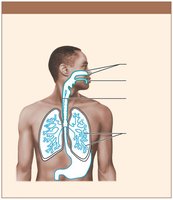
Mucous membranes (mucosae): Line body cavities open to the exterior (e.g., digestive, respiratory tracts)
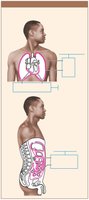
Serous membranes: Line closed body cavities; secrete serous fluid to reduce friction (e.g., pericardium, pleura, peritoneum)
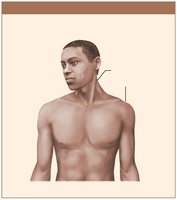
Cutaneous membrane: The skin; covers the body surface
Tissue Repair
Steps in Tissue Repair
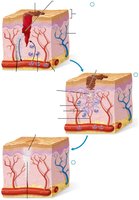
Tissue repair involves a series of steps to restore structure and function after injury:
Inflammation: Sets the stage for repair by bringing immune cells to the site
Organization: Restores blood supply and forms granulation tissue
Regeneration and fibrosis: Permanent repair by replacing damaged tissue with the same tissue (regeneration) or scar tissue (fibrosis)
Additional info: The regenerative capacity of tissues varies: epithelial and connective tissues (except cartilage) regenerate well, muscle tissue regenerates poorly or moderately, and nervous tissue has very limited regenerative ability.
