 Indietro
Chemical Level of Organization: Foundations for Anatomy & Physiology
Guida di studio - Note intelligenti
 Appunti personalizzati basati sui tuoi materiali, ampliati con definizioni chiave, esempi e contesto.
Chemical Level of Organization
Introduction to Chemistry in Anatomy & Physiology
Chemistry forms the basis for understanding physiological processes at the molecular and cellular levels. The structure of atoms, their interactions, and the formation of molecules and compounds are fundamental to the function of living organisms.
Matter: Anything that occupies space and has mass; composed of atoms.
Atoms: The smallest units of matter, join to form chemicals with unique characteristics.
Chemical characteristics: Determine physiological functions at the molecular and cellular levels.
Atomic Structure
Atoms consist of subatomic particles: protons, neutrons, and electrons. Their arrangement defines the atom's properties and behavior.
Protons: Positively charged, 1 mass unit.
Neutrons: Neutral, 1 mass unit.
Electrons: Negatively charged, very low mass.
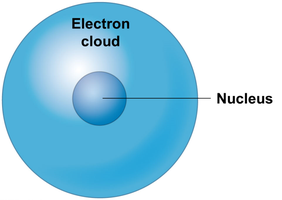
Nucleus: Contains protons and neutrons.
Electron cloud: Spherical area containing electrons; organized into shells or energy levels.
Principal Elements in the Human Body
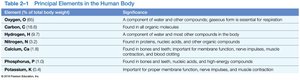
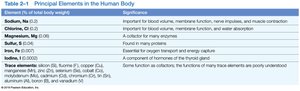
The human body is composed of several key elements, each with specific physiological roles. These elements are classified as major, minor, and trace elements based on their abundance and function.
Element | Significance |
|---|---|
Oxygen (O) | Component of water and other compounds; essential for respiration |
Carbon (C) | Found in all organic molecules |
Hydrogen (H) | Component of water and most other compounds in the body |
Nitrogen (N) | Found in proteins, nucleic acids, and other organic compounds |
Calcium (Ca) | Found in bones and teeth; important for membrane function, nerve impulses, muscle contraction, and blood clotting |
Phosphorus (P) | Found in bones and teeth, nucleic acids, and high-energy compounds |
Potassium (K) | Important for proper membrane function, nerve impulses, and muscle contraction |
Isotopes and Atomic Variants
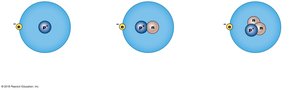
Isotopes are atoms of the same element with different numbers of neutrons, affecting their mass but not their chemical properties. Some isotopes are radioactive (radioisotopes) and decay over time, measured by half-life.
Hydrogen-1: 1 proton, 0 neutrons
Deuterium (Hydrogen-2): 1 proton, 1 neutron
Tritium (Hydrogen-3): 1 proton, 2 neutrons
Electron Shells and Energy Levels
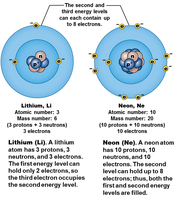
Electrons occupy specific energy levels or shells around the nucleus. The arrangement of electrons determines the atom's reactivity and bonding behavior.
Valence shell: Outermost shell; determines chemical bonding.
Subshells: 1s, 2s, 2p, 3s, 3p, 3d; each holds a specific number of electrons.
Chemical Bonds and Molecules
Ionic Bonds
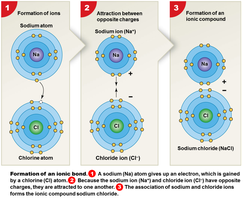
Ionic bonds form when one atom donates electrons to another, resulting in oppositely charged ions (cations and anions) that attract each other.
Cation: Positively charged ion (electron donor).
Anion: Negatively charged ion (electron acceptor).
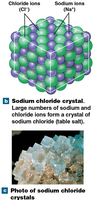
Ionic bond: Attraction between cations and anions.
Covalent Bonds
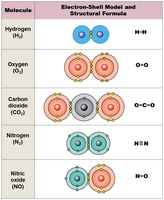
Covalent bonds involve the sharing of electrons between atoms. They can be single, double, or triple bonds depending on the number of shared electron pairs.
Single covalent bond: One pair of electrons shared.
Double covalent bond: Two pairs shared.
Triple covalent bond: Three pairs shared.
Molecule | Electron-Shell Model and Structural Formula |
|---|---|
Hydrogen (H2) | H–H |
Oxygen (O2) | O=O |
Carbon dioxide (CO2) | O=C=O |
Nitrogen (N2) | N≡N |
Nitric oxide (NO) | N=O |
Polar Covalent Bonds and Water
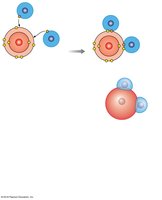
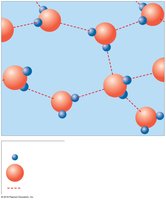
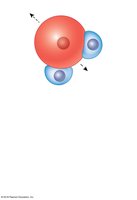
Polar covalent bonds occur when electrons are shared unequally, resulting in molecules with positive and negative poles. Water is a classic example, with oxygen pulling electrons more strongly than hydrogen.
Polar molecule: Has distinct positive and negative ends.
Water: Essential for life; its polarity enables hydrogen bonding and unique properties.
Chemical Reactions and Metabolism
Types of Chemical Reactions
Chemical reactions involve the formation or breaking of bonds. They are classified as decomposition, synthesis, exchange, and reversible reactions.
Decomposition (catabolism): AB → A + B
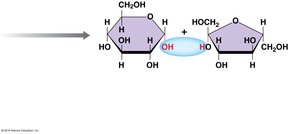
Hydrolysis: AB + H2O → AH + BOH
Synthesis (anabolism): A + B → AB
Dehydration synthesis: AH + BOH → AB + H2O
Exchange: AB + CD → AD + CB
Reversible: A + B ↔ AB
Enzymes and Activation Energy
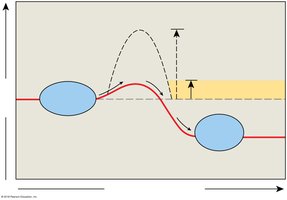
Biochemical reactions require activation energy. Enzymes are protein catalysts that lower this energy, enabling reactions to occur efficiently in cells.
Enzyme: Protein that speeds up reactions without being consumed.
Activation energy: Minimum energy required to start a reaction.
Water, Solutions, and Electrolytes
Properties of Water
Water is the universal solvent, accounting for two-thirds of body weight. Its polarity enables it to dissolve many substances, participate in reactions, and regulate temperature.
Solvent: Liquid in which solutes are dissolved.
Solute: Substance dissolved in a solvent.
Hydration spheres: Water molecules surround ions and polar molecules, keeping them in solution.
Electrolytes in Body Fluids
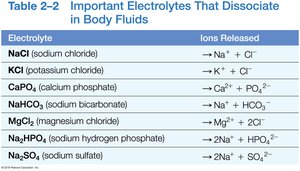
Electrolytes are inorganic ions that conduct electricity in solution. Their balance is vital for physiological functions such as nerve impulses and muscle contraction.
Electrolyte | Ions Released |
|---|---|
NaCl (sodium chloride) | Na+ + Cl– |
KCl (potassium chloride) | K+ + Cl– |
CaPO4 (calcium phosphate) | Ca2+ + PO42– |
NaHCO3 (sodium bicarbonate) | Na+ + HCO3– |
MgCl2 (magnesium chloride) | Mg2+ + 2Cl– |
Na2HPO4 (sodium hydrogen phosphate) | 2Na+ + HPO42– |
Na2SO4 (sodium sulfate) | 2Na+ + SO42– |
Acids, Bases, and pH
pH and Homeostasis
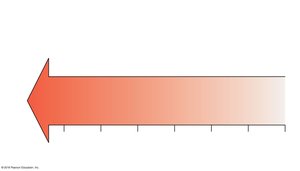
pH is the negative logarithm of the hydrogen ion concentration. It is crucial for maintaining homeostasis, as many physiological processes depend on a stable pH.
Neutral pH: 7.0 (pure water)
Acidic pH: < 7.0 (high H+ concentration)
Basic pH: > 7.0 (low H+ concentration)
Human blood pH: 7.35–7.45
Acids, Bases, Salts, and Buffers
Acids donate protons (H+), bases accept protons, salts dissociate into ions other than H+ and OH–, and buffers stabilize pH by neutralizing strong acids or bases.
Strong acids/bases: Dissociate completely.
Weak acids/bases: Partially dissociate; help maintain pH balance.
Buffer systems: Carbonic acid–bicarbonate system is vital in humans.
Organic Molecules and Macromolecules
Carbohydrates
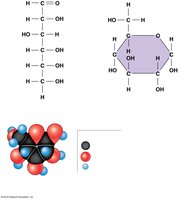
Carbohydrates are organic molecules containing carbon, hydrogen, and oxygen in a 1:2:1 ratio. They serve as energy sources and structural components.
Monosaccharides: Simple sugars (glucose, fructose, galactose).
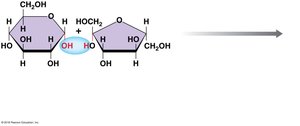
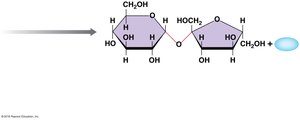
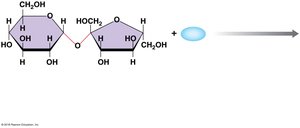
Disaccharides: Two monosaccharides joined by dehydration synthesis (sucrose, maltose, lactose).
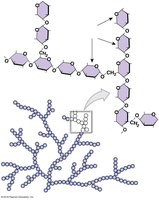
Polysaccharides: Polymers of many sugars (glycogen, starch, cellulose).
Lipids
Lipids are hydrophobic molecules including fats, oils, and waxes. They are essential for energy storage, insulation, and cell membrane structure.
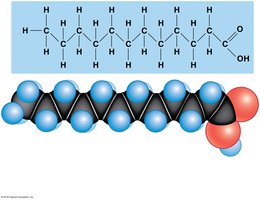
Fatty acids: Long chains of carbon and hydrogen with a carboxyl group.
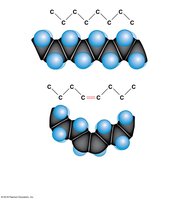
Saturated: No double bonds; straight chains.
Unsaturated: One or more double bonds; bent chains.
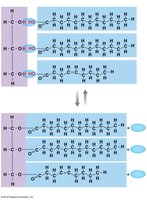
Triglycerides: Glycerol plus three fatty acids; energy source, insulation, protection.
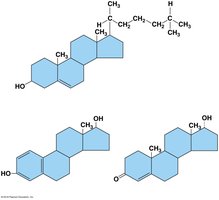
Steroids: Four-ringed structures; include cholesterol, hormones.
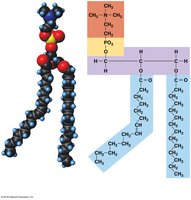
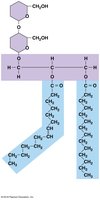
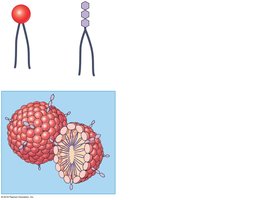
Phospholipids and glycolipids: Structural lipids in membranes; hydrophilic heads and hydrophobic tails.
Proteins
Proteins are the most abundant organic molecules, composed of 20 amino acids. They perform structural, regulatory, transport, and catalytic functions.
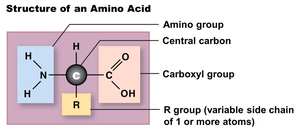
Amino acid structure: Central carbon, hydrogen, amino group, carboxyl group, variable R group.
Peptide bond: Formed by dehydration synthesis between amino acids.
Protein structure: Primary (sequence), secondary (hydrogen bonds: alpha helix, beta sheet), tertiary (3D folding), quaternary (multiple polypeptides).
Enzymes: Catalysts; specificity, saturation limits, regulation.
Denaturation: Loss of structure and function due to heat or pH.
Nucleic Acids and High-Energy Compounds
Nucleic Acids
Nucleic acids (DNA and RNA) store and process genetic information. They are polymers of nucleotides, each containing a pentose sugar, phosphate group, and nitrogenous base.
DNA: Double-stranded; complementary base pairs (A-T, C-G).
RNA: Single-stranded; base pairs (A-U, C-G).
High-Energy Compounds
ATP (adenosine triphosphate) is the primary energy carrier in cells. It is formed by phosphorylation and hydrolyzed by ATPase to release energy.
AMP: Adenosine monophosphate (one phosphate).
ADP: Adenosine diphosphate (two phosphates).
ATP: Adenosine triphosphate (three phosphates; high-energy bonds).
Summary Table: Key Chemical Concepts
Concept | Definition/Example |
|---|---|
Atom | Smallest unit of matter; nucleus + electron cloud |
Isotope | Atoms of same element, different neutrons |
Ionic bond | Electron transfer; cation + anion |
Covalent bond | Electron sharing; single, double, triple |
Enzyme | Protein catalyst; lowers activation energy |
Electrolyte | Ion in solution; conducts electricity |
pH | Measure of H+ concentration |
Carbohydrate | Energy source; monosaccharide, disaccharide, polysaccharide |
Lipid | Hydrophobic molecule; fatty acid, triglyceride, steroid |
Protein | Polymer of amino acids; structure, function, enzyme |
Nucleic acid | DNA, RNA; genetic information |
ATP | Cellular energy carrier |
Additional info: This guide expands on brief points with academic context, definitions, and examples to ensure completeness and clarity for Anatomy & Physiology students.
