 Indietro
Connective Tissue: Structure, Types, and Functions
Guida di studio - Note intelligenti
 Appunti personalizzati basati sui tuoi materiali, ampliati con definizioni chiave, esempi e contesto.
Connective Tissue (CT)
Overview of Connective Tissue
Connective tissue is a fundamental tissue type widely distributed throughout the human body. It serves various functions, including binding, support, protection, insulation, and transportation. The extracellular matrix (ECM) is a defining feature, making up most of the tissue's volume, with relatively few cells embedded within.
Four Main Classes:
Connective Tissue Proper (includes fat and ligaments)
Cartilage
Bone
Blood
Major Functions:
Binding & support
Protection
Insulation
Transportation (as blood)
Common Characteristic: Mostly extracellular material/matrix (ECM) with few cells
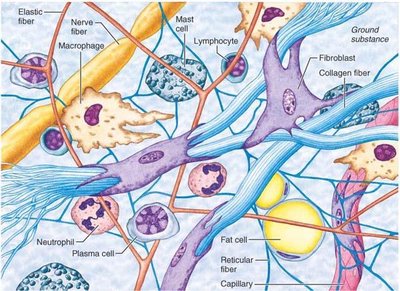
Structural Elements of Connective Tissue
Connective tissue is composed of three main structural elements: ground substance, fibers, and cells. Each plays a distinct role in tissue function and integrity.
Ground Substance:
Material filling the space between cells
Composed of interstitial/tissue fluid (mostly water) and proteoglycans (proteins with long sugar chains)
Functions as an extracellular gel, holding large amounts of fluid and allowing diffusion of nutrients from capillaries to cells
Fibers:
Collagen: Tough, provides high tensile strength to ECM
Elastic fibers: Long, thin fibers containing elastin protein; allow recoil of stretched CT
Reticular fibers: Short, fine fibers forming delicate networks where CT abuts other tissue
Cells:
Immature/undifferentiated or mature cells, depending on tissue type
Adipocytes (fat cells): Energy storage and insulation
White blood cells (WBCs): Fight infection
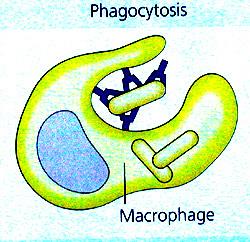
Macrophages: Phagocytose foreign substances
Mast cells: Mediate inflammatory response
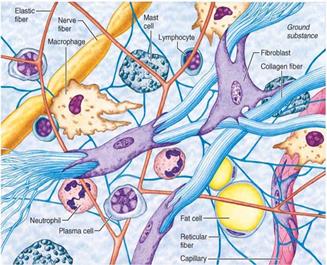
Connective Tissue Proper
Loose Connective Tissue
Loose connective tissue is characterized by fewer, spaced fibers and serves as a packing material in the body.
Loose Areolar CT:
Mostly collagen and few elastic fibers, widely spaced
Fills spaces between glands, muscles, and nerves
Loose Reticular CT:
Loose network of reticular fibers
Forms a stroma/bed to support cells in lymph nodes, spleen, and bone marrow
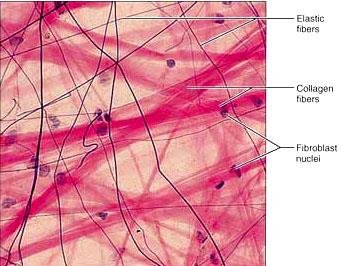
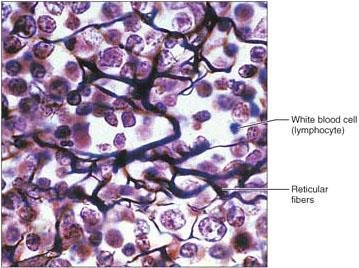
Dense Connective Tissue
Dense connective tissue contains mostly packed fibers, providing strength and resistance to tension.
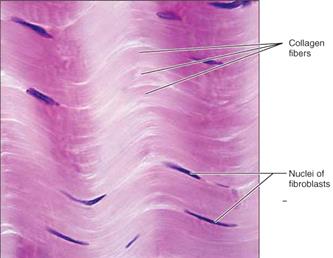
Dense Regular CT:
Parallel collagen fibers, few elastic fibers
Withstands great tensile stresses
Found in tendons, aponeuroses, ligaments, fascia
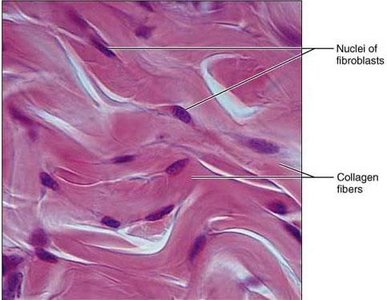
Dense Irregular CT:
Irregularly arranged collagen fibers, some elastic fibers
Withstands tension from multiple directions
Found in dermis of skin, digestive tract walls, fibrous capsules of organs and joints
Adipose Tissue
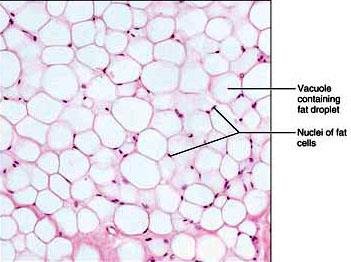
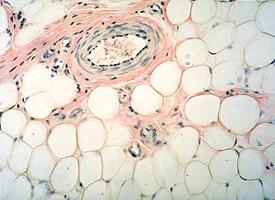
Adipose tissue is a specialized connective tissue primarily composed of closely-packed adipocytes. It provides insulation, cushioning, and fuel storage.
Located under skin, around kidneys & eyeballs, within breasts
Cartilage
Types of Cartilage
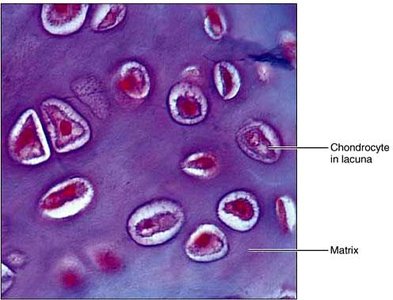
Cartilage is a resilient and smooth elastic tissue, a major component of joints, and is classified into three types based on matrix composition and function.
Hyaline Cartilage:
Firm, amorphous matrix containing collagen
Supports, reinforces, cushions, and resists compression
Forms embryonic skeleton and cartilage structures of nose, trachea, larynx
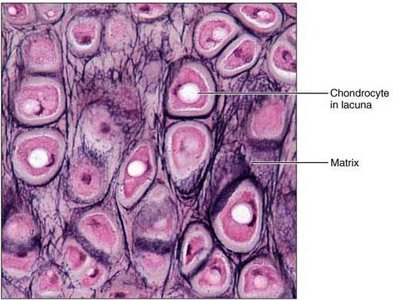
Elastic Cartilage:
Similar to hyaline, but with more elastic fibers
Maintains shape and allows flexibility
Found in external ear and epiglottis
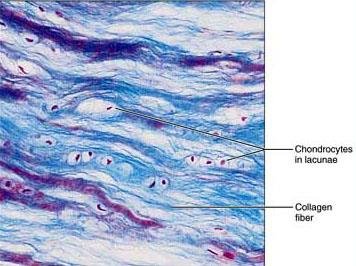
Fibrocartilage:
Matrix similar to hyaline, but less firm
Mostly collagen; good tensile strength and absorbs compressive shock
Found in intervertebral discs, discs of knee joints
Bone
Structure and Function of Bone
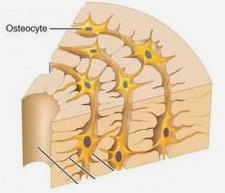
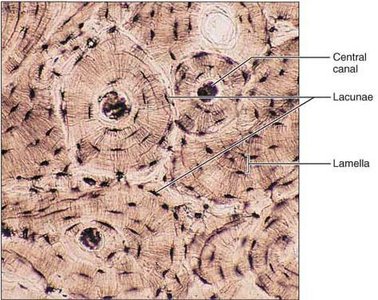
Bone tissue is characterized by a matrix of many collagen fibers and calcium deposits. It supports and protects the body, provides leverage for movement, and stores calcium and other minerals.
Contains osteocytes embedded in the matrix
Blood
Components and Functions of Blood
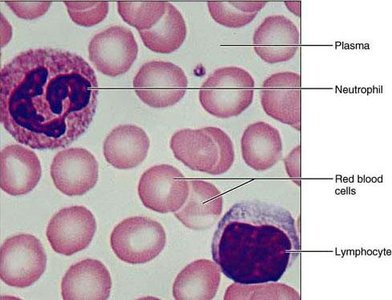
Blood is a fluid connective tissue containing red blood cells (RBCs), white blood cells (WBCs), and platelets suspended in plasma. It transports gases, nutrients, wastes, and other substances throughout the body.
Contained within blood vessels
Cells in Connective Tissue
Specialized Cells and Their Functions
Adipocytes: Fat cells for energy storage and insulation
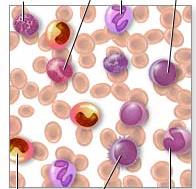
White Blood Cells (WBCs): Immune defense
Macrophages: Phagocytosis of foreign substances
Mast Cells: Mediate inflammatory response
Summary Table: Connective Tissue Types and Functions
Type | Main Features | Location | Function |
|---|---|---|---|
Loose Areolar CT | Widely spaced collagen & elastic fibers | Fills spaces between glands, muscles, nerves | Packing material |
Loose Reticular CT | Reticular fibers, stroma | Lymph nodes, spleen, bone marrow | Support for cells |
Dense Regular CT | Parallel collagen fibers | Tendons, ligaments | Tensile strength |
Dense Irregular CT | Irregular collagen fibers | Dermis, organ capsules | Resists tension |
Adipose Tissue | Closely-packed adipocytes | Under skin, around organs | Insulation, energy storage |
Hyaline Cartilage | Firm matrix, collagen | Nose, trachea, embryonic skeleton | Support, cushion |
Elastic Cartilage | Elastic fibers | Ear, epiglottis | Flexibility |
Fibrocartilage | Collagen, less firm matrix | Intervertebral discs | Shock absorption |
Bone | Collagen, calcium deposits | Skeletal system | Support, protection |
Blood | RBCs, WBCs, platelets in plasma | Blood vessels | Transport |
Additional info:
Connective tissue is essential for structural integrity and physiological function in multicellular organisms.
ECM composition and fiber arrangement determine tissue properties and function.
