 Indietro
Connective Tissues: Structure, Function, and Types
Guida di studio - Note intelligenti
 Appunti personalizzati basati sui tuoi materiali, ampliati con definizioni chiave, esempi e contesto.
Connective Tissue: The Living Fabric
Overview of Connective Tissue
Connective tissue is the most abundant and widely distributed of the primary tissue types in the human body. It plays critical roles in binding, supporting, protecting, insulating, storing energy, and transporting substances throughout the body.
Main Classes: Connective tissue proper, cartilage, bone, and blood.
Major Functions: Binding and support, protection, insulation, energy storage, and transport of substances (e.g., blood).
General Characteristics of Connective Tissue
Origin: All connective tissues arise from mesenchyme (an embryonic tissue).
Vascularity: Varies from highly vascular (bone) to avascular (cartilage).
Extracellular Matrix: Unlike other tissues, connective tissue is largely composed of nonliving extracellular matrix, which separates the cells and allows the tissue to withstand tension and physical stress.
Structural Elements of Connective Tissue
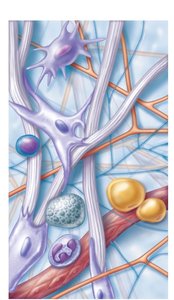
Ground Substance: Unstructured material that fills the space between cells and acts as a medium for nutrient and waste exchange. It consists of interstitial fluid, cell adhesion proteins, and proteoglycans (which trap water and affect tissue viscosity).
Fibers: Provide support and structure. Three types:
Collagen fibers: Strongest and most abundant; provide high tensile strength.
Elastic fibers: Allow tissues to stretch and recoil.
Reticular fibers: Short, fine, and highly branched; form supportive networks.
Cells: Each connective tissue type has specific cells:
"Blast" cells (e.g., fibroblasts, chondroblasts, osteoblasts) are immature, mitotically active, and secrete matrix.
"Cyte" cells (e.g., chondrocytes, osteocytes) are mature and maintain the matrix.
Other cells include fat cells (store nutrients), white blood cells (immune response), mast cells (inflammation), and macrophages (phagocytosis).
Types of Connective Tissue
Connective Tissue Proper
This category includes all connective tissues except bone, cartilage, and blood. It is divided into loose and dense subclasses based on fiber arrangement and density.
Loose Connective Tissue
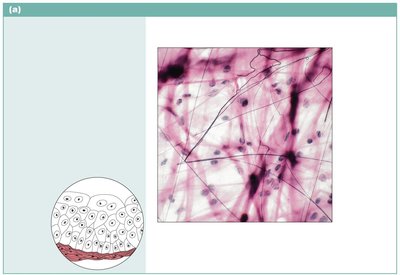
Areolar: Gel-like matrix with all three fiber types; supports and binds other tissues, holds body fluids, defends against infection, and stores nutrients. Most widely distributed connective tissue.
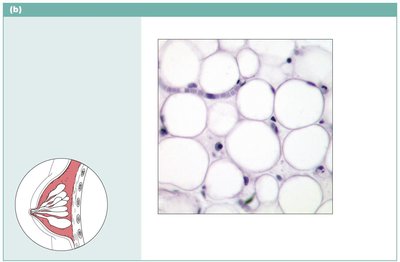
Adipose: Closely packed adipocytes (fat cells) with nucleus pushed to the side; stores energy, insulates, and cushions organs. Highly vascularized.
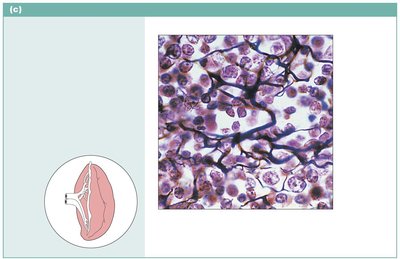
Reticular: Network of reticular fibers; supports free blood cells in lymph nodes, spleen, and bone marrow.
Dense Connective Tissue (Fibrous)
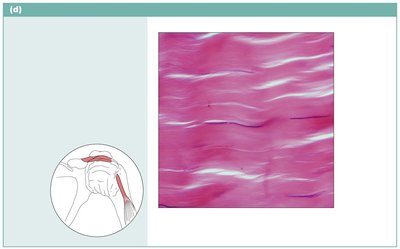
Dense Regular: Parallel collagen fibers; withstands tension in one direction; found in tendons and ligaments.
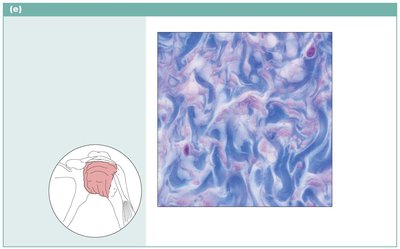
Dense Irregular: Irregularly arranged collagen fibers; resists tension from multiple directions; found in dermis and joint capsules.
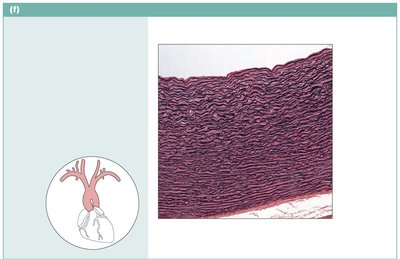
Elastic: High proportion of elastic fibers; allows tissue to recoil after stretching; found in walls of large arteries and certain ligaments.
Cartilage
Cartilage is a tough yet flexible tissue that lacks nerve fibers and is avascular. It is composed of chondroblasts (immature) and chondrocytes (mature), and is surrounded by a membrane called the perichondrium.
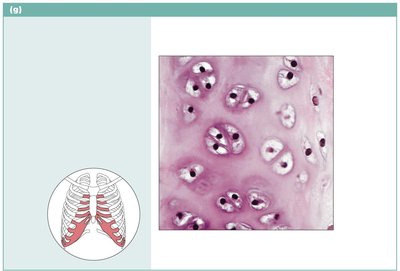
Hyaline Cartilage: Most common type; supports and reinforces, forms embryonic skeleton, covers ends of long bones, and forms costal cartilages.
Elastic Cartilage: Similar to hyaline but with more elastic fibers; maintains shape and allows flexibility; found in external ear and epiglottis.
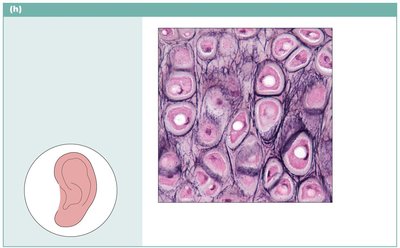
Fibrocartilage: Thick collagen fibers; absorbs compressive shock; found in intervertebral discs, pubic symphysis, and knee menisci.
Bone (Osseous Tissue)
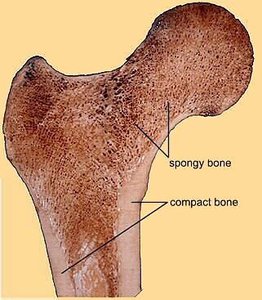
Bone tissue supports and protects body structures, stores fat, and synthesizes blood cells. It is highly vascularized and contains more collagen than cartilage, as well as inorganic calcium salts. The basic structural unit is the osteon.
Cells: Osteoblasts (produce matrix), osteocytes (maintain matrix).
Matrix: Hard, calcified with collagen fibers.
Functions: Support, protection, movement, mineral storage, blood cell formation (hematopoiesis).
Blood
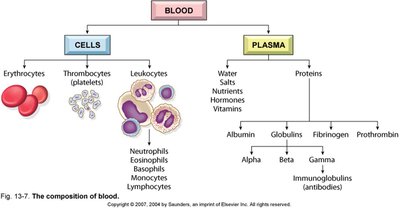
Blood is an atypical connective tissue with a fluid matrix (plasma). It contains red blood cells (erythrocytes), white blood cells (leukocytes), and platelets (thrombocytes). Blood functions in the transport of gases, nutrients, wastes, and other substances throughout the body.
Matrix: Plasma (no fibers except during clotting).
Functions: Transport of respiratory gases, nutrients, wastes, hormones, and immune cells.
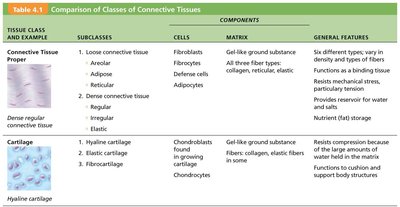
Summary Table: Comparison of Classes of Connective Tissues
Tissue Class and Example | Subclasses | Cells | Matrix | General Features |
|---|---|---|---|---|
Connective Tissue Proper | Loose (areolar, adipose, reticular); Dense (regular, irregular, elastic) | Fibroblasts, fibrocytes, defense cells, adipocytes | Gel-like ground substance; all three fiber types | Six different types; functions as binding tissue; resists mechanical stress; reservoir for water and salts; energy storage |
Cartilage | Hyaline, elastic, fibrocartilage | Chondroblasts (in growing cartilage), chondrocytes | Gel-like ground substance; fibers: collagen, elastic in some | Resists compression; cushions and supports body structures |
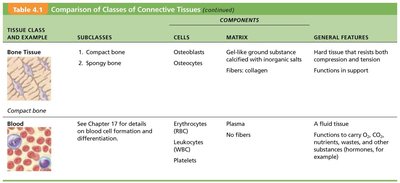
Bone Tissue | Compact, spongy | Osteoblasts, osteocytes | Gel-like ground substance calcified with inorganic salts; fibers: collagen | Hard tissue that resists compression and tension; support |
Blood | --- | Erythrocytes, leukocytes, platelets | Plasma (fluid); no fibers | Functions in transport of gases, nutrients, wastes, and other substances |
Additional info:
Connective tissues are essential for structural integrity and physiological function in all organ systems.
Disorders of connective tissue can lead to a wide range of diseases, including autoimmune disorders, scurvy (vitamin C deficiency affecting collagen), and osteoporosis (bone matrix loss).
