 Indietro
Development: Fetus to Child – Human Pregnancy, Birth, and Early Growth
Guida di studio - Note intelligenti
 Appunti personalizzati basati sui tuoi materiali, ampliati con definizioni chiave, esempi e contesto.
Fetal Period: Morphogenesis
Overview of Fetal Development
The fetal period is characterized by rapid growth and differentiation of the body, with organ systems becoming functional. This stage spans from the end of the embryonic period to birth, and is crucial for the maturation of tissues and organs.
Growth in Length: The fetus grows from approximately 1 inch to 14–22 inches.
Weight Change: Weight increases from about 1 gram (0.03 oz) to 3–4 kg (6–10 lbs).
Organ System Development: All major organ systems develop and begin to function.

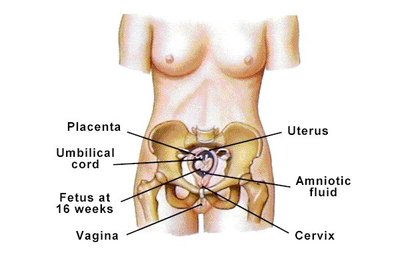
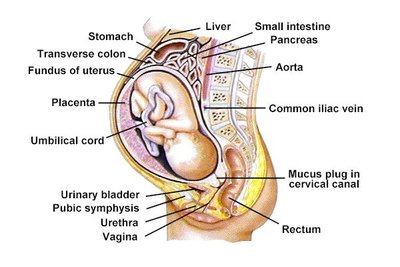
Fetal Anatomy at 16 Weeks
At 16 weeks, the fetus is surrounded by amniotic fluid and connected to the placenta via the umbilical cord. The uterus provides a protective environment for continued development.
Placenta: Facilitates nutrient and gas exchange between mother and fetus.
Amniotic Fluid: Cushions the fetus and maintains a stable temperature.
Umbilical Cord: Connects the fetus to the placenta.
Uterine Changes During Pregnancy
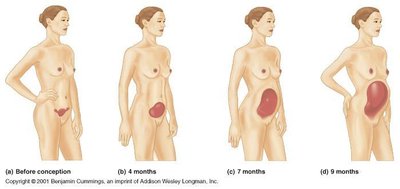
Growth and Position of the Uterus
The uterus undergoes significant changes in size and position throughout pregnancy, accommodating the growing fetus.
Before Conception: Uterus is small and located in the pelvic cavity.
4 Months: Uterus expands and rises into the abdominal cavity.
7 Months: Uterus continues to enlarge, displacing abdominal organs.
9 Months: Uterus reaches its maximum size, pushing against the diaphragm.
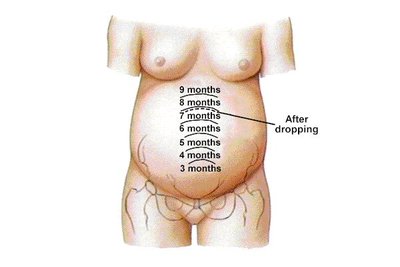
Estimating Uterine Size
Uterine size can be estimated by palpation and visual assessment, with the fundus rising progressively higher as pregnancy advances.
Fundal Height: Used clinically to estimate gestational age.
After Dropping: Near term, the fetus descends into the pelvis, lowering the fundal height.
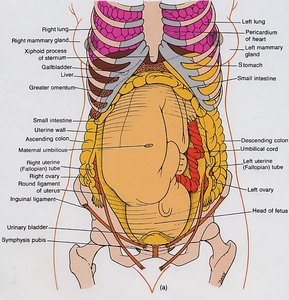
Anatomical Relationships in Late Pregnancy
The enlarged uterus displaces abdominal organs and alters the anatomy of the pelvic region.
Compression of Organs: Bladder, intestines, and other organs are compressed.
Maternal Circulation: Blood flow may be affected by the position of the uterus.
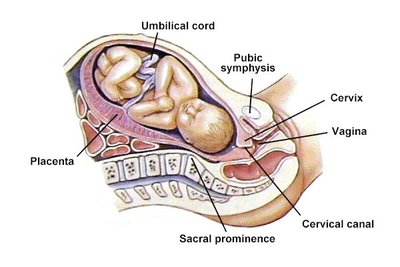
Fetal Position Before Birth
Positioning for Delivery
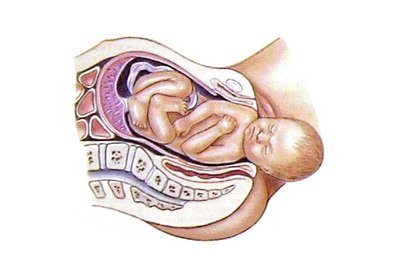
The fetus typically assumes a head-down (vertex) position before birth, which is optimal for delivery.
Head Engagement: The fetal head enters the pelvic cavity.
Flexion: The fetus curls into a compact position.
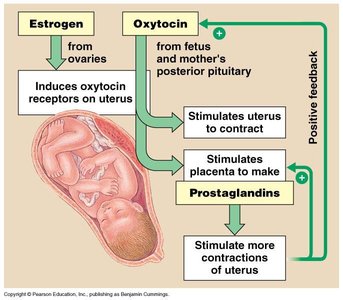
Hormonal Cascade for Birth
Hormonal Regulation of Labor
The onset of labor is regulated by a cascade of hormones, primarily estrogen, oxytocin, and prostaglandins.
Estrogen: Increases oxytocin receptors on the uterus.
Oxytocin: Released from the fetus and mother's posterior pituitary, stimulates uterine contractions.
Prostaglandins: Produced by the placenta, enhance uterine contractions.
Positive Feedback: Contractions stimulate further hormone release, intensifying labor.
Stages of Birth
Stage 1: Labor (Effacement and Dilation)
Labor is divided into three phases based on cervical dilation and contraction patterns.
Latent Phase (1–4 cm): Contractions are irregular and mild; may last days.
Active Phase (4–8 cm): Contractions become more intense and regular; longest phase (12–36 hours in first-time mothers).
Transition Phase (8–10 cm): Shortest and most intense phase; contractions peak in strength.
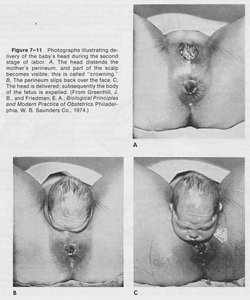
Stage 2: Expulsion of Fetus
The fetus is expelled from the uterus through the birth canal.
Crowning: The fetal head becomes visible at the vaginal opening.
Rotation: After crowning, the fetus turns 90° to allow the shoulders to pass.
Contractions: Strong uterine and voluntary (Valsalva) contractions push the fetus out.
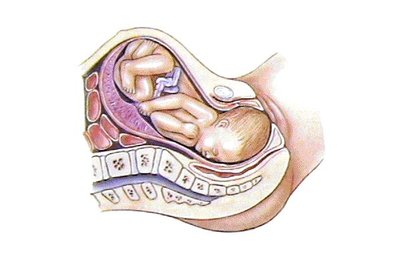



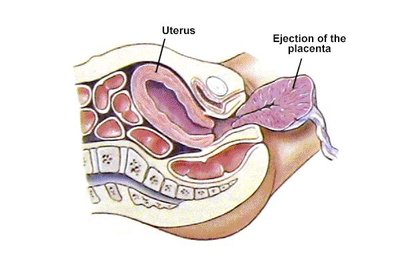
Stage 3: Delivery of After-birth (Placenta)
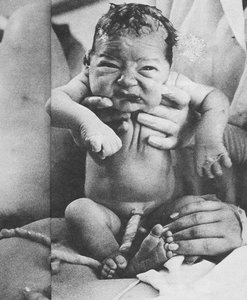
After the fetus is delivered, the placenta is expelled from the uterus.
Placental Delivery: Usually occurs within minutes after birth; the placenta is flexible and easily expelled.
Doctor's Role: The physician may assist in the removal of the placenta.
Breastfeeding and Hormonal Regulation
Hormonal Response to Suckling
Breastfeeding initiates a hormonal response that supports both milk production and uterine contraction.
Oxytocin: Stimulates mammary duct contraction (milk let-down) and uterine contraction.
Prolactin: Promotes milk production in the mammary glands.
Birth Defects and Teratogens
Thalidomide Disaster
Birth defects can result from both natural and man-made causes. Thalidomide, a drug once used to treat morning sickness, caused severe birth defects when taken during pregnancy.
Teratogens: Agents that cause developmental abnormalities.
Prevention: Avoidance of harmful substances during pregnancy is critical.
Continued Development After Birth
Growth Stages
Human development continues after birth through several distinct stages:
Infancy: Rapid growth and development of motor skills.
Childhood: Continued physical and cognitive development.
Adolescence: Puberty and maturation of reproductive systems.
Adulthood and Aging: Maintenance and eventual decline of physiological functions.
Summary Table: Stages of Labor
Stage | Main Events | Duration |
|---|---|---|
Stage 1: Labor | Effacement and dilation of cervix | Latent: days; Active: 12–36 hrs; Transition: 1–2 min |
Stage 2: Expulsion | Delivery of fetus | Minutes to hours |
Stage 3: After-birth | Delivery of placenta | Minutes |
Key Terms and Definitions
Placenta: Organ that connects fetus to mother, facilitating nutrient and waste exchange.
Amniotic Fluid: Fluid surrounding the fetus, providing protection and temperature regulation.
Umbilical Cord: Structure containing blood vessels that link fetus to placenta.
Effacement: Thinning of the cervix during labor.
Dilation: Opening of the cervix to allow passage of the fetus.
Crowning: Appearance of the fetal head at the vaginal opening during birth.
Valsalva Contractions: Voluntary straining by the mother to aid delivery.
Prolactin: Hormone promoting milk production.
Oxytocin: Hormone stimulating uterine and mammary contractions.
Teratogen: Any agent causing birth defects.
Relevant Equations
Gestational Age Estimation (Fundal Height)
Fundal height (in cm) is often used to estimate gestational age in weeks: Additional info: This equation is a clinical approximation and may vary based on individual factors. ----------------------------------------
