 Indietro
Digestive and Urinary Systems: Anatomy, Physiology, and Metabolism Study Guide
Guida di studio - Note intelligenti
 Appunti personalizzati basati sui tuoi materiali, ampliati con definizioni chiave, esempi e contesto.
Digestive System Anatomy and Functions
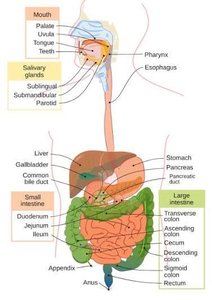
Overview of Digestive System Structures
The digestive system is responsible for breaking down food, absorbing nutrients, and eliminating waste. It consists of a series of organs and accessory structures, each with specialized functions.
Mouth: Begins mechanical and chemical digestion; includes palate, uvula, tongue, and teeth.
Pharynx and Esophagus: Transport food from mouth to stomach.
Stomach: Secretes acid and enzymes for protein digestion.
Small Intestine (Duodenum, Jejunum, Ileum): Major site for digestion and absorption of nutrients.
Large Intestine (Cecum, Colon, Rectum): Absorbs water and forms feces.
Accessory Organs: Liver, gallbladder, pancreas, and salivary glands aid digestion via secretions.
Functions of Digestive System Structures
Mechanical Digestion: Physical breakdown of food (chewing, churning).
Chemical Digestion: Enzymatic breakdown of macromolecules.
Absorption: Uptake of nutrients into blood or lymph.
Elimination: Removal of indigestible substances as feces.
Accessory Organs of the Digestive System
Cells and Secretions
Accessory organs produce substances essential for digestion.
Salivary Glands: Secrete saliva containing amylase for starch digestion.
Liver: Produces bile for fat emulsification.
Gallbladder: Stores and releases bile.
Pancreas: Secretes digestive enzymes (lipase, protease, amylase) and bicarbonate.
Hormones of the Digestive System
Key Digestive Hormones
Hormones regulate digestive processes.
Gastrin: Stimulates gastric acid secretion.
Secretin: Stimulates pancreatic bicarbonate secretion.
Cholecystokinin (CCK): Stimulates release of bile and pancreatic enzymes.
Metabolism: Carbohydrates, Proteins, and Fatty Acids
Overview of Metabolic Pathways
Metabolism includes all chemical reactions in the body, divided into catabolism (breakdown) and anabolism (synthesis).
Carbohydrates: Broken down to glucose for ATP production.
Proteins: Broken down to amino acids for synthesis or energy.
Fatty Acids: Used for energy via beta-oxidation.
Glycolysis Pathway in ATP Production
Steps of Glycolysis
Glycolysis is the first step in cellular respiration, converting glucose to pyruvate and generating ATP.
Location: Cytoplasm
Products: 2 ATP, 2 NADH, 2 pyruvate per glucose molecule
Equation: 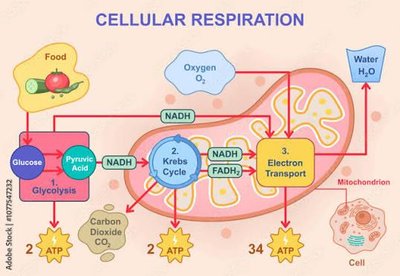
Mitochondrial Role in ATP Production
Cellular Respiration in Mitochondria
The mitochondria are the site of aerobic respiration, including the Krebs cycle and electron transport chain.
Krebs Cycle: Produces NADH, FADH2, CO2, and ATP.
Electron Transport Chain: Uses NADH and FADH2 to generate ATP via oxidative phosphorylation.
Byproducts: CO2 and H2O
Electron Transport Chain and Chemiosmosis
Enzymes and Steps
The electron transport chain (ETC) consists of protein complexes that transfer electrons and pump protons, creating a gradient used by ATP synthase to produce ATP.
Complexes I-IV: Transfer electrons from NADH/FADH2 to O2.
ATP Synthase: Uses proton gradient to synthesize ATP.
Chemiosmosis: Movement of H+ ions drives ATP production.
Equation: 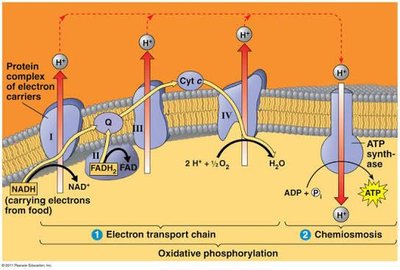
Macronutrients, Micronutrients, and Vitamins
Classification and Functions
Macronutrients: Carbohydrates, proteins, fats; provide energy and structural components.
Micronutrients: Vitamins and minerals; required in small amounts for metabolic processes.
Vitamins: Organic compounds essential for enzyme function (e.g., vitamin C, D, B-complex).
Anabolism: Storage of Molecules
Overview of Anabolic Processes
Anabolism refers to the synthesis and storage of molecules, such as glycogen, proteins, and lipids.
Glycogenesis: Formation of glycogen from glucose.
Protein Synthesis: Assembly of amino acids into proteins.
Lipogenesis: Formation of triglycerides from fatty acids and glycerol.
Kidney Anatomy and Physiology
Structure of the Kidneys
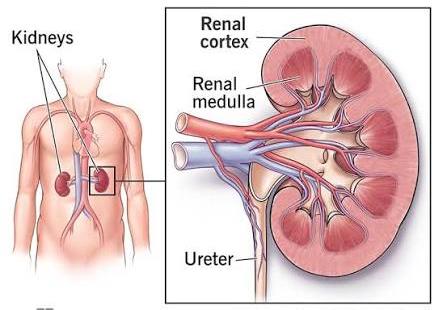
The kidneys filter blood, remove waste, and regulate fluid and electrolyte balance.
Renal Cortex: Outer region containing nephrons.
Renal Medulla: Inner region with renal pyramids.
Ureter: Transports urine to bladder.
Physiology of the Kidneys
Filtration: Removal of waste and excess substances from blood.
Reabsorption: Recovery of essential molecules and water.
Secretion: Addition of substances to filtrate for excretion.
Nephron Functions
Role of the Nephron
The nephron is the functional unit of the kidney, responsible for urine formation.
Glomerular Filtration: Blood plasma filtered into Bowman's capsule.
Tubular Reabsorption: Selective reabsorption of water and solutes.
Tubular Secretion: Removal of additional wastes.
Filtration Mechanisms
Process of Filtration
Filtration occurs at the glomerulus, driven by blood pressure.
Selective Permeability: Allows passage of water, ions, and small molecules.
Filtration Rate: Controlled by hydrostatic and osmotic pressures.
Physiology of Urine Formation
Steps in Urine Formation
Filtration: Formation of filtrate in glomerulus.
Reabsorption: Movement of substances from filtrate back to blood.
Secretion: Addition of waste products to filtrate.
Excretion: Removal of urine from body.
Hormones Involved in Kidney Function
Key Renal Hormones
Aldosterone: Increases sodium reabsorption.
Antidiuretic Hormone (ADH): Promotes water reabsorption.
Renin: Regulates blood pressure.
Example:
ADH increases water reabsorption in the collecting ducts, reducing urine volume.
----------------------------------------
