 Indietro
DNA Structure, Chromosomes, and Key Experiments: Study Notes for Anatomy & Physiology
Guida di studio - Note intelligenti
 Appunti personalizzati basati sui tuoi materiali, ampliati con definizioni chiave, esempi e contesto.
Genes & Genome I: DNA Structure & Chromosomes
The Structure of DNA
DNA is the fundamental molecule that stores genetic information in all living organisms. Its structure allows for both the storage and accurate copying of genetic instructions.
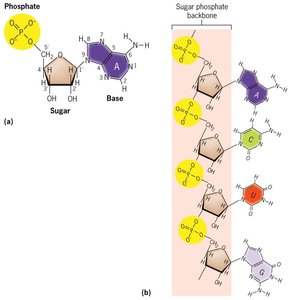
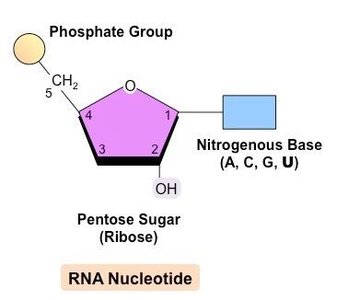
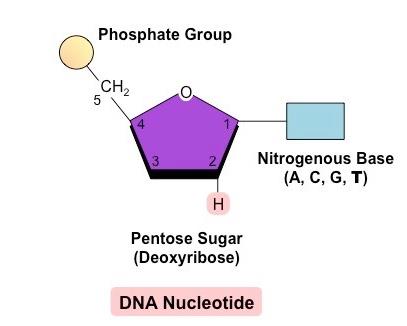
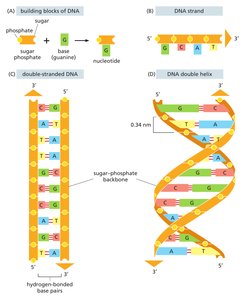
Nucleotide Components: Each nucleotide consists of a five-carbon sugar (deoxyribose in DNA, ribose in RNA), a phosphate group, and a nitrogenous base.
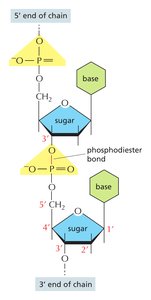
Sugar-Phosphate Backbone: Nucleotides are linked by phosphodiester bonds between the sugar and phosphate, forming a backbone with bases projecting outward.
Strand Polarity: DNA strands have directionality, with a 5' phosphate end and a 3' hydroxyl end.
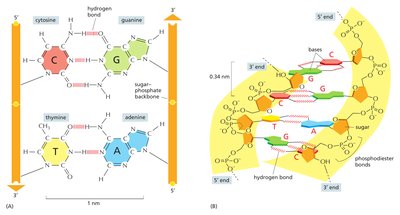
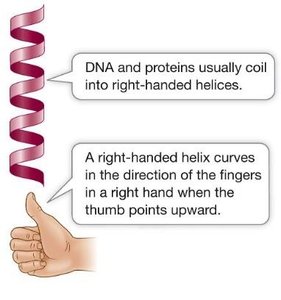
Double Helix: Two antiparallel strands are joined by hydrogen bonds between complementary bases, forming a right-handed double helix.
Nitrogenous Bases and Base Pairing
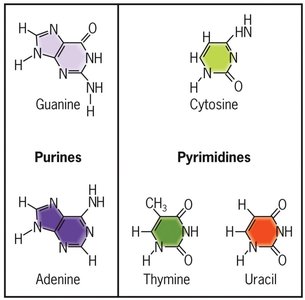
DNA and RNA contain four types of nitrogenous bases, which are classified as purines or pyrimidines. The sequence of these bases encodes genetic information.
Purines: Adenine (A) and Guanine (G) have two rings.
Pyrimidines: Cytosine (C), Thymine (T; DNA only), and Uracil (U; RNA only) have one ring.
Base Pairing: In DNA, A pairs with T (two hydrogen bonds), and G pairs with C (three hydrogen bonds). In RNA, U replaces T.
Complementarity: Base pairing ensures accurate DNA replication and transcription.
DNA Double Helix and Replication
The double helix structure of DNA is essential for its function in storing and copying genetic information. The antiparallel arrangement and specific base pairing allow each strand to serve as a template during replication.
Antiparallel Strands: The two DNA strands run in opposite directions (5' to 3' and 3' to 5').
Hydrogen Bonds: Base pairs are held together by hydrogen bonds, stabilizing the helix.
Replication: Each strand can be copied to produce a new complementary strand.
Chargaff's Rule: In double-stranded DNA, %A = %T and %G = %C.
Experimental Evidence for DNA Structure
Key experiments and discoveries established DNA as the genetic material and revealed its structure.
Chargaff's Rule: Demonstrated base composition relationships in DNA.
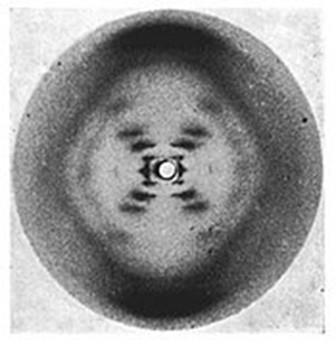
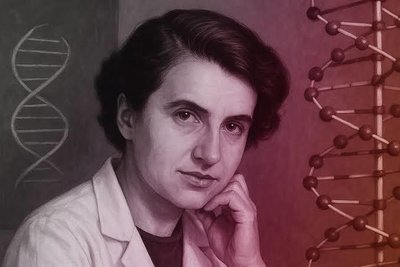
X-ray Diffraction: Rosalind Franklin's Photograph 51 revealed the helical structure and dimensions of DNA.
Watson and Crick: Proposed the double helix model based on available evidence.
Geometry and Features of the DNA Double Helix
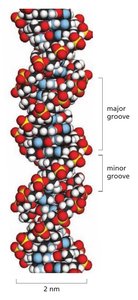
The DNA double helix is a right-handed structure with major and minor grooves, which are important for protein binding and gene regulation.
Helical Parameters: ~10 base pairs per turn, 0.34 nm between base pairs, 2 nm diameter.
Grooves: Major and minor grooves expose chemical groups for protein interactions.
Right-Handed Helix: Most DNA and proteins coil in a right-handed manner.
Genetic Information: Sequence, Not Chemistry
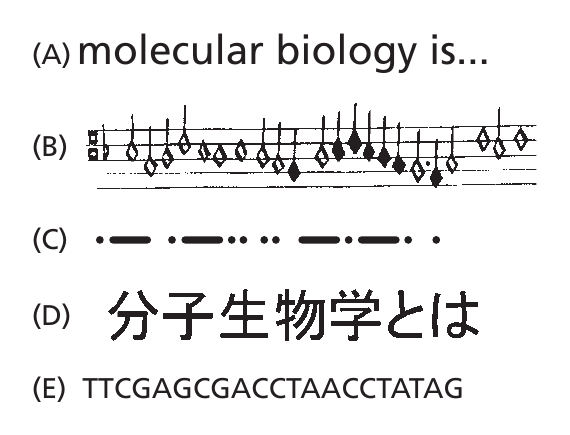
The information in DNA is stored in the sequence of its bases, similar to how languages and music encode information in the order of their symbols.
Linear Sequence: DNA is read in a defined direction, and the order of bases determines genetic instructions.
Diversity: Differences in DNA sequence underlie the diversity of organisms.
Genes and Genome Organization
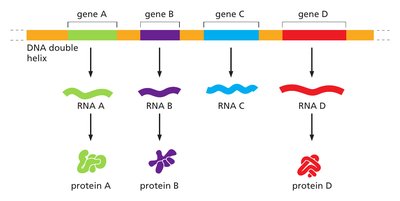
Genes are segments of DNA that are transcribed into RNA. Most genes encode proteins, but some produce functional RNAs. The genome is the complete set of genetic material in an organism.
Protein-Coding Genes: Transcribed into RNA, then translated into protein.
Non-Coding RNA Genes: Produce RNAs that function directly (e.g., rRNA, tRNA, miRNA).
Genome: Includes all DNA, both coding and noncoding regions.
The Structure of Eukaryotic Chromosomes
Chromosome Visibility and Chromosome Painting
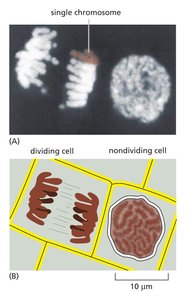
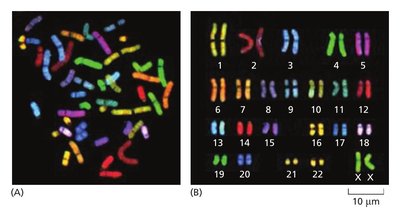
Chromosomes are visible only during cell division, when they condense. Chromosome painting uses fluorescent probes to identify individual chromosomes and detect rearrangements.
Condensation: Chromosomes condense during mitosis, becoming visible as distinct bodies.
Chromosome Painting: Fluorescent dyes and DNA probes allow visualization and identification of chromosomes.
Karyotype: An organized display of all chromosomes, arranged in homologous pairs.
Genome Organization and Coding Density
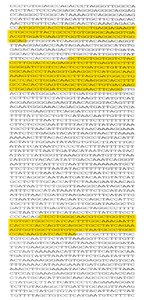
Genome size, gene number, and chromosome number vary among species. Coding sequences are often a minority of the total DNA.
Gene Density: Yeast has a highly gene-dense genome, with little noncoding DNA between genes.
Human Genome: Contains more noncoding DNA, with coding regions (exons) interspersed with noncoding regions (introns).
Chromosome Number: Chromosome number does not predict gene number or organismal complexity.

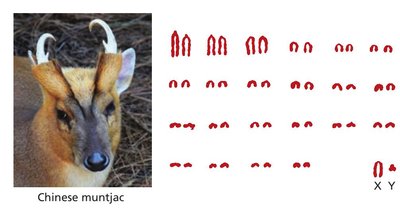
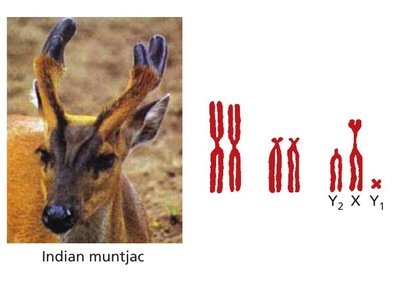
Chromosome Duplication and Segregation
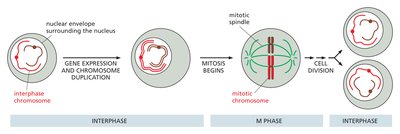
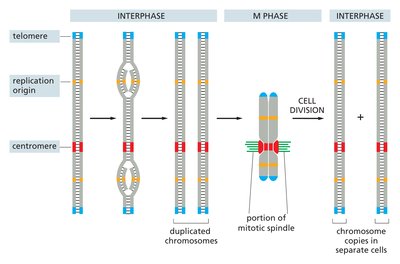
Chromosomes are duplicated during interphase and segregated during mitosis. Specialized DNA elements ensure faithful inheritance.
Cell Cycle: Interphase (DNA duplication) and M phase (mitosis and chromosome segregation).
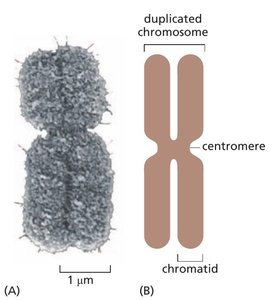
Specialized Elements: Centromere (spindle attachment), telomeres (chromosome ends), and replication origins (start sites for DNA replication).
Chromatid: Each duplicated chromosome consists of two sister chromatids joined at the centromere.
Chromosome Territories and Nuclear Organization
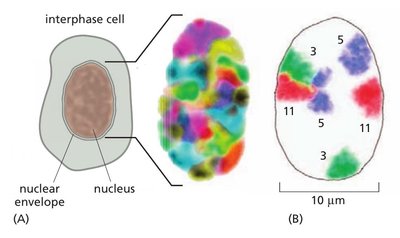
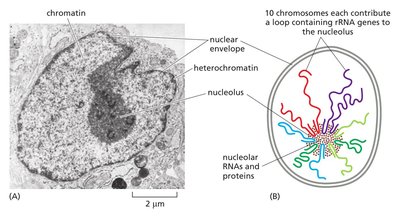
Each chromosome occupies a distinct territory within the interphase nucleus, which helps reduce entanglement and may influence gene regulation. The nucleolus forms around rRNA gene clusters from multiple chromosomes.
Chromosome Territories: Chromosomes are spatially organized within the nucleus.
Nucleolus: Site of rRNA transcription and ribosome assembly, formed from rRNA gene clusters.
Key Experiments That Identified DNA as the Genetic Material
Griffith's Experiment: Transformation in Bacteria
Griffith demonstrated that a heritable trait could be transferred between bacteria, suggesting the existence of a "transforming principle."
S and R Strains: Smooth (S) strain is virulent; rough (R) strain is non-virulent.
Transformation: Heat-killed S cells and live R cells together cause disease, indicating transfer of genetic information.
Avery, MacLeod, and McCarty: DNA is the Transforming Principle
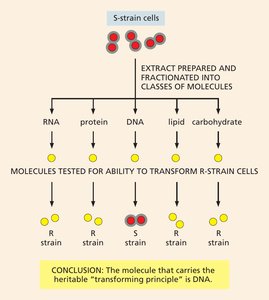
These researchers showed that only DNA, not protein or RNA, could transform R cells into S cells, providing direct evidence that DNA is the genetic material.
Fractionation: Bacterial extracts were separated into DNA, RNA, protein, lipid, and carbohydrate.
Transforming Activity: Only the DNA fraction transformed cells; DNase abolished transformation.
Summary Table: DNA vs. RNA Nucleotides
Feature | DNA | RNA |
|---|---|---|
Sugar | Deoxyribose | Ribose |
Strands | Double-stranded | Single-stranded |
Bases | A, T, G, C | A, U, G, C |
Stability | More stable | Less stable |
Take-Home Messages
DNA stores genetic information in the sequence of its four bases.
Complementary base pairing enables accurate DNA replication and inheritance.
Classic experiments established DNA as the genetic material.
Genes are transcribed into RNA; some RNAs are translated into proteins, others function directly as RNAs.
A functional chromosome requires replication origins, a centromere, and telomeres.
Genome organization extends beyond DNA sequence, including chromosome territories and nuclear structures.
