 Indietro
Endocrine System: Hormones, Regulation, and Glandular Structure
Guida di studio - Note intelligenti
 Appunti personalizzati basati sui tuoi materiali, ampliati con definizioni chiave, esempi e contesto.
Endocrine System Overview
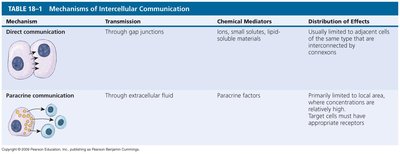
Mechanisms of Intercellular Communication
The endocrine system relies on various mechanisms for intercellular communication, which are essential for maintaining homeostasis and coordinating physiological responses.
Direct Communication: Occurs through gap junctions, allowing ions, small solutes, and lipid-soluble materials to pass directly between adjacent cells. Effects are usually limited to cells of the same type that are interconnected by connexons.
Paracrine Communication: Utilizes extracellular fluid to transmit paracrine factors. Effects are primarily limited to local areas where concentrations are relatively high, and target cells must have appropriate receptors.
Hormone Classes and Examples
Classification of Hormones
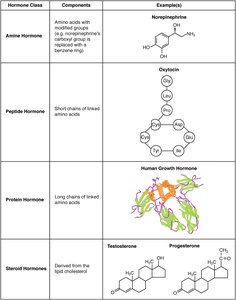
Hormones are classified based on their chemical structure, which influences their function and mechanism of action.
Amine Hormones: Derived from amino acids with modified groups. Example: Norepinephrine.
Peptide Hormones: Composed of short chains of linked amino acids. Example: Oxytocin.
Protein Hormones: Consist of long chains of linked amino acids. Example: Human Growth Hormone.
Steroid Hormones: Derived from cholesterol. Examples: Testosterone and Progesterone.
Pituitary Gland and Hypothalamus
Anatomical Relationship and Histology
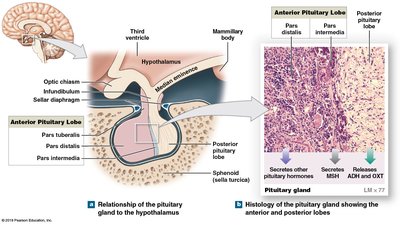
The pituitary gland is closely associated with the hypothalamus, which regulates its function through neural and hormonal signals. The gland consists of anterior and posterior lobes, each with distinct histological features and hormone secretion profiles.
Anterior Pituitary Lobe: Contains pars distalis and pars intermedia; secretes hormones such as GH, TSH, ACTH, FSH, LH, and PRL.
Posterior Pituitary Lobe: Contains pars nervosa; releases ADH and OXT.
Regulation of Endocrine Organs
Typical Pattern of Regulation
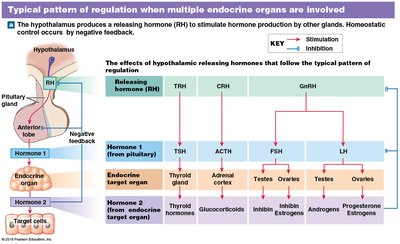
Endocrine regulation often involves multiple organs, with the hypothalamus producing releasing hormones (RH) that stimulate the anterior pituitary to secrete tropic hormones, which then act on target glands. Negative feedback mechanisms maintain homeostasis.
Releasing Hormones (RH): Produced by the hypothalamus to stimulate pituitary hormone release.
Pituitary Hormones: Examples include TSH, ACTH, FSH, LH.
Target Glands: Thyroid, adrenal cortex, gonads.
Negative Feedback: Hormones from target glands inhibit further release from hypothalamus and pituitary.
Hypothalamic and Pituitary Hormones
Hormone Pathways and Target Organs
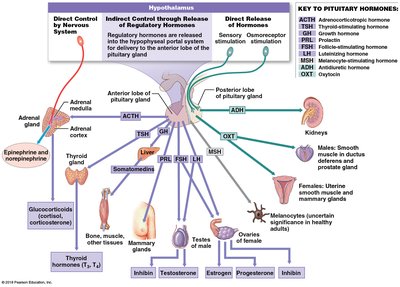
The hypothalamus controls the pituitary gland through direct neural input, regulatory hormones, and direct release of hormones. Each pathway affects specific target organs and physiological functions.
ACTH: Stimulates adrenal cortex to release glucocorticoids.
TSH: Stimulates thyroid gland to release thyroid hormones.
GH: Stimulates growth in bones, muscles, and other tissues.
PRL: Stimulates mammary glands.
FSH/LH: Regulate gonadal function.
ADH/OXT: Released directly from posterior pituitary; affect kidneys, uterus, and mammary glands.
Growth Hormone Regulation
Feedback Control of Growth Hormone
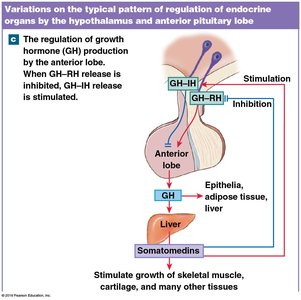
Growth hormone (GH) secretion is regulated by the hypothalamus through growth hormone-releasing hormone (GH-RH) and growth hormone-inhibiting hormone (GH-IH). The anterior pituitary releases GH, which acts on various tissues and stimulates the production of somatomedins in the liver.
Stimulation: GH-RH increases GH release.
Inhibition: GH-IH decreases GH release.
Somatomedins: Mediate growth effects on skeletal muscle, cartilage, and other tissues.
Posterior Pituitary Hormones
ADH and Oxytocin Pathways
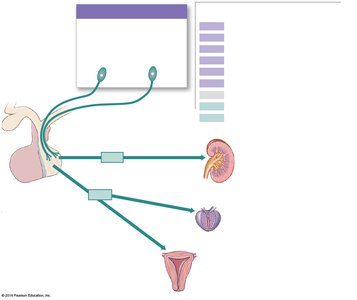
The posterior pituitary releases antidiuretic hormone (ADH) and oxytocin (OXT), which have distinct target organs and physiological effects.
ADH: Acts on kidneys to regulate water balance.
Oxytocin: Acts on smooth muscle in the uterus and mammary glands in females, and on smooth muscle in the ductus deferens and prostate gland in males.
Thyroid Gland Structure and Function
Anatomy and Histology of the Thyroid Gland
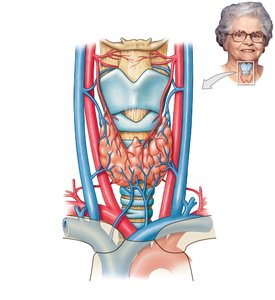
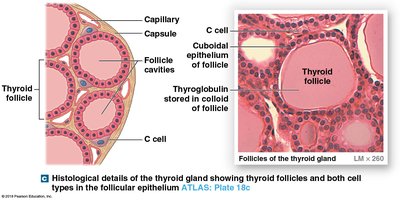
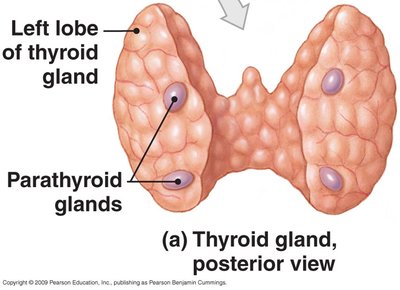
The thyroid gland is located in the anterior neck and consists of two lobes connected by an isthmus. It is highly vascularized and contains thyroid follicles, which are the functional units responsible for hormone production.
Thyroid Follicles: Spherical structures lined by cuboidal epithelium; contain colloid with thyroglobulin.
C Cells: Located between follicles; secrete calcitonin.
Thyroid Hormone Mechanism of Action
Cellular Effects of Thyroid Hormones
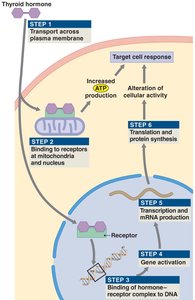
Thyroid hormones enter target cells and bind to receptors in the mitochondria and nucleus, leading to increased ATP production and altered cellular activity. They regulate gene expression and protein synthesis.
Step 1: Transport across plasma membrane.
Step 2: Binding to receptors at mitochondria and nucleus.
Step 3: Binding of hormone-receptor complex to DNA.
Step 4: Transcription and mRNA production.
Step 5: Translation and protein synthesis.
Target Cell Response: Increased ATP production and alteration of cellular activity.
Parathyroid Glands
Anatomy and Function
The parathyroid glands are small endocrine glands located on the posterior surface of the thyroid gland. They play a crucial role in calcium homeostasis by secreting parathyroid hormone (PTH).
PTH: Increases blood calcium levels by stimulating osteoclast activity, enhancing calcium reabsorption in kidneys, and promoting activation of vitamin D.
Vitamin D and Calcium Regulation
Pathway of Calcitriol Production
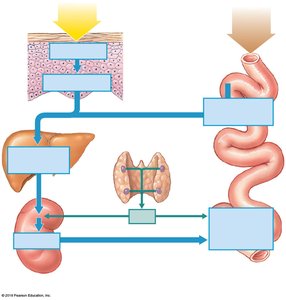
Calcitriol, the active form of vitamin D, is produced through a multi-step process involving the skin, liver, kidneys, and parathyroid glands. It is essential for calcium and phosphate ion absorption in the digestive tract.
Step 1: Sunlight stimulates production of cholecalciferol in the skin.
Step 2: Dietary cholecalciferol is absorbed in the digestive tract.
Step 3: Cholecalciferol is converted to an intermediate form in the liver.
Step 4: Parathyroid hormone stimulates conversion to calcitriol in the kidneys.
Step 5: Calcitriol stimulates calcium and phosphate absorption in the digestive tract.
Clinical Conditions Related to Endocrine System
Thyroid Disorders
Disorders of the thyroid gland can lead to significant clinical manifestations.
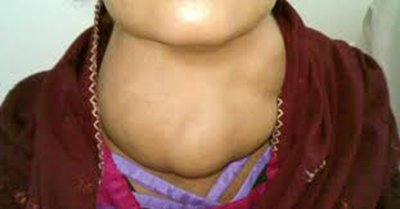
Goiter: Enlargement of the thyroid gland, often due to iodine deficiency or thyroid dysfunction.
Hypothyroidism: Deficiency of thyroid hormones, leading to symptoms such as fatigue, weight gain, and developmental delays.
Diabetes Mellitus
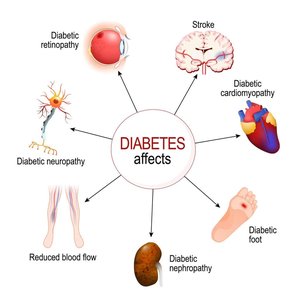
Diabetes mellitus is a metabolic disorder characterized by chronic hyperglycemia due to defects in insulin secretion, insulin action, or both. It affects multiple organ systems.
Diabetic Retinopathy: Damage to the retina.
Diabetic Neuropathy: Nerve damage.
Diabetic Nephropathy: Kidney damage.
Diabetic Cardiomyopathy: Heart muscle dysfunction.
Diabetic Foot: Poor wound healing and risk of infection.
Stroke: Increased risk due to vascular complications.
Reduced Blood Flow: Peripheral vascular disease.
Additional info:
These notes cover the endocrine system, focusing on hormone classification, regulation, glandular anatomy, and clinical conditions. The images included directly reinforce anatomical, physiological, and clinical concepts relevant to the study of the endocrine system in Anatomy & Physiology.
