 Indietro
Endocrine System: Structure, Function, and Hormone Mechanisms
Guida di studio - Note intelligenti
 Appunti personalizzati basati sui tuoi materiali, ampliati con definizioni chiave, esempi e contesto.
Endocrine System Overview
Definition and Function
The endocrine system is the body's second major controlling system, influencing metabolic activities of cells through the release of hormones. It works alongside the nervous system to regulate physiological processes, but its effects are generally slower and longer-lasting.
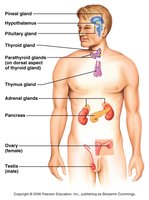
Endocrine glands include: pituitary, thyroid, parathyroid, adrenal, pineal, and thymus.
The pancreas and gonads (ovaries and testes) produce both hormones (endocrine products) and exocrine products.
The hypothalamus has both neural and endocrine functions.
Other hormone-producing tissues: adipose cells, small intestine, stomach, kidneys, and heart.
Hormone Types and Classification
Hormones, Autocrines, and Paracrines
Hormones are chemical messengers secreted into extracellular fluids and transported by the bloodstream to target cells. They regulate metabolic functions and have lag times ranging from seconds to hours, with prolonged effects.
Autocrines: Act on the same cell that secretes them.
Paracrines: Affect nearby cells other than those that secrete them.
Autocrines and paracrines are not considered hormones because they do not travel long distances.
Hormone Classes
Amino acid-based hormones: Includes amines, thyroxine, peptide, and protein hormones.
Steroid hormones: Derived from cholesterol; includes gonadal and adrenocortical hormones.
Eicosanoids: Biologically active lipids (e.g., leukotrienes, prostaglandins) with local hormone-like activity.
Mechanisms of Hormone Action
General Mechanisms
Hormones alter target cell activity by two main mechanisms:
Second messenger systems: Used by amino acid-based hormones; involve regulatory G proteins and cannot enter the cell directly.
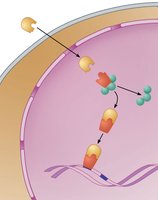
Direct gene activation: Used by steroid hormones; these hormones enter the cell and directly affect gene transcription.
Cellular changes induced by hormones include:
Alteration of plasma membrane permeability
Stimulation of protein synthesis
Activation/deactivation of enzyme systems
Induction of secretory activity
Stimulation of mitosis
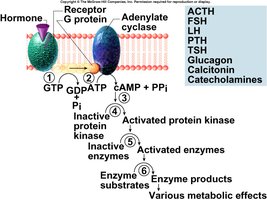
Amino Acid-Based Hormone Action: cAMP Second Messenger
The cAMP pathway is a classic example of second messenger signaling:
Hormone (first messenger) binds to its receptor on the cell membrane.
Receptor activates a G protein by exchanging GDP for GTP.
Activated G protein stimulates adenylate cyclase.
Adenylate cyclase converts ATP to cAMP (second messenger).
cAMP activates protein kinases, leading to cellular effects.
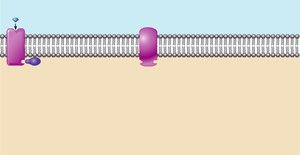
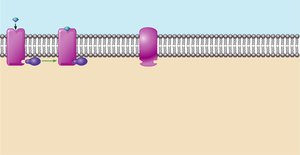
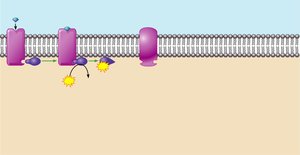
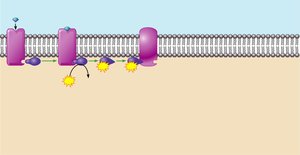
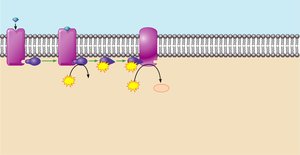
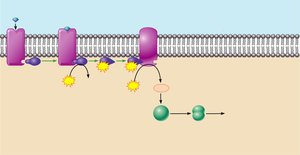
Multiple hormones can act on the same cell via different receptors, leading to complex regulation.
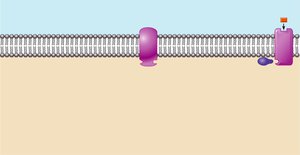
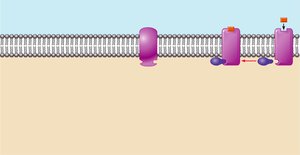
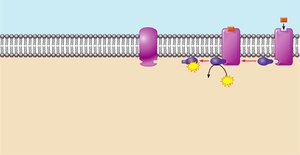
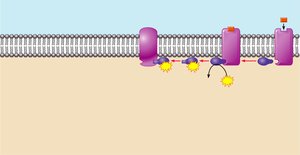
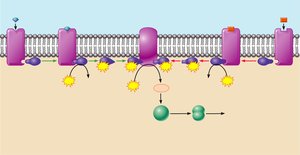
Enzyme Amplification
A single hormone molecule can trigger the production of billions of molecules of reaction product, demonstrating the efficiency and amplification of hormone signaling.
Amino Acid-Based Hormone Action: PIP-Calcium Second Messenger
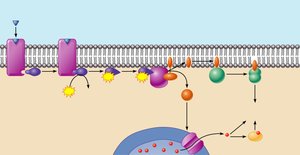
Some hormones use the PIP2-calcium pathway:
Hormone binds to receptor and activates G protein.
G protein activates phospholipase C.
Phospholipase C splits PIP2 into DAG and IP3.
DAG activates protein kinases; IP3 triggers release of Ca2+ from intracellular stores.
Ca2+ acts as a third messenger, altering cellular responses.
Steroid Hormones: Synthesis and Action
Synthesis
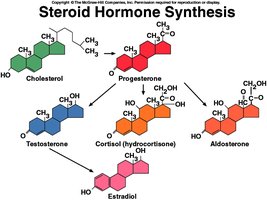
Steroid hormones are synthesized from cholesterol, differing in functional groups attached to the four-ringed steroid backbone.
Mechanism of Action
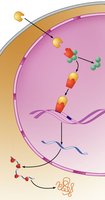
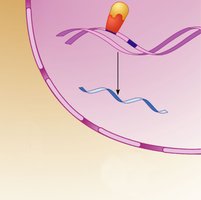
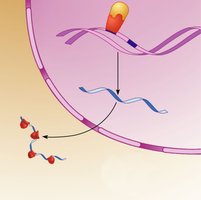
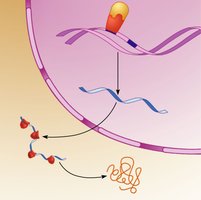
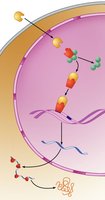
Steroid hormones prompt DNA transcription to produce mRNA, which is then translated into proteins that bring about cellular effects. Steroids and thyroid hormones use this mechanism.
Target Cell Specificity and Activation
Specificity
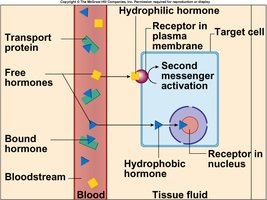
Hormones circulate throughout the body but only affect target cells with specific receptors. Receptors may be intracellular (for steroids and thyroid hormone) or on the plasma membrane (for amino acid-based hormones).
Examples
ACTH receptors are only found on adrenal cortex cells.
Thyroxine receptors are found in nearly all body cells.
Activation Factors
Blood levels of the hormone
Number of receptors on the target cell
Affinity of receptors for the hormone
Up-regulation: Target cells form more receptors in response to the hormone. Down-regulation: Target cells lose receptors in response to the hormone.
Hormone Concentrations and Modes of Action
Blood Transport
Hormones circulate in the blood as either free or bound forms. Steroids and thyroid hormones are hydrophobic and require plasma proteins for transport, while hydrophilic hormones travel freely.
Concentration Regulation
Hormone concentration reflects rate of release and speed of inactivation/removal (by degrading enzymes, kidneys, or liver).
Hormone Interactions at Target Cells
Types of Interaction
Permissiveness: One hormone requires another to exert its effect.
Synergism: Multiple hormones produce the same effect, amplifying the response.
Antagonism: One hormone opposes the action of another (e.g., insulin vs. glucagon).
Control of Hormone Release
Regulation Mechanisms
Blood levels of hormones are controlled by negative feedback and are synthesized/released in response to:
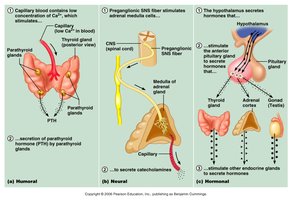
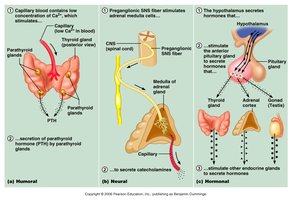
Humoral stimuli: Changes in blood levels of ions/nutrients (e.g., Ca2+ levels regulate PTH release).
Neural stimuli: Nerve fibers stimulate hormone release (e.g., SNS stimulates adrenal medulla).
Hormonal stimuli: Hormones stimulate other endocrine organs (e.g., hypothalamic hormones stimulate pituitary).
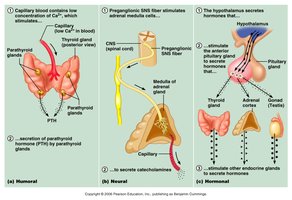
Example: Thyroid-Related Hormones
The hypothalamus releases TRH, which stimulates the anterior pituitary to release TSH, which then stimulates the thyroid gland to release thyroid hormones (T3 and T4).
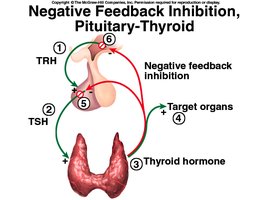
Feedback Mechanisms
Negative feedback: Increased target organ hormone levels inhibit release of tropic hormones.
Positive feedback: Example is oxytocin release during childbirth, which increases uterine contractions.
Major Endocrine Organs: Pituitary (Hypophysis)
Structure and Function
The pituitary gland (hypophysis) is a two-lobed organ that secretes nine major hormones:
Neurohypophysis: Posterior lobe (neural tissue); stores and releases hormones from the hypothalamus.
Adenohypophysis: Anterior lobe (glandular tissue); synthesizes and secretes hormones.
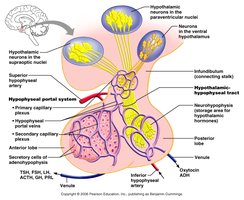
Pituitary-Hypothalamic Relationships
Posterior lobe: Neural connection (hypothalamic-hypophyseal tract); stores oxytocin and ADH.
Anterior lobe: Vascular connection (hypophyseal portal system); receives releasing/inhibiting hormones from hypothalamus.
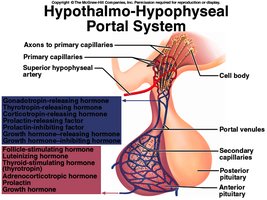
Adenohypophyseal Hormones
Hormones and Functions
Growth hormone (GH): Stimulates growth, especially in bone and skeletal muscle; promotes protein synthesis and fat utilization.
Thyroid-stimulating hormone (TSH): Stimulates thyroid gland activity.
Adrenocorticotropic hormone (ACTH): Stimulates adrenal cortex to release corticosteroids.
Follicle-stimulating hormone (FSH): Stimulates gamete production.
Luteinizing hormone (LH): Triggers ovulation and promotes synthesis of sex hormones.
Prolactin (PRL): Stimulates milk production.
Regulation is achieved through hypothalamic releasing and inhibiting hormones.
Growth Hormone Regulation
Stimulated by GHRH; inhibited by GHIH (somatostatin).
Indirect effects mediated by IGFs (insulin-like growth factors).
Direct effects: Promotes lipolysis, inhibits glucose uptake (diabetogenic effect).
Thyroid Stimulating Hormone (TSH)
Stimulates thyroid gland development and activity.
Triggered by TRH from hypothalamus.
Negative feedback from rising thyroid hormone levels inhibits TSH release.
Adrenocorticotropic Hormone (ACTH)
Stimulates adrenal cortex to release corticosteroids.
Triggered by CRH from hypothalamus; influenced by stress, fever, hypoglycemia.
Gonadotropins (FSH and LH)
Regulate function of ovaries and testes.
FSH: Stimulates gamete production.
LH: Triggers ovulation, promotes synthesis of sex hormones.
Absent in prepubertal children; triggered by GnRH during/after puberty.
Prolactin (PRL)
Stimulates milk production in females.
Triggered by PRH; inhibited by PIH (dopamine).
Blood levels rise toward end of pregnancy; suckling stimulates PRH release.
Posterior Pituitary and Hypothalamic Hormones
Hormones Stored and Released
Antidiuretic hormone (ADH): Influences water balance.
Oxytocin: Stimulates smooth muscle contraction in breasts and uterus.
Both hormones are synthesized in the hypothalamus and stored in the posterior pituitary.
Both use the PIP-calcium second-messenger mechanism.
----------------------------------------
