 Indietro
Endocrine System: Structure, Function, and Major Glands
Guida di studio - Note intelligenti
 Appunti personalizzati basati sui tuoi materiali, ampliati con definizioni chiave, esempi e contesto.
Endocrine System: General Characteristics
Overview of the Endocrine System
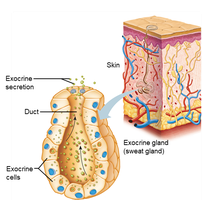
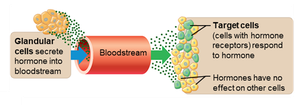
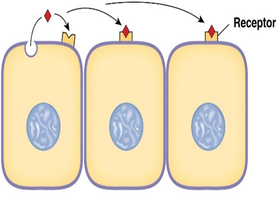
The endocrine system is a network of glands and specialized cells that secrete hormones directly into the bloodstream to regulate various physiological processes. Unlike exocrine glands, which release substances through ducts to external or internal surfaces, endocrine glands are ductless and release hormones into the interstitial fluid, from where they diffuse into the blood and act on distant target cells.
Endocrine glands: Ductless glands that secrete hormones internally.
Exocrine glands: Secrete substances into ducts leading to body surfaces or cavities.
Target cell: Any cell with a specific receptor for a hormone.
Major Endocrine Glands
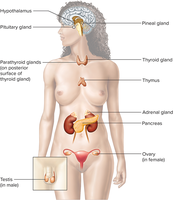
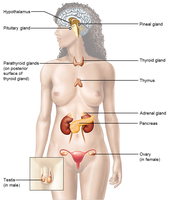
The major glands of the endocrine system include the pituitary gland, thyroid gland, parathyroid glands, adrenal glands, and pancreas. Other organs, such as the pineal gland and thymus, also have endocrine functions.
Pituitary gland: Master gland controlling other endocrine glands.
Thyroid gland: Regulates metabolism.
Parathyroid glands: Regulate calcium levels.
Adrenal glands: Produce stress hormones and regulate metabolism.
Pancreas: Regulates blood glucose.
Pineal gland: Regulates circadian rhythms.
Thymus: Involved in immune cell maturation.
Types of Secretions
Paracrine secretions: Affect nearby cells (e.g., prostaglandins).
Autocrine secretions: Affect the cell that secretes them.
Hormones: Functions and Regulation
Functions of Hormones
Hormones are chemical messengers that regulate a wide range of physiological activities:
Control rates of chemical reactions.
Regulate transport of substances across cell membranes.
Maintain water, electrolyte, and blood pressure balance.
Influence reproduction, development, and growth.
Hormone Receptors and Sensitivity
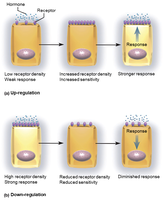
Target cells can adjust their sensitivity to hormones by altering the number of receptors:
Upregulation: Increase in receptor number, increasing sensitivity.
Downregulation: Decrease in receptor number, reducing sensitivity.
Chemical Classification of Hormones
Steroid Hormones
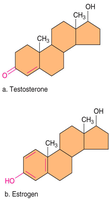
Steroid hormones are derived from cholesterol and are synthesized by the smooth endoplasmic reticulum of endocrine cells. They are lipid-soluble (hydrophobic/lipophilic) and require transport proteins in the blood.
Produced mainly by adrenal cortex and gonads.
Examples: cortisol, aldosterone, testosterone, estrogens, progesterone.
Amine Hormones
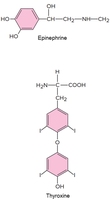
Amine hormones are derived from the amino acids tyrosine or tryptophan. They include catecholamines (epinephrine, norepinephrine) and thyroid hormones (T3, T4).
Catecholamines (adrenal medulla): hydrophilic (lipophobic).
Thyroid hormones: hydrophobic (lipophilic), require transport proteins.
Melatonin (pineal gland): amphiphilic.
Peptide and Protein Hormones
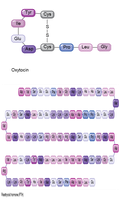
Peptide and protein hormones are composed of amino acids and are synthesized by the rough endoplasmic reticulum. They are hydrophilic (lipophobic) and soluble in blood.
Include all hormones not classified as steroid or amine.
Examples: growth hormone, TSH, oxytocin, parathyroid hormone.
Hormone Mechanisms of Action
Steroid and Thyroid Hormones
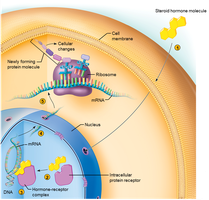
Steroid and thyroid hormones are lipid-soluble and can diffuse through the cell membrane. Their receptors are located in the cytoplasm or nucleus. The hormone-receptor complex binds to DNA, regulating gene expression and protein synthesis.
Peptide/Protein and Amine Hormones
Hydrophilic hormones (peptide/protein, catecholamines) cannot cross the cell membrane. Their receptors are on the cell surface, and they act via second messenger systems (e.g., cAMP). The hormone is the first messenger; cAMP is a common second messenger that activates protein kinases, altering cell metabolism.
Regulation of Hormone Secretion
Control Mechanisms
Hormone secretion is tightly regulated, primarily by negative feedback mechanisms. Hormones may be released in response to:
Tropic hormones: Hormones that stimulate other endocrine glands (e.g., hypothalamic and pituitary hormones).
Nervous system stimulation: Direct neural input (e.g., sympathetic stimulation of adrenal medulla).
Blood composition: Changes in blood levels of ions or nutrients (e.g., glucose levels regulating insulin and glucagon release).
Major Endocrine Glands and Their Hormones
Pituitary Gland (Hypophysis)
The pituitary gland is located at the base of the brain, attached to the hypothalamus by the infundibulum. It consists of two parts:
Anterior pituitary (adenohypophysis): True endocrine gland, produces and releases six major hormones.
Posterior pituitary (neurohypophysis): Extension of neural tissue, stores and releases hormones produced by the hypothalamus.
Anterior Pituitary Hormones
Growth hormone (GH, somatotropin): Stimulates tissue growth, protein synthesis, and metabolism. Indirectly promotes growth via insulin-like growth factors (IGFs).
Prolactin (PRL): Stimulates mammary gland development and milk production.
Thyroid-stimulating hormone (TSH, thyrotropin): Stimulates thyroid hormone production.
Adrenocorticotropic hormone (ACTH, corticotropin): Stimulates adrenal cortex to release cortisol.
Follicle-stimulating hormone (FSH): Stimulates gamete production in gonads.
Luteinizing hormone (LH): Stimulates sex hormone production and ovulation.
Posterior Pituitary Hormones
Antidiuretic hormone (ADH, vasopressin): Reduces urine formation, conserves water, and constricts blood vessels.
Oxytocin (OT): Stimulates uterine contractions during childbirth and milk ejection during breastfeeding; may promote social bonding.
Thyroid and Parathyroid Glands
Thyroid Gland
The thyroid gland is located anterior to the trachea and produces thyroid hormones (T3 and T4) and calcitonin.
T3 (triiodothyronine) and T4 (thyroxine): Regulate basal metabolic rate, protein synthesis, and lipid metabolism.
Calcitonin: Lowers blood calcium and phosphate levels by increasing osteoblast activity and renal excretion.
Parathyroid Glands
The parathyroid glands secrete parathyroid hormone (PTH) in response to low blood calcium.
PTH: Increases blood calcium by stimulating osteoclasts, enhancing renal calcium reabsorption, and promoting intestinal absorption via vitamin D activation.
Adrenal Glands
Adrenal Medulla
The adrenal medulla produces catecholamines (epinephrine and norepinephrine) in response to sympathetic stimulation, mediating the "fight or flight" response.
Increase heart rate, blood pressure, blood glucose, and airflow to lungs.
Adrenal Cortex
The adrenal cortex produces steroid hormones:
Aldosterone (zona glomerulosa): Regulates sodium and potassium balance.
Cortisol (zona fasciculata): Increases blood glucose, suppresses inflammation, and is released in response to stress.
Sex hormones (zona reticularis): Small amounts of androgens and estrogens.
Pancreas, Pineal Gland, and Thymus
Pancreas
The pancreas has both exocrine (digestive enzyme production) and endocrine (hormone production) functions. The endocrine portion consists of islets of Langerhans:
Alpha cells: Secrete glucagon (raises blood glucose).
Beta cells: Secrete insulin (lowers blood glucose).
Delta cells: Secrete somatostatin (regulates alpha and beta cells).
Diabetes Mellitus
Type 1: Autoimmune destruction of beta cells; requires insulin therapy.
Type 2: Insulin resistance; often associated with obesity.
Symptoms: Hyperglycemia, glycosuria, polyuria, polydipsia, polyphagia, acidosis.
Pineal Gland
Produces melatonin, regulating circadian rhythms; secretion suppressed by light.
Thymus
Secretes thymosins, which promote T cell maturation for immune function.
