 Indietro
Enzymatic Digestion and Enzyme Activity in the Digestive System (Lab 7 PhysioEx Exercise 8 Review)
Guida di studio - Note intelligenti
 Appunti personalizzati basati sui tuoi materiali, ampliati con definizioni chiave, esempi e contesto.
Digestion and Enzyme Function
Overview of Digestion
Digestion is the process by which large biomolecules are broken down into smaller, absorbable units through hydrolysis. This process is catalyzed by enzymes, which are biological catalysts that accelerate hydrolytic reactions.
Hydrolysis: The chemical breakdown of a compound due to reaction with water.
Enzymes: Proteins that speed up chemical reactions by lowering activation energy.
Substrate Specificity: Each enzyme acts on a specific substrate due to its unique shape.
Environmental Sensitivity: Enzyme activity is affected by factors such as pH and temperature.
Saturation: Enzymes can become saturated when all active sites are occupied.
Denaturation: Loss of enzyme shape due to disruption of weak bonds, resulting in loss of function.
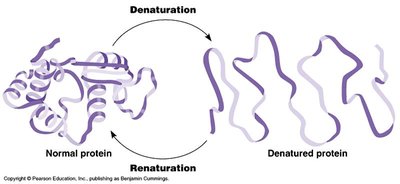
Protein Structure and Denaturation
Enzymes are proteins whose function depends on their three-dimensional structure. Denaturation occurs when environmental changes disrupt the protein's structure, leading to loss of function.
Normal Protein: Maintains a specific folded structure necessary for activity.
Denatured Protein: Loses its shape and cannot function properly.
Renaturation: Sometimes, proteins can regain their structure if the denaturing agent is removed.
Amylase and Carbohydrate Digestion
Amylase Activity
Amylase is an enzyme that catalyzes the breakdown of starch into smaller sugars such as maltose and maltotriose.
Starch: A polysaccharide composed of glucose units.
Maltose: A disaccharide consisting of two glucose molecules.
Maltotriose: A trisaccharide consisting of three glucose molecules.
Amylase: Hydrolyzes starch into maltose and maltotriose.
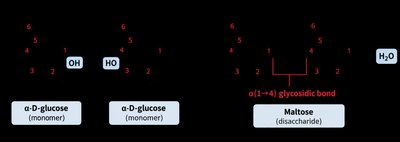
Assays for Amylase Activity
Two common assays are used to test amylase activity:
IKI (Iodine/Potassium Iodide) Test: Detects the presence of starch or cellulose. Turns blue-black if starch is present.
Benedict's Assay: Detects reducing sugars. A color change to green or reddish/brown indicates the presence of reducing sugars.
Experimental Design: Amylase Activity Over Time
Create a sucrose solution.
Run IKI and Benedict's assays before adding amylase (baseline).
Add amylase and incubate for 1, 5, and 10 minutes.
Run IKI and Benedict's assays at each time point.
Expected Results:
IKI: Decreases as starch is broken down.
Benedict's: Increases as reducing sugars are produced.
Effect of Temperature and pH on Amylase
Enzyme activity is highly dependent on environmental conditions.
Optimal pH: Amylase functions best at neutral pH (around 7).
Optimal Temperature: Amylase is most active at body temperature (25-37°C).
Extreme pH or temperature: Reduces or abolishes enzyme activity due to denaturation.
Enzyme Specificity
Amylase: Cannot break down cellulose; only acts on starch.
Peptidase: Cannot break down starch; acts on proteins.
Bacterial Enzymes: Some bacteria produce enzymes capable of breaking down cellulose.
Pepsin Activity
Pepsin and Protein Digestion
Pepsin is a protease enzyme that breaks down proteins into small peptides and amino acids in the stomach.
BAPNA Assay: Measures pepsin activity by detecting hydrolysis of BAPNA, which releases a yellow dye.
Optical Density (OD): Increases as the solution becomes more yellow, indicating greater hydrolysis.
Expected Results:
Active pepsin: High OD, yellow color.
Inactive pepsin (high pH or temperature): Low OD, no color change.
Lipase Activity and Fat Digestion
Lipase Function
Lipase is an enzyme that catalyzes the breakdown of triglycerides into monoglycerides and free fatty acids.
Triglycerides: Large fat molecules composed of glycerol and three fatty acids.
Monoglyceride: Glycerol with one fatty acid.
Fatty Acids: Released during hydrolysis, lower the pH of the solution.
Bile: Emulsifies fats, increasing surface area for lipase action.
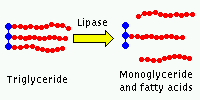
Monitoring Lipase Activity
pH Change: As lipase breaks down triglycerides, free fatty acids are released, lowering the pH.
Optimal Conditions: Lipase is most active at neutral pH and in the presence of bile salts.
Summary Table: Enzyme Activity Under Different Conditions
Enzyme | Substrate | pH | Temperature | Result | Interpretation |
|---|---|---|---|---|---|
Amylase | Starch | 7 | 25°C | ↓Starch; ↑Reducing sugar | Amylase functional |
Amylase | Starch | 2 | 25°C | ↑Starch; ↑Reducing sugar | Reduced enzyme efficiency |
Amylase | Starch | 9 | 25°C | ↑Starch; ↑Reducing sugar | Reduced enzyme efficiency |
Pepsin | BAPNA | 2 | 25°C | OD = 0.4 | Pepsin active |
Pepsin | BAPNA | 2 | 100°C | OD = 0 | Pepsin inactive |
Lipase | Vegetable Oil | 7 | --- | pH drops to 6.21 | Lipase active, fatty acids released |
Key Terms and Concepts
Enzyme: Protein catalyst for biochemical reactions.
Substrate: The molecule upon which an enzyme acts.
Hydrolysis: Chemical breakdown using water.
Denaturation: Loss of protein structure and function.
Assay: Analytical test to measure enzyme activity.
Optical Density: Measurement of solution color intensity.
Additional info: Expanded explanations and context were added to clarify enzyme function, assay interpretation, and the impact of environmental factors on enzyme activity.
