 Indietro
Epidemiology - Mircobio
Guida di studio - Note intelligenti
 Appunti personalizzati basati sui tuoi materiali, ampliati con definizioni chiave, esempi e contesto.
Epidemiology and Herd Immunity
Definition and Importance of Herd Immunity
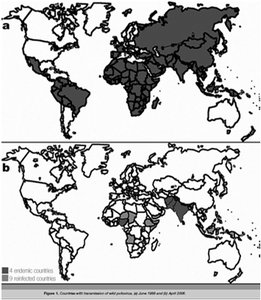
Herd immunity refers to the proportion of individuals in a population who are immune to a contagious disease, either through vaccination or recovery from illness. This collective immunity helps protect those who are not immune by reducing the likelihood of disease transmission. - Key Point 1: Herd immunity is only applicable to contagious diseases (e.g., not tetanus). - Key Point 2: High levels of herd immunity can lead to the elimination of diseases, as seen with smallpox and the ongoing efforts against polio. - Example: When a large percentage of the population is immune, outbreaks are less likely to occur, protecting vulnerable individuals. 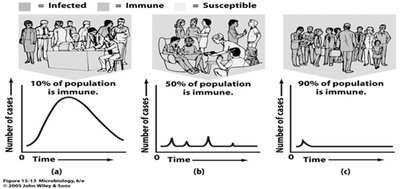
Controlling Transmission of Infectious Diseases
Isolation and Quarantine
Isolation and quarantine are critical methods for controlling the spread of infectious diseases. Isolation involves separating infected individuals from the general population, while quarantine separates healthy individuals who have been exposed to a disease during its incubation period. - Key Point 1: Isolation is used for patients and can also be important in laboratory settings. - Key Point 2: Quarantine is rarer today but was effective during outbreaks such as SARS in 2003. - Example: Port health stations monitor international travelers for signs of illness and determine necessary measures. 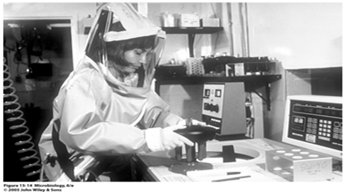
Immunization and Vector Control
Immunization is a primary strategy for disease prevention, contributing to herd immunity and the near eradication of diseases like polio, measles, mumps, and diphtheria in the US. Vector control targets organisms (e.g., mosquitoes) that transmit diseases such as malaria. - Key Point 1: Immunization reduces disease incidence and protects the population. - Key Point 2: Vector control is essential for diseases transmitted by insects. 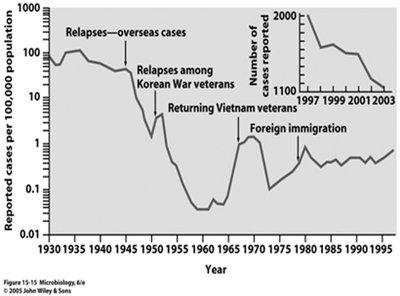
Biosafety Levels in Laboratory Settings
Biosafety Level Classifications
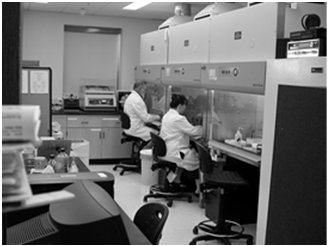
Biosafety levels (BSL) are standards for laboratory safety based on the risk posed by pathogens. - BSL-1: Nonpathogenic organisms; standard practices; open bench tops. Examples: Bacillus subtilis, E. coli K12. - BSL-2: Pathogenic to humans; open bench tops; specific training required. Examples: Streptococcus pneumoniae, measles virus, hepatitis B virus. - BSL-3: Serious disease by inhalation; biological safety cabinets or protective equipment. Examples: SARS-CoV-2, Mycobacterium tuberculosis. - BSL-4: Dangerous/exotic agents; life-threatening; separate facilities; suits with life support. Examples: Ebola virus, Marburg virus. 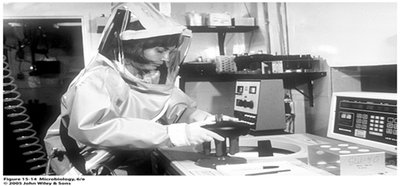

Nosocomial (Health-Care Associated) Infections
Definition and Sources
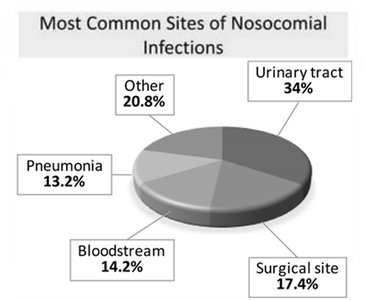
Nosocomial infections, also known as health-care associated infections (HAI), are acquired in hospitals or healthcare settings. They affect approximately 10% of patients, with significant morbidity and mortality. - Key Point 1: Sources can be exogenous (from outside the patient) or endogenous (from the patient's own flora). - Key Point 2: Susceptibility increases in compromised hosts, such as those with breaks in skin, debilitated, or immunosuppressed individuals. 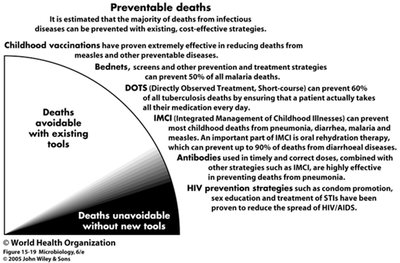
Transmission and Universal Precautions
Transmission of nosocomial infections varies and can involve contact with body fluids, contaminated equipment, or personnel. Universal precautions are recommended to prevent infection. - Key Point 1: Procedures contributing to infection include surgery, catheters, respiratory devices, and antibiotic use. - Key Point 2: Universal precautions include handwashing, wearing gloves, masks, and proper disposal of contaminated items. 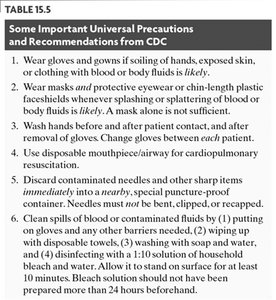
Types and Prevention of Nosocomial Infections
Most nosocomial infections are caused by bacteria, often normal flora or opportunistic pathogens. Common organisms include E. coli, Staphylococcus aureus, Clostridium difficile, and Pseudomonas aeruginosa. Prevention involves infection-control specialists, handwashing, sterile equipment, gloves, and insect control. 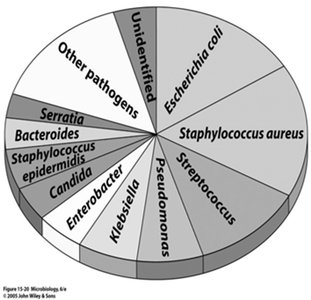
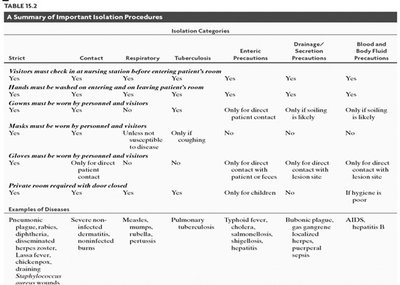
Summary of Important Isolation Procedures
Isolation procedures vary depending on the type of infection and include strict, contact, respiratory, tuberculosis, enteric, drainage/secretion, and blood/body fluid precautions.
Isolation Category | Strict | Contact | Respiratory | Tuberculosis | Enteric | Drainage/Secretion | Blood/Body Fluid |
|---|---|---|---|---|---|---|---|
Visitors check in | Yes | No | No | No | No | No | No |
Hand washing | Yes | Yes | Yes | Yes | Yes | Yes | Yes |
Gowns | Yes | Yes | No | No | No | Only if soiling likely | Only if soiling likely |
Masks | Yes | No | Yes | Only if coughing | No | Only for direct contact | Only for direct contact |
Gloves | Yes | Yes | No | No | Only for direct contact | Only for direct contact | Only for direct contact |
Examples | Streptococcus, Staphylococcus | MRSA, VRE | Pneumonia, tuberculosis | Typhoid fever, cholera | Bubonic plague, draining abscess | Hepatitis, AIDS |
Case Study: Nosocomial Infection
Pseudomonas aeruginosa Infection
A 53-year-old man with Guillain-Barré syndrome, hospitalized for two months, developed a nosocomial infection with Pseudomonas aeruginosa. This bacterium is a gram-negative rod, often resistant to antibiotics, and produces a blue-green pigment. It is commonly found in the environment and is associated with burns, sepsis, and cystic fibrosis. - Key Point 1: Symptoms included shortness of breath, chest pain, shock, and fever. - Key Point 2: Blood cultures confirmed Pseudomonas aeruginosa, which can cause septic shock due to endotoxin production.
Bioweapons and Bioterrorism
Historical and Modern Context
Bioweapons have been used historically, from infected corpses to smallpox blankets. Modern conventions prohibit the development, production, and use of biological and chemical weapons. - Key Point 1: Geneva Protocol and Biological and Toxins Weapons Convention are international agreements to control WMDs. - Key Point 2: Health care workers must be prepared for bioterrorism with training, vaccines, and medicines.
CDC Categories of Bioterrorism Agents
The CDC classifies bioterrorism agents into three categories: - Category A: High priority, person-to-person spread, high mortality, public panic (e.g., anthrax, smallpox, Ebola). - Category B: Moderately easy to spread, moderate morbidity, low mortality (e.g., food/water threats, brucellosis, toxins). - Category C: Emerging pathogens that may be engineered for mass spread, high morbidity and mortality potential (e.g., Nipah virus, hantavirus).
Preventable Deaths and Public Health Strategies
Preventable Deaths from Infectious Diseases
The majority of deaths from infectious diseases can be prevented with existing, cost-effective strategies such as childhood vaccinations, bednets, and improved treatment protocols. - Key Point 1: Vaccinations and prevention strategies significantly reduce mortality from diseases like measles, malaria, and tuberculosis. - Key Point 2: Integrated management and prevention strategies are highly effective in reducing deaths from pneumonia, diarrhea, and HIV/AIDS. 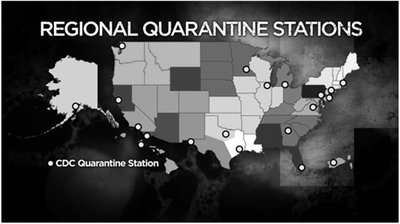
Summary
Understanding epidemiology, herd immunity, transmission control, biosafety, and nosocomial infections is essential for preventing and managing infectious diseases. Effective public health strategies, laboratory safety, and international cooperation are critical for disease control and bioterrorism preparedness.
