 Indietro
Fluid, Electrolyte, and Acid-Base Balance: Anatomy & Physiology II Study Guide
Guida di studio - Note intelligenti
 Appunti personalizzati basati sui tuoi materiali, ampliati con definizioni chiave, esempi e contesto.
Fluid, Electrolyte, and Acid-Base Balance
Water in the Body
Water is the most abundant component of body fluids and serves as a universal solvent, facilitating chemical reactions and transport of substances. The body acquires water from two main sources: preformed water (from ingested food and drink) and metabolic water (produced during cellular respiration).
Preformed water: About 90% of total water intake, derived from food and beverages.
Metabolic water: About 10% of total water, generated as a byproduct of cellular metabolism.
Water Content in the Human Body
The total water content in an average adult is approximately 40 liters, making up 50-60% of body weight. Water content varies by age, sex, and body composition.
Infants: >73% water
Adult males: ~60% water
Adult females: ~50% water (higher body fat, lower muscle mass)
Elderly: ~45% water
Body water is distributed between two major fluid compartments:
Intracellular Fluid (ICF): 70% of total body water; located within cells (cytosol).
Extracellular Fluid (ECF): 30% of total body water; includes blood plasma (1/3 of ECF) and interstitial fluid (2/3 of ECF).
Terminology Review: Solutions, Solvents, and Solutes
Understanding basic solution chemistry is essential for fluid and electrolyte balance.
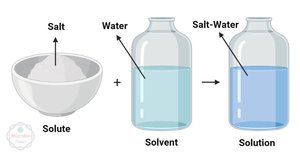
Solvent: The substance that dissolves other substances; water is the universal solvent.
Solute: Substances dissolved in the solvent; can be electrolytes or nonelectrolytes.
Solution: A mixture of solute(s) and solvent.
Electrolytes and Nonelectrolytes
Electrolytes
Electrolytes are solutes that dissociate into ions in water, enabling electrical conductivity and influencing osmotic balance.
Cations: Positively charged ions (e.g., Na+, K+, Ca2+, Mg2+).
Anions: Negatively charged ions (e.g., Cl-, HCO3-, phosphates, proteins).
Osmotic power: Electrolytes cause fluid shifts due to their ability to attract water.
Examples of electrolytes include sodium (Na+), potassium (K+), chloride (Cl-), bicarbonate (HCO3-), calcium (Ca2+), magnesium (Mg2+), and some proteins.
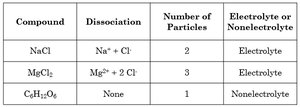
Compound | Dissociation | Number of Particles | Electrolyte or Nonelectrolyte |
|---|---|---|---|
NaCl | Na+ + Cl- | 2 | Electrolyte |
MgCl2 | Mg2+ + 2 Cl- | 3 | Electrolyte |
C6H12O6 | None | 1 | Nonelectrolyte |
Nonelectrolytes
Nonelectrolytes are mostly organic molecules that do not dissociate in water and do not conduct electricity.
Examples: Glucose, lipids, creatinine, urea
Electrolyte Distribution in Body Compartments
The distribution of electrolytes differs between intracellular and extracellular fluids.
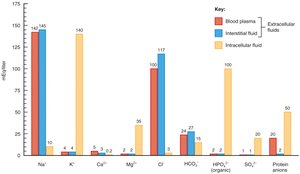
Intracellular Fluid (ICF): Most abundant cation is K+; most abundant anions are phosphates and proteins.
Extracellular Fluid (ECF): Most abundant cation is Na+; most abundant anion is Cl-.
Blood plasma: Contains more proteins than interstitial fluid.
Acid-Base Balance
Importance of pH Regulation
pH affects all functional proteins and biochemical reactions in the body. Normal blood pH is tightly regulated between 7.35 and 7.45. Deviations can lead to serious conditions:
Alkalosis: Arterial blood pH > 7.45
Acidosis: Arterial blood pH < 7.35
Buffers: Substances that prevent drastic changes in pH by neutralizing acids or bases.
Types of Acid-Base Imbalances
Respiratory Acidosis: Caused by hypoventilation or impaired lung function, leading to increased pCO2.
Respiratory Alkalosis: Caused by hyperventilation, strong emotions, or hypoxemia, leading to decreased pCO2.
Metabolic Acidosis: Caused by severe diarrhea, renal disease, untreated diabetes, starvation, or excess alcohol ingestion.
Metabolic Alkalosis: Caused by vomiting, gastric suctioning, excessive antacid ingestion, or excess aldosterone.
Regulation of Hydrogen Ion (H+) Concentration
The body regulates H+ concentration through three sequential mechanisms:
Chemical buffer systems: Immediate response (seconds).
Respiratory regulation: Fast response (1-3 minutes).
Renal mechanisms: Slowest but most powerful (hours to days).
Physiological Buffering Systems
The respiratory and urinary systems are the main physiological buffering systems. If one system malfunctions, the other compensates to maintain acid-base balance.
Bicarbonate Buffer System
The bicarbonate buffer system is central to acid-base regulation. The following equation represents the reversible reaction:
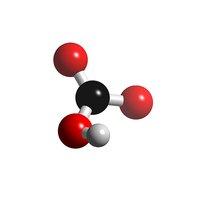
Changes in CO2 levels directly affect pH:
↑ CO2 → ↓ pH (more acidic)
↓ CO2 → ↑ pH (more basic)
Hyperventilation removes excess CO2 (pushes reaction left), while hypoventilation retains CO2 (pushes reaction right).
Renal Buffering
Renal mechanisms are the most powerful regulators of pH, though they act slowly. The kidneys eliminate fixed acids, conserve or generate bicarbonate, and regulate H+ secretion and reabsorption.
Blood pH too high (basic): Kidneys excrete excess bicarbonate and retain H+, lowering pH.
Blood pH too low (acidic): Kidneys reabsorb or generate more bicarbonate and secrete H+, raising pH.
Regulation depends on the kidney’s ability to secrete or retain H+. Tubule cells are impermeable to bicarbonate but permeable to CO2, allowing conversion and transport between compartments.
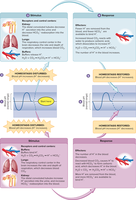
Summary of Renal and Respiratory Mechanisms
Both renal and respiratory systems work together to maintain acid-base balance. If one system is compromised, the other compensates to restore homeostasis.
Edition Notes
Content updated for Fall 2026 to align with the Unit 5 exam. Clarifications made regarding bicarbonate buffer system and acid-base regulation.
Credits: Julie Underwood, Laura Bianco, John Kaminski, and the BIO 121 cross college team.
