 Indietro
Fluid, Electrolyte, and Acid-Base Balance: Study Guide for Anatomy & Physiology
Guida di studio - Note intelligenti
 Appunti personalizzati basati sui tuoi materiali, ampliati con definizioni chiave, esempi e contesto.
Fluid Compartments of the Body
Major Fluid Compartments
The human body contains water distributed in distinct compartments, each serving specific physiological functions. Understanding these compartments is essential for grasping fluid balance and homeostasis.
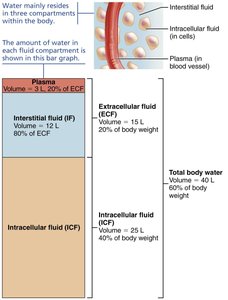
Intracellular Fluid (ICF): Fluid within cells; constitutes about 40% of body weight.
Extracellular Fluid (ECF): Fluid outside cells; includes plasma, interstitial fluid, lymph, cerebrospinal fluid (CSF), eye humors, synovial fluid, and serous fluid. ECF makes up about 20% of body weight.
Plasma: The liquid component of blood, accounting for about 3 L (20% of ECF).
Interstitial Fluid (IF): Fluid between cells, about 12 L (80% of ECF).
Exchange Between Fluid Compartments
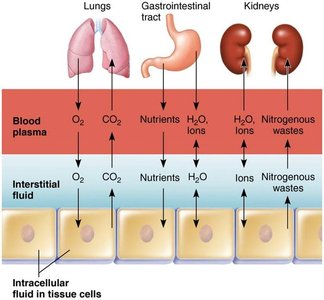
Gases, nutrients, water, and wastes are exchanged between plasma, interstitial fluid, and intracellular fluid. This exchange is vital for cellular function and overall homeostasis.
Blood plasma: Delivers oxygen, nutrients, and removes carbon dioxide and nitrogenous wastes.
Interstitial fluid: Acts as a medium for exchange between plasma and cells.
Intracellular fluid: Receives nutrients and oxygen, releases wastes.
Water Balance: Intake and Output
Sources of Water Intake and Output
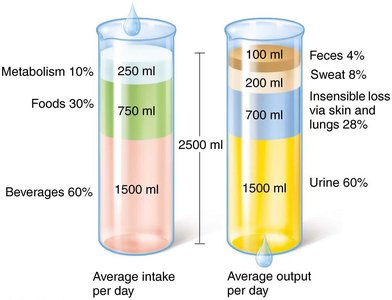
Water balance is maintained by matching intake and output. The body gains water from beverages, food, and metabolism, and loses it through urine, sweat, feces, and insensible losses.
Intake: Beverages (60%), foods (30%), metabolism (10%)
Output: Urine (60%), insensible loss via skin and lungs (28%), sweat (8%), feces (4%)
Thirst Mechanism
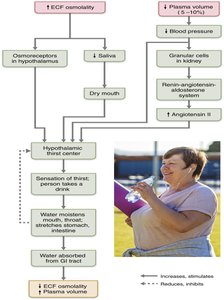
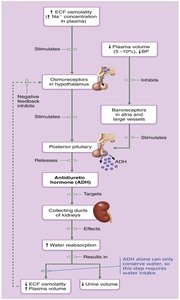
The thirst mechanism regulates water intake and is triggered by increased ECF osmolality or decreased plasma volume. Osmoreceptors in the hypothalamus detect these changes, stimulating thirst and water consumption.
Stimuli: Increased ECF osmolality, decreased plasma volume
Effect: Activation of hypothalamic thirst center, leading to water intake
Antidiuretic Hormone (ADH) Release
ADH is released in response to increased ECF osmolality or decreased plasma volume. It acts on the kidneys to promote water reabsorption, reducing urine output and restoring fluid balance.
Stimulus: Increased ECF osmolality or decreased plasma volume
Action: ADH released from posterior pituitary, targets kidney collecting ducts
Effect: Increased water reabsorption, decreased urine volume
Disturbances in Water Balance
Dehydration
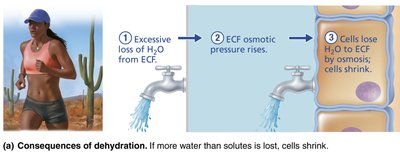
Dehydration occurs when water loss exceeds intake, leading to increased ECF osmotic pressure and cellular shrinkage.
Causes: Excessive sweating, diarrhea, inadequate intake
Consequences: Cells lose water to ECF by osmosis and shrink
Hypotonic Hydration (Water Gain)
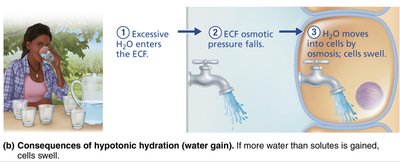
Hypotonic hydration results from excessive water intake or impaired excretion, causing ECF osmotic pressure to fall and cells to swell.
Causes: Excessive water intake, ADH secretion
Consequences: Water moves into cells by osmosis, cells swell
Edema
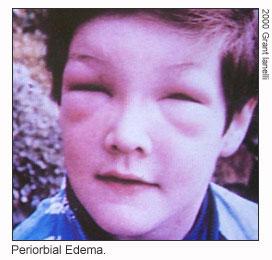
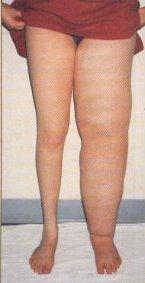
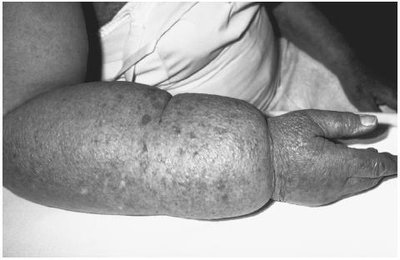
Edema is the accumulation of fluid in interstitial spaces, leading to swelling. It differs from hypotonic hydration, which affects cells.
Causes: Increased hydrostatic pressure, decreased osmotic pressure, lymphatic obstruction, surgical removal of lymph nodes
Consequences: Decreased circulating blood volume and blood pressure
Electrolyte Imbalances
Causes and Consequences of Electrolyte Imbalances
Electrolytes such as sodium, potassium, phosphate, chloride, calcium, and magnesium are essential for physiological functions. Imbalances can have significant clinical consequences.
Sodium (Na+)
Hypernatremia: Serum Na+ > 145 mEq/L; causes include dehydration, excessive IV NaCl; consequences: CNS dehydration, confusion, lethargy, twitching, convulsions
Hyponatremia: Serum Na+ < 135 mEq/L; causes: solute loss, water retention, diuretics, renal disease, excess ADH; consequences: brain swelling, confusion, coma, decreased blood volume and pressure
Potassium (K+)
Hyperkalemia: Serum K+ > 5.5 mEq/L; causes: renal failure, burns, rapid IV KCl; consequences: nausea, arrhythmias, muscle weakness, paralysis
Hypokalemia: Serum K+ < 3.5 mEq/L; causes: GI loss, diuretics, starvation; consequences: arrhythmias, muscle weakness, confusion
Phosphate (HPO42−)
Hyperphosphatemia: > 2.9 mEq/L; causes: renal failure, hypoparathyroidism; consequences: related to Ca2+ changes
Hypophosphatemia: < 1.6 mEq/L; causes: GI loss, hyperparathyroidism; consequences: related to Ca2+ changes
Chloride (Cl−)
Hyperchloremia: > 105 mEq/L; causes: dehydration, metabolic acidosis; consequences: related to pH abnormalities
Hypochloremia: < 95 mEq/L; causes: vomiting, alkalosis; consequences: related to underlying cause
Calcium (Ca2+)
Hypercalcemia: > 5.2 mEq/L or 10.5 mg%; causes: hyperparathyroidism, vitamin D excess; consequences: arrhythmias, muscle weakness, confusion, kidney stones
Hypocalcemia: < 4.5 mEq/L or 9 mg%; causes: burns, hypoparathyroidism, vitamin D deficiency; consequences: muscle cramps, tetany, convulsions, fractures
Magnesium (Mg2+)
Hypermagnesemia: > 2.2 mEq/L; causes: renal failure, excessive antacids; consequences: lethargy, coma, cardiac arrest
Hypomagnesemia: < 1.4 mEq/L; causes: alcohol use disorder, malnutrition; consequences: tremors, convulsions
Regulation of Sodium and Water Balance
Hormonal Regulation
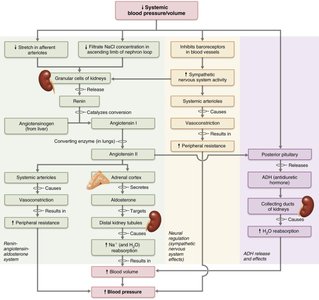
Sodium and water balance are regulated by several hormones, which help maintain blood pressure and volume.
ADH and Thirst: Maintain blood volume and osmolality
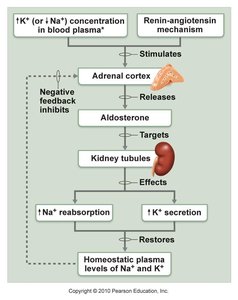
Renin-Angiotensin-Aldosterone System: Regulates Na+ and K+ levels
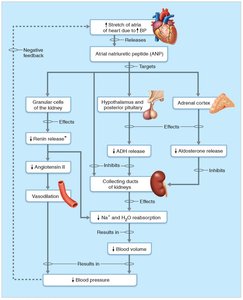
Atrial Natriuretic Peptide (ANP): Reduces blood pressure and volume by inhibiting vasoconstriction and Na+/H2O retention
Estrogens: Enhance NaCl reabsorption
Progesterone: Mild diuretic effect
Glucocorticoids: Enhance Na+ reabsorption
Acid-Base Balance
Normal pH Values
Blood pH: 7.4
ICF pH: 7.0
Acids, Bases, and Buffers
Acids: Proton donors; increase acidity
Bases: Proton acceptors; decrease acidity
Buffers: Compounds that resist pH changes by combining weak acids and bases
Major Chemical Buffer Systems
Bicarbonate Buffer System: Main ECF buffer; also used in ICF
Phosphate Buffer System: Important in urine and ICF Salts of H2PO4− (weak acid) and HPO42− (weak base)
Protein Buffer System: Amino acid side chains act as weak acids (COOH) or bases (NH2); important in ICF and plasma
Mechanisms for Maintaining pH
Blood Buffer Systems: Act within seconds
Respiratory Rate: Compensates within 1–3 minutes
Renal Mechanisms: Tubular secretion of H+ by kidneys; hours to days
Acid-Base Imbalances
Condition | Hallmark | Causes | Consequences |
|---|---|---|---|
Respiratory Acidosis | PCO2 > 45 mm Hg; pH < 7.35 | Impaired lung function, hypoventilation | CNS depression, confusion, lethargy |
Respiratory Alkalosis | PCO2 < 35 mm Hg; pH > 7.45 | Hyperventilation, anxiety, high altitude | Dizziness, tingling, muscle cramps |
Metabolic Acidosis | HCO3− < 22 mEq/L; pH < 7.35 | Diarrhea, renal disease, diabetes, starvation, alcohol | Rapid breathing, confusion, fatigue |
Metabolic Alkalosis | HCO3− > 26 mEq/L; pH > 7.45 | Vomiting, diuretics, antacids, aldosterone excess | Muscle twitching, irritability, convulsions |
Ketoacidosis
Ketoacidosis is a metabolic acidosis caused by uncontrolled diabetes mellitus or prolonged alcoholism. The liver breaks down fats and proteins, producing ketone bodies, which lower blood pH.
Diabetes: Inability to use glucose, increased fat metabolism
Alcoholism: Dehydration, impaired gluconeogenesis, increased ketone production
Summary Table: Electrolyte Imbalances
Ion | Abnormality | Serum Value | Causes | Consequences |
|---|---|---|---|---|
Sodium | Hypernatremia | > 145 mEq/L | Dehydration, IV NaCl | CNS dehydration, confusion, twitching |
Sodium | Hyponatremia | < 135 mEq/L | Diuretics, renal disease, excess ADH | Brain swelling, confusion, coma |
Potassium | Hyperkalemia | > 5.5 mEq/L | Renal failure, burns | Arrhythmias, muscle weakness |
Potassium | Hypokalemia | < 3.5 mEq/L | GI loss, diuretics | Arrhythmias, muscle weakness |
Phosphate | Hyperphosphatemia | > 2.9 mEq/L | Renal failure | Related to Ca2+ changes |
Phosphate | Hypophosphatemia | < 1.6 mEq/L | GI loss | Related to Ca2+ changes |
Chloride | Hyperchloremia | > 105 mEq/L | Dehydration, acidosis | Related to pH abnormalities |
Chloride | Hypochloremia | < 95 mEq/L | Vomiting, alkalosis | Related to underlying cause |
Calcium | Hypercalcemia | > 5.2 mEq/L | Hyperparathyroidism | Arrhythmias, muscle weakness |
Calcium | Hypocalcemia | < 4.5 mEq/L | Burns, hypoparathyroidism | Muscle cramps, tetany |
Magnesium | Hypermagnesemia | > 2.2 mEq/L | Renal failure | Lethargy, coma |
Magnesium | Hypomagnesemia | < 1.4 mEq/L | Alcohol use disorder | Tremors, convulsions |
Additional info: Academic context was added to clarify mechanisms, clinical consequences, and regulatory pathways for fluid, electrolyte, and acid-base balance. Tables were reconstructed for clarity and completeness.
