 Indietro
Fundamentals of the Nervous System and Nervous Tissue: Study Guide
Guida di studio - Note intelligenti
 Appunti personalizzati basati sui tuoi materiali, ampliati con definizioni chiave, esempi e contesto.
Fundamentals of the Nervous System and Nervous Tissue
Characteristics and Functions of the Nervous System
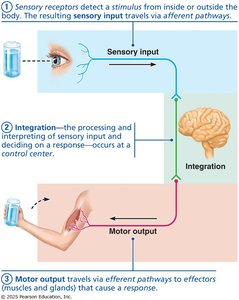
The nervous system is a complex network responsible for controlling and coordinating bodily functions. It enables rapid communication between different parts of the body and is essential for sensation, integration, and response.
Sensory Input: The nervous system detects internal and external stimuli through sensory receptors. This information is transmitted via afferent pathways to the central nervous system (CNS).
Integration: The CNS processes and interprets sensory input, deciding on an appropriate response. This occurs in the brain or spinal cord.
Motor Output: The nervous system sends signals via efferent pathways to effectors (muscles and glands), causing a response.
Reflex Arc: A pathway that allows for rapid, automatic responses to stimuli.
Major Divisions of the Nervous System
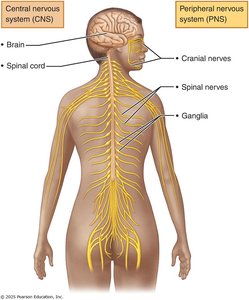
The nervous system is divided into two main structural and functional components: the central nervous system (CNS) and the peripheral nervous system (PNS).
Central Nervous System (CNS): Consists of the brain and spinal cord. It acts as the integrative and control center.
Peripheral Nervous System (PNS): Composed of cranial nerves, spinal nerves, and ganglia. It connects the CNS to the rest of the body.
General Organization of the Nervous System
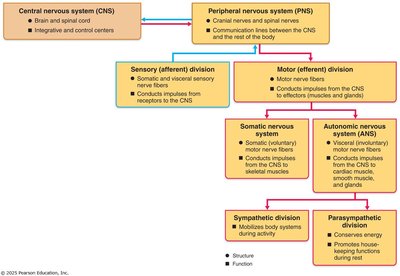
Sensory (Afferent) Division: Carries sensory information from receptors to the CNS.
Motor (Efferent) Division: Transmits commands from the CNS to effectors.
Somatic Nervous System: Controls voluntary movements (skeletal muscles).
Autonomic Nervous System (ANS): Regulates involuntary functions (smooth muscle, cardiac muscle, glands). Includes sympathetic and parasympathetic divisions.
Histology of Nervous Tissue
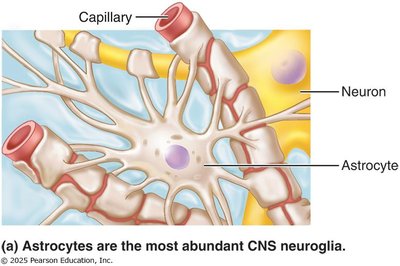
Nervous tissue consists of two main cell types: neurons and neuroglia (glial cells). Neurons are excitable cells that transmit electrical signals, while neuroglia provide support and protection.
Types of Neuroglia (Glial Cells)
Astrocytes: Most abundant CNS glia; support neurons, regulate blood-brain barrier, and maintain extracellular environment.
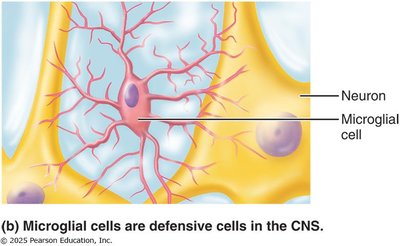
Microglial Cells: Defensive cells; act as macrophages to remove debris and pathogens.
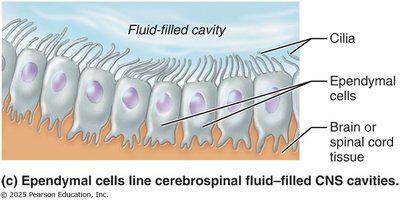
Ependymal Cells: Line cerebrospinal fluid-filled cavities; help circulate CSF.
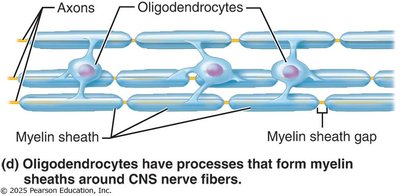
Oligodendrocytes: Form myelin sheaths in the CNS; myelinate multiple axons.
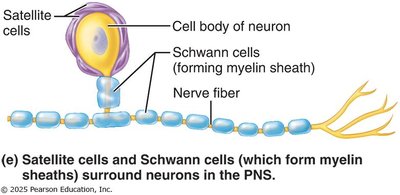
Satellite Cells: Surround neuron cell bodies in the PNS; regulate environment.
Schwann Cells: Form myelin sheaths in the PNS; myelinate one axon segment each.
Neurons: Structure and Function
Neurons are the structural and functional units of the nervous system. They are specialized for communication and possess unique properties.
Excitability: Ability to respond to stimuli and generate electrical signals.
Membrane Potential: Electrical charge difference across the cell membrane.
Action Potentials: Rapid electrical impulses transmitted along the neuron.
Longevity: Neurons can live for a lifetime.
Amitotic: Most neurons do not divide after development.
High Metabolic Rate: Require continuous supply of oxygen and glucose.
Major Structures of a Typical Neuron
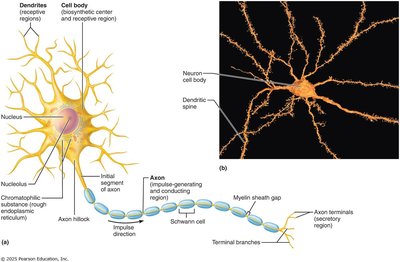
Cell Body (Soma): Contains nucleus and organelles; site of metabolic activity.
Dendrites: Receive input signals from other neurons.
Axon: Conducts nerve impulses away from the cell body.
Axon Hillock: Initiates action potentials.
Axon Terminals: Release neurotransmitters to communicate with other cells.
Neuron Groupings
Tracts: Bundles of axons in the CNS.
Nerves: Bundles of axons in the PNS.
Nuclei: Clusters of cell bodies in the CNS.
Ganglia: Clusters of cell bodies in the PNS.
Axonal Transport
Anterograde Transport: Movement from cell body to axon terminals (e.g., neurotransmitters).
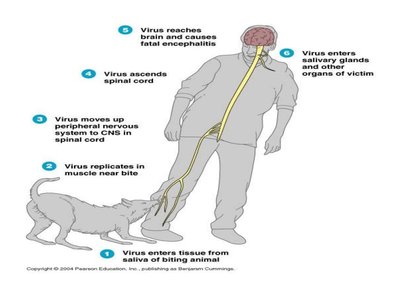
Retrograde Transport: Movement from axon terminals to cell body (e.g., recycled materials, viruses).
Functional Types of Neurons
Neurons are classified based on their function:
Sensory Neurons: Carry information from sensory receptors to the CNS.
Interneurons: Located within the CNS; process and integrate information.
Motor Neurons: Transmit commands from the CNS to effectors (muscles/glands).
Myelination and Myelin Sheath
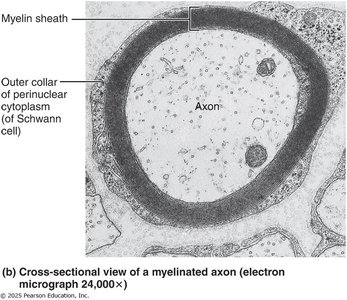
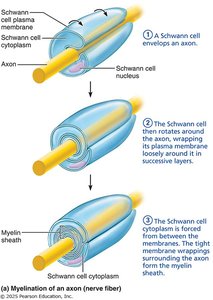
Myelin is a lipid-rich insulating material that surrounds axons, increasing the speed of nerve impulse conduction. Myelinated axons conduct impulses faster than unmyelinated axons.
Oligodendrocytes (CNS): Myelinate multiple axons.
Schwann Cells (PNS): Myelinate one axon segment each.
Nodes of Ranvier: Gaps between myelin segments; enable saltatory conduction (impulse jumps from node to node).
Comparison of Oligodendrocytes and Schwann Cells
Cell Type | Location | Function |
|---|---|---|
Oligodendrocyte | CNS | Myelinates multiple axons |
Schwann Cell | PNS | Myelinates one axon segment |
Disorders Associated with Axonal Transport
Rabies: Virus travels retrograde along axons to the CNS.
Herpes Simplex Virus (HSV): Uses axonal transport to reach the CNS.
Polio: Infects motor neurons, leading to paralysis.
Summary Table: Types of Glial Cells
Cell Type | Location | Function |
|---|---|---|
Astrocyte | CNS | Support, regulate environment |
Microglial Cell | CNS | Defense, phagocytosis |
Ependymal Cell | CNS | Line CSF cavities, circulate CSF |
Oligodendrocyte | CNS | Myelinate axons |
Satellite Cell | PNS | Support neuron cell bodies |
Schwann Cell | PNS | Myelinate axons |
Key Equations and Concepts
Membrane Potential: The voltage difference across a neuron's plasma membrane.
Saltatory Conduction: Rapid transmission of nerve impulses along myelinated axons, jumping from node to node.
Example: In multiple sclerosis, myelin is damaged, leading to slower nerve impulse conduction and neurological symptoms.
Additional info: The notes above expand on brief slide points to provide a comprehensive, exam-ready summary of nervous system fundamentals, histology, neuron structure, and myelination.
