 Indietro
Gas Exchange and Transport in Human Physiology
Guida di studio - Note intelligenti
 Appunti personalizzati basati sui tuoi materiali, ampliati con definizioni chiave, esempi e contesto.
Gas Pressure and Volume
Understanding Gas Pressure
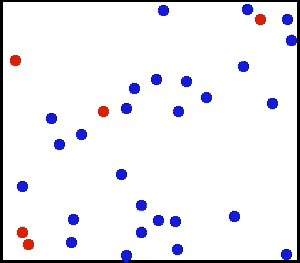
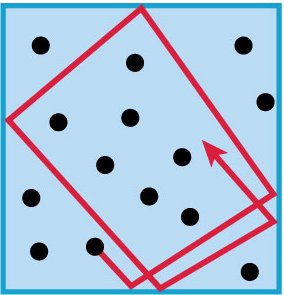
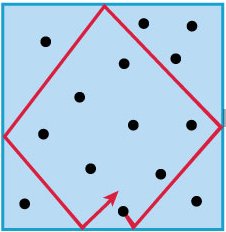
Gas pressure is the force generated by molecules bombarding the surface of a container and each other. The number of molecules per unit volume directly affects the pressure: more molecules in a given volume result in higher pressure. This relationship is described by Boyle’s Law, which states that pressure is inversely proportional to volume for a given amount of gas.
Boyle’s Law:
Example: Decreasing the volume of a container with the same number of gas molecules increases the pressure.
Partial Pressures (Dalton's Law)
Dalton’s Law of Partial Pressures
In a mixture of gases, each gas exerts its own pressure independently of the others. The total pressure is the sum of the partial pressures of each gas. This is crucial in physiology for understanding how gases like oxygen, carbon dioxide, and nitrogen behave in the atmosphere and in the body.
Dalton’s Law:
Partial Pressure Calculation:
Example: Atmospheric air at sea level (760 mmHg): - Nitrogen (N2): 79% → mmHg - Oxygen (O2): 21% → mmHg - Carbon dioxide (CO2): 0.03% → mmHg
Pressure and Fluids: Gas Dissolving in Liquids
Gas-Liquid Equilibrium and Henry’s Law
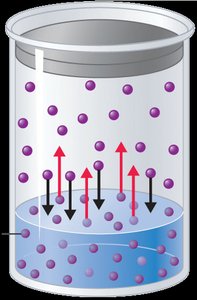
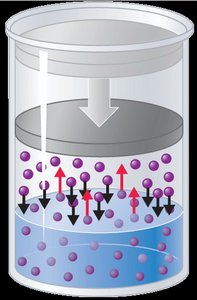
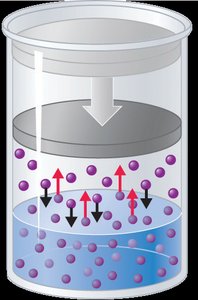
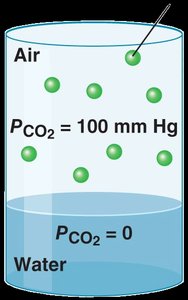
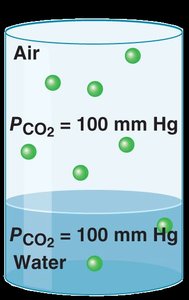
When a gas is in contact with a liquid, molecules will dissolve into the liquid until equilibrium is reached—when the number of molecules entering and leaving the solution is equal. The amount of gas that dissolves is proportional to its partial pressure (Henry’s Law), but each gas has a different solubility in liquids.
Henry’s Law: The concentration of a dissolved gas is proportional to its partial pressure above the liquid.
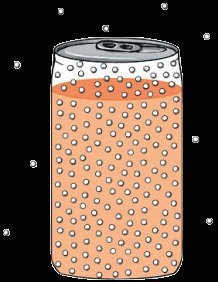
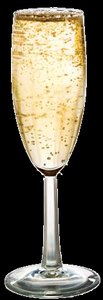
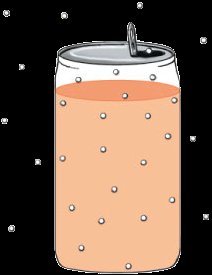
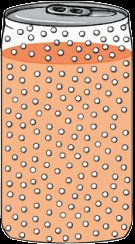
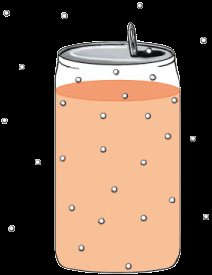
Example: High pressure in a sealed soda can allows more CO2 to dissolve; opening the can releases pressure and CO2 escapes until equilibrium is reached.
Decompression Sickness
Effects of Pressure Changes on Gas Solubility
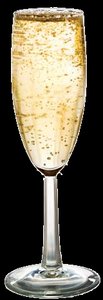
At high pressures, such as during deep-sea diving, large amounts of inert gases (e.g., nitrogen) dissolve in body tissues. If ascent is too rapid, these gases come out of solution as bubbles, causing decompression sickness ("the bends"). Hyperbaric chambers are used to treat this by slowly reducing pressure.
Solubility of Gases in Liquids
Oxygen and Carbon Dioxide Solubility
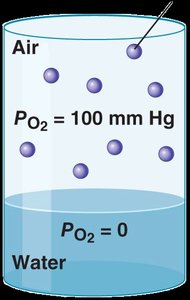
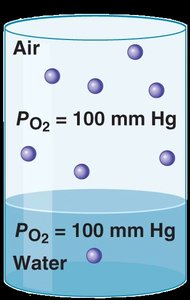
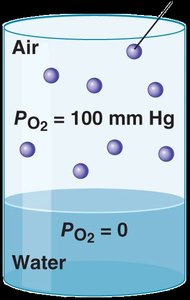
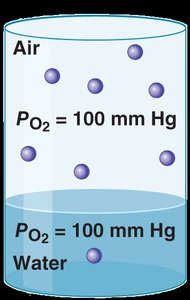
Different gases have different solubilities in water. For example, at 100 mmHg partial pressure, the concentration of O2 in water is much lower than in air, while CO2 is much more soluble in water than O2.
Oxygen: [O2] in air = 5.2 mmol/L; [O2] in water = 0.15 mmol/L
Carbon Dioxide: [CO2] in air = 5.2 mmol/L; [CO2] in water = 3.0 mmol/L
Efficiency of Gas Exchange
Factors Affecting Gas Exchange in the Lungs
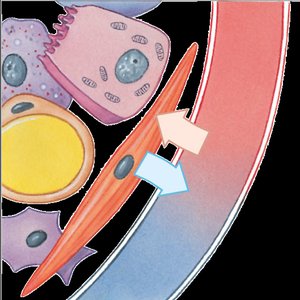
Gas exchange between alveolar air and blood is highly efficient due to several factors:
Large differences in partial pressures: The greater the difference, the faster the movement of gases.
Short diffusion distances: The alveolar-capillary membrane is extremely thin (~0.5 µm).
Large surface area: The alveoli provide a surface area of about 140 m2 (half a tennis court).
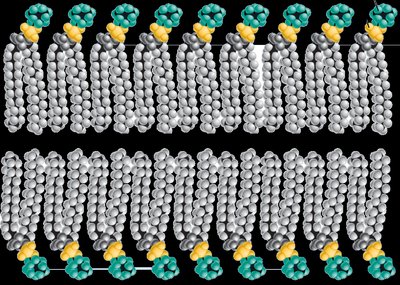
Nonpolar, lipid-soluble gases: O2 and CO2 are nonpolar and cross cell membranes easily.


Hemoglobin and Oxygen Transport
Role of Hemoglobin in Oxygen Saturation
Oxygen does not dissolve well in plasma, so hemoglobin is essential for transporting O2 in the blood. Each hemoglobin molecule can bind up to four O2 molecules, and its affinity for O2 increases as more O2 binds (cooperativity). This allows for efficient loading in the lungs and unloading in tissues.
Hemoglobin binding:
Cooperativity: Hemoglobin’s affinity for O2 increases with each O2 bound.
Oxygen saturation curve: Shows steep increase at low PO2, plateau at high PO2.
Factors Affecting Hemoglobin-Oxygen Affinity
Intrinsic and Extrinsic Modulators
Several factors influence hemoglobin’s affinity for oxygen:
Temperature: Higher temperatures decrease affinity (shift curve right).
pH (Bohr effect): Lower pH (higher H+) decreases affinity.
PCO2: Higher CO2 decreases affinity (carbamino effect).
2,3-BPG: Increased 2,3-bisphosphoglycerate decreases affinity.
CO (carbon monoxide): Binds hemoglobin much more strongly than O2, preventing O2 transport.
These factors allow hemoglobin to release more O2 in metabolically active tissues.
Myoglobin and Fetal Hemoglobin
Specialized Oxygen Carriers
Myoglobin, found in muscle tissue, is a monomeric protein with a higher affinity for O2 than hemoglobin, allowing for O2 storage. Fetal hemoglobin has a different structure, giving it a higher affinity for O2 than adult hemoglobin, facilitating O2 transfer from mother to fetus.
Carbon Dioxide Transport
Mechanisms of CO2 Transport in Blood
CO2 is transported in the blood by three main mechanisms:
Dissolved in plasma as gas (5-10%)
As bicarbonate ion (80-90%): CO2 reacts with water to form carbonic acid, which dissociates into H+ and HCO3-. This reaction is catalyzed by carbonic anhydrase in red blood cells.
Bound to hemoglobin as carbaminohemoglobin (5-10%)
The chloride shift exchanges HCO3- for Cl- across the RBC membrane to maintain ionic balance.
Chemoreceptors and Regulation of Ventilation
Peripheral and Central Chemoreceptors
Chemoreceptors monitor blood gases and regulate ventilation:
Peripheral chemoreceptors: Located in carotid bodies and aortic bodies; respond to changes in arterial PO2, PCO2, and [H+].
Central chemoreceptors: Located in the medulla oblongata; respond to changes in pH of cerebrospinal fluid (indirectly to CO2).
CO2 and H+ are the most important regulators of ventilation.
Ventilation is adjusted via negative feedback to maintain homeostasis of blood gases.
Overview of Gastrointestinal Processes
Four Basic GI Processes
The gastrointestinal (GI) system is responsible for digestion and absorption of nutrients. The four basic processes are:
Digestion: Mechanical and chemical breakdown of food into smaller molecules.
Secretion: Release of enzymes and fluids into the GI tract to aid digestion and absorption.
Absorption: Transport of digestive end-products into the bloodstream.
Motility: Mixing and propulsion of contents through the GI tract by smooth muscle contractions.
Functional Anatomy of the Gastrointestinal Wall
Layers of the GI Tract Wall
The GI tract wall consists of several layers, each with specialized functions:
Mucosa: Innermost layer, includes mucous membrane (enterocytes: absorptive, exocrine, and endocrine cells), lamina propria (connective tissue, lymphatics), and muscularis mucosae (smooth muscle for folding).
Submucosa: Thick connective tissue with blood vessels, nerves (submucosal plexus), and glands; provides elasticity.
Muscularis externa: Circular and longitudinal smooth muscle layers responsible for GI motility (peristalsis and segmentation).
Serosa: Outermost layer; connective tissue and mesothelium that secretes lubricating fluid and connects to mesenteries.
Mouth, Pharynx, and Esophagus
Salivary Glands and Saliva Composition
The mouth initiates digestion through mastication and saliva secretion. Saliva contains:
Bicarbonate (HCO3-): Buffers and neutralizes acids.
Mucus: Glycoproteins that lubricate food and protect the GI lining.
Salivary amylase: Enzyme that begins starch digestion.
Lysozyme: Enzyme that destroys certain bacteria, preventing tooth decay.
Salivary secretion is regulated by both branches of the autonomic nervous system:
Parasympathetic: Stimulates large amounts of watery, bicarbonate-rich saliva (e.g., in response to food, sight, or smell).
Sympathetic: Stimulates small amounts of viscous, protein-rich saliva (e.g., during stress or nervousness).
