 Indietro
Histology of Human Tissues: A Mini-Textbook Study Guide
Guida di studio - Note intelligenti
 Appunti personalizzati basati sui tuoi materiali, ampliati con definizioni chiave, esempi e contesto.
Histology: The Study of Tissues
Histology is the branch of anatomy that studies the microscopic structure of tissues. Understanding tissue types and their characteristics is fundamental in Anatomy & Physiology, as tissues form the basis for all organs and body systems.
Major Tissue Types
Epithelial Tissue: Covers body surfaces, lines cavities, and forms glands.
Connective Tissue: Supports, protects, and binds other tissues together.
Muscle Tissue: Responsible for movement.
Nervous Tissue: Initiates and transmits electrical impulses.
Epithelial Tissue
General Characteristics
Epithelial tissue consists of closely packed cells with minimal extracellular matrix. It serves as a protective barrier and is involved in absorption, secretion, and sensation.
Cellularity: Composed almost entirely of cells.
Polarity: Has an apical (top) and basal (bottom) surface.
Avascular: Lacks blood vessels; nutrients diffuse from underlying tissues.
Regeneration: High capacity for renewal.
Types of Epithelia
Simple Epithelium: Single cell layer; functions in absorption, secretion, and filtration.
Stratified Epithelium: Multiple layers; provides protection.
Specialized Types: Includes pseudostratified and transitional epithelia.
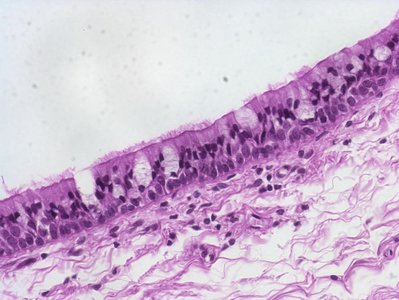
Example: Pseudostratified Ciliated Columnar Epithelium
This type lines portions of the respiratory tract and contains cilia and goblet cells for mucus secretion and movement.
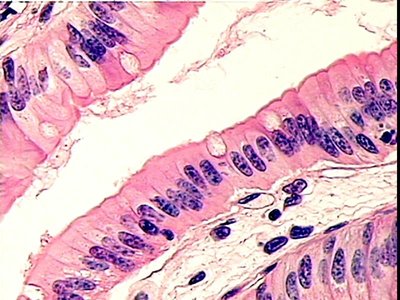
Example: Simple Columnar Epithelium
Found in the digestive tract, this epithelium is specialized for absorption and secretion.
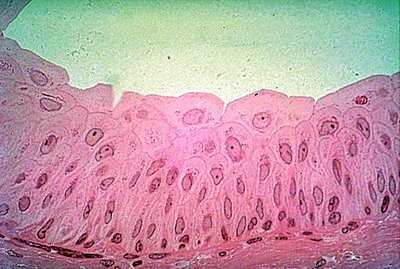
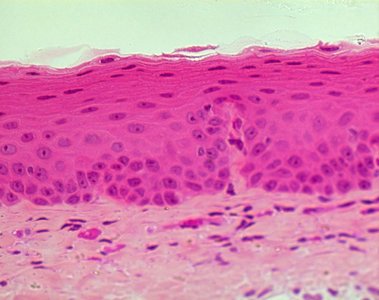
Example: Stratified Squamous Epithelium
Provides protection in areas subject to abrasion, such as the skin and oral cavity.
Connective Tissue
General Characteristics
Connective tissue is the most abundant and widely distributed tissue type. It supports, binds, and protects other tissues and organs.
Cells: Various types, including fibroblasts, chondrocytes, osteocytes, and blood cells.
Extracellular Matrix: Composed of protein fibers (collagen, elastic, reticular) and ground substance.
Vascularity: Varies from avascular (cartilage) to highly vascular (bone).
Types of Connective Tissue
Loose Connective Tissue: Areolar, adipose, and reticular tissues.
Dense Connective Tissue: Dense regular, dense irregular, and elastic tissues.
Specialized Connective Tissue: Cartilage, bone, and blood.
Example: Areolar Connective Tissue
Areolar tissue is a loose connective tissue that holds organs in place and attaches epithelial tissue to underlying tissues.
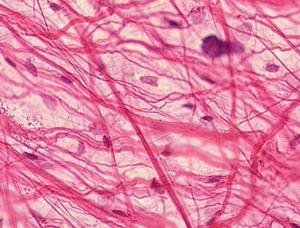
Example: Dense Regular Connective Tissue
This tissue contains closely packed collagen fibers aligned in parallel, providing great tensile strength (e.g., tendons and ligaments).
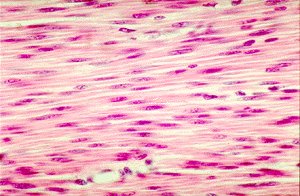
Example: Dense Irregular Connective Tissue
Collagen fibers are arranged irregularly, providing strength in multiple directions (e.g., dermis of the skin).
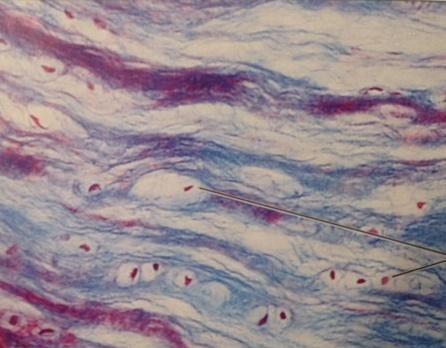
Example: Adipose Tissue
Adipose tissue stores fat for energy, insulation, and cushioning.
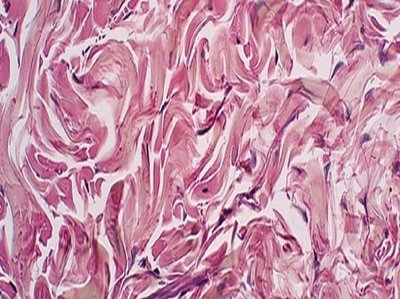
Example: Reticular Connective Tissue
Forms a supportive framework for lymphoid organs such as lymph nodes and spleen.
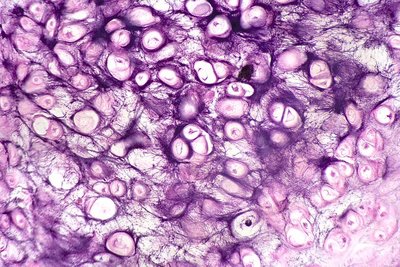
Example: Cartilage
Cartilage is a flexible connective tissue found in joints, ear, nose, and respiratory tract. It is avascular and contains chondrocytes in lacunae.
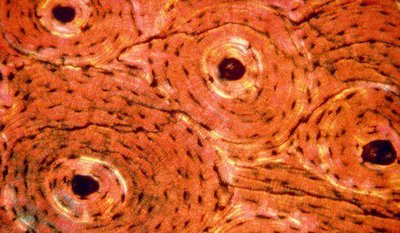
Example: Bone (Osseous) Tissue
Bone tissue provides structural support and protection. It contains osteocytes in lacunae arranged in concentric circles (osteons).
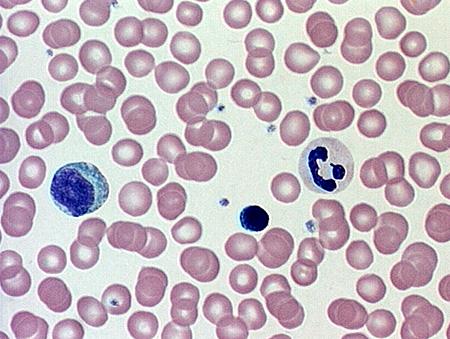
Example: Blood
Blood is a fluid connective tissue composed of red blood cells, white blood cells, and platelets suspended in plasma. It functions in transport, regulation, and protection.
Muscle Tissue
General Characteristics
Muscle tissue is specialized for contraction and movement. There are three types: skeletal, cardiac, and smooth muscle.
Skeletal Muscle: Voluntary, striated, multinucleated.
Cardiac Muscle: Involuntary, striated, branched, with intercalated discs.
Smooth Muscle: Involuntary, non-striated, spindle-shaped cells.
Example: Smooth Muscle Tissue
Smooth muscle is found in the walls of hollow organs (e.g., intestines, blood vessels) and is responsible for involuntary movements.
Nervous Tissue
General Characteristics
Nervous tissue is specialized for communication via electrical and chemical signals. It consists of neurons and supporting glial cells.
Neurons: Transmit electrical impulses.
Glial Cells: Support, protect, and nourish neurons.
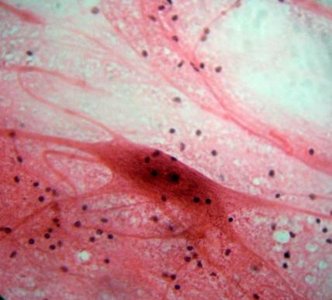
Example: Nervous Tissue
Nervous tissue is found in the brain, spinal cord, and peripheral nerves. Neurons have a cell body, dendrites, and an axon.
Summary Table: Major Tissue Types and Examples
Tissue Type | Example | Main Function |
|---|---|---|
Epithelial | Stratified squamous, simple columnar | Protection, absorption, secretion |
Connective | Areolar, bone, blood, cartilage | Support, binding, transport |
Muscle | Smooth muscle | Movement |
Nervous | Neuron | Communication |
Additional info: Images were matched to tissue types based on standard histological appearance and context. This guide covers content relevant to "Tissue: The Living Fabric" (Ch. 4) and supports understanding for other chapters involving tissue structure and function.
