 Indietro
Host-Microbe Relationships- microbio
Guida di studio - Note intelligenti
 Appunti personalizzati basati sui tuoi materiali, ampliati con definizioni chiave, esempi e contesto.
Host-Microbe Relationships
Normal Microflora
Normal microflora, also known as normal flora, are microorganisms that reside in and on the human body without causing disease under normal circumstances. They play a crucial role in maintaining health by preventing the colonization of pathogenic microbes through microbial antagonism.
Definition: Microbial antagonism refers to the competition between normal flora and potential pathogens for nutrients and space.
Examples: Escherichia coli is a common normal flora in the intestines, responsible for 80% of urinary tract infection cases.
Reservoir: The self (endogenous) is often the reservoir for infections caused by normal flora.
Transmission/Susceptibility: Poor hygiene, incomplete bladder emptying, anatomical differences (shorter urethra in females), and urinary catheters increase susceptibility.
Portals of Entry and Exit
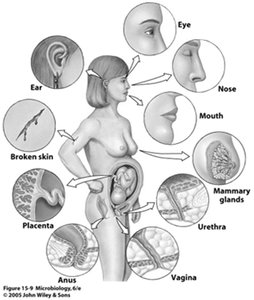
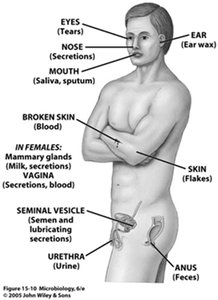
Pathogens enter and exit the human body through specific anatomical sites known as portals. Understanding these portals is essential for comprehending disease transmission and prevention.
Portals of Entry: Include the eye, ear, nose, mouth, broken skin, placenta, mammary glands, urethra, anus, and vagina.
Portals of Exit: Generally associated with body secretions such as tears, ear wax, saliva, sputum, blood, milk, vaginal secretions, semen, urine, and skin flakes.
Infectious Dose
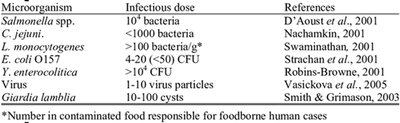
The infectious dose is the minimum number of microorganisms required to cause infection in a host. This varies by pathogen and route of transmission.
Foodborne Transmission: Pathogens such as Salmonella, Campylobacter jejuni, Listeria monocytogenes, E. coli, Yersinia enterocolitica, viruses, and Giardia lamblia have different infectious doses.
Microorganism | Infectious Dose | References |
|---|---|---|
Salmonella spp. | 106 bacteria | D'Aoust et al., 2001 |
C. jejuni | <1000 bacteria | Nachamkin, 2001 |
L. monocytogenes | >100 bacteria | Swaminathan, 2001 |
E. coli O157 | 4-20 (<50) CFU | Strachan et al., 2001 |
Y. enterocolitica | >104 CFU | Robins-Browne, 2001 |
Virus | 1-10 virus particles | Vasickova et al., 2005 |
Giardia lamblia | 10-100 cysts | Smith & Grimason, 2003 |
Urinary Tract Infections (UTIs)
Pathogenesis and Symptoms
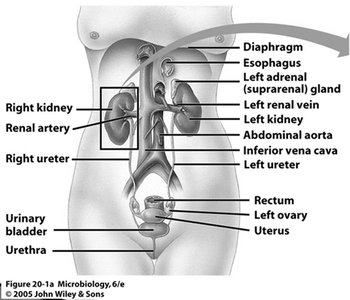
UTIs are commonly caused by enteric bacteria, especially Escherichia coli. The urinary tract is normally sterile, but urine provides a good growth medium for bacteria.
Types: Urethritis (urethra), cystitis (bladder), pyelonephritis (kidney).
Symptoms: Pain/burning during urination, frequent urination, kidney pain, confusion (especially in elderly).
Diagnosis
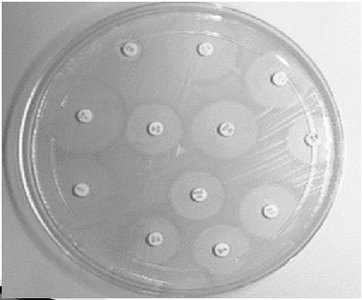
Diagnosis involves urine culture, microscopic examination, and antibiotic susceptibility testing. Samples must be tested immediately or refrigerated to prevent bacterial growth.
Urine Culture: Identifies the number and type of microorganisms present.
Antibiotic Susceptibility Testing: Determines the most effective antibiotic for treatment.
Treatment and Prevention
Treatment involves prompt administration of antibiotics, with adjustments based on susceptibility results. Prevention includes good hygiene and proper catheter care.
Begin antibiotics immediately to prevent spread.
Adjust medication if susceptibility testing indicates resistance.
Microbial Pathogenicity and Virulence Factors
Virulence Factors
Virulence factors are characteristics of microorganisms that enable them to cause infection and disease. These include mechanisms for attachment, invasiveness, tissue damage, and toxin production.
Attachment: Microbes attach to host cells via pili or capsules.

Invasiveness: Enzymes such as hyaluronidase break down tissues, allowing pathogens to invade deeper layers.

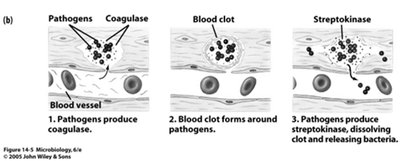
Tissue Damage: Enzymes like coagulase (clots blood), streptokinase (dissolves clots), leukocidins (destroy WBCs), and hemolysins (lyse RBCs) contribute to tissue destruction.

Hemolysins and Blood Agar
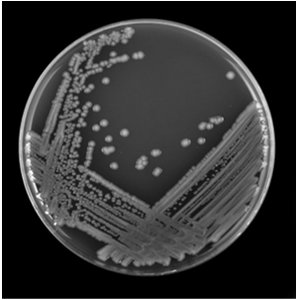
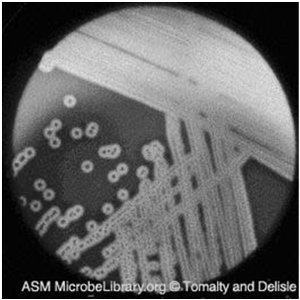
Hemolysins are enzymes that lyse red blood cells. Blood agar is used to identify the type of hemolysin produced by bacteria, which helps differentiate species.
Alpha-hemolysis (α): Partial lysis, greenish zone.
Beta-hemolysis (β): Complete lysis, clear zone.
Gamma-hemolysis (γ): No lysis, no zone.

Streptococcal Pharyngitis (Strep Throat)
Etiology and Symptoms
Strep throat is caused by Streptococcus pyogenes, a Gram-positive, beta-hemolytic streptococcus. It is transmitted via inhalation of droplets from infected individuals or carriers.
Symptoms: Severe sore throat, fever, swollen tonsils, adenoids, and lymph nodes.
Diagnosis
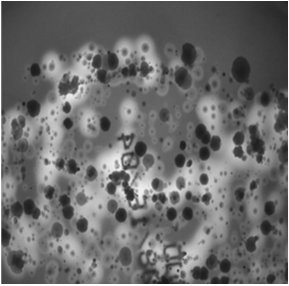
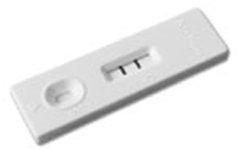
Diagnosis is made by throat swab and culture on blood agar to observe beta-hemolysis, or by rapid antigen tests.
Complications
If untreated, strep throat can lead to rheumatic fever, an autoimmune reaction causing fever, rash, arthritis, and damage to the mitral valve of the heart.
Treatment
Treatment involves antibiotics, and prophylactic antibiotics may be recommended before dental work for those with a history of rheumatic fever.
Bacterial Toxins
Types of Toxins
Bacterial toxins are poisonous substances produced by bacteria. They are classified as exotoxins (excreted by cells) and endotoxins (released when cells die).
Exotoxins: Act on specific tissues, such as neurotoxins and enterotoxins.
Endotoxins: Released from Gram-negative bacteria upon cell death.
Botulism
Etiology and Pathogenesis
Botulism is caused by Clostridium botulinum, an anaerobic, endospore-forming Gram-positive bacillus. The neurotoxin produced is the most potent known.
Reservoir: Spores in soil, contaminating food.
Transmission: Improperly canned food allows spores to germinate and produce toxin.
Pathogenicity: Toxin ingested causes intoxication, affecting muscle signaling.
Symptoms: Flaccid paralysis, respiratory failure.
Prognosis: Untreated mortality 60%; modern treatment reduces mortality to ~3%.
Diagnosis and Treatment
Diagnosis: Culture organism from food/feces, detect toxin in food.
Treatment: Immediate antitoxin administration, maintain respiration. Antibiotics are ineffective against the toxin.
Prevention: Proper canning, boiling home-canned food for 20 minutes destroys toxin.
Special Cases
Infant Botulism: No honey for babies under 1 year; spores germinate in gut and produce toxin.
Wound Botulism: Spores in wounds produce toxin, increased with IV drug use.
Botulinum Toxin (Botox): Used therapeutically in small doses.
Tetanus
Etiology and Pathogenesis
Tetanus is caused by Clostridium tetani, an anaerobic, endospore-forming Gram-positive bacillus. The neurotoxin produced causes spastic paralysis.
Reservoir: Spores in soil, normal flora of animals and humans.
Transmission: Puncture wounds provide anaerobic environment for spore germination.
Symptoms: Painful muscle spasms, "lockjaw".
Diagnosis: Based on symptoms; no blood test available.
Treatment: Antitoxin, maintain respiration and nutrition.
Prevention: Vaccine with boosters every 10 years.
Emerging Infectious Diseases: West Nile Fever
Etiology and Transmission
West Nile fever is caused by the West Nile virus, endemic along the Nile River and emerging in the U.S. since 1999. The reservoir is infected birds, and transmission occurs via mosquito vectors.
Symptoms: Most cases are asymptomatic; West Nile Fever (25%) presents with fever and joint pain; West Nile Encephalitis (1%) is more severe, especially in infants and elderly.
Diagnosis: Blood test for antibodies to the virus.
Treatment/Prevention: No cure; treat symptoms, mosquito control, and avoidance. Vaccine available for horses.
Summary Table: Bacterial Virulence Factors
Virulence Factor | Mechanism | Example |
|---|---|---|
Attachment | Pili, capsule | E. coli in urinary tract |
Invasiveness | Enzymes (hyaluronidase) | Streptococci |
Tissue Damage | Coagulase, streptokinase, hemolysins | Staphylococcus, Streptococcus |
Toxins | Exotoxins, endotoxins | Clostridium botulinum, C. tetani |
Additional info: Academic context was added to clarify mechanisms, diagnostic methods, and prevention strategies for each disease and virulence factor.
