 Indietro
Influenza pt 1- microbio
Guida di studio - Note intelligenti
 Appunti personalizzati basati sui tuoi materiali, ampliati con definizioni chiave, esempi e contesto.
Influenza Virus: Etiology and Structure
Etiologic Agent and Viral Structure
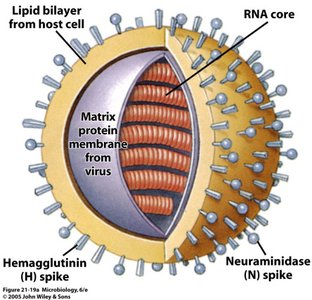
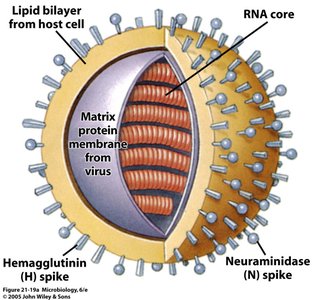
The influenza virus is a single-stranded RNA virus belonging to the Orthomyxoviridae family. It is enveloped and characterized by surface spikes, which play crucial roles in infection and immunity.
Etiologic Agent: Influenzavirus
Genome: Single-stranded RNA (s.s. RNA)
Envelope: Lipid bilayer derived from the host cell
Surface Spikes: Hemagglutinin (H) and Neuraminidase (N)
Matrix Protein: Provides structural integrity
Types of Influenza Virus
There are three main types of influenza virus, each with distinct epidemiological characteristics:
Influenza A: Infects humans, birds, swine, and other vertebrates; many subtypes (named by H & N types, e.g., H1N1, H3N2); can cause pandemics.
Influenza B: Infects humans only; causes limited epidemics.
Influenza C: Infects humans; rarely diagnosed as a clinical problem.
Transmission and Reservoirs
Reservoirs and Modes of Transmission
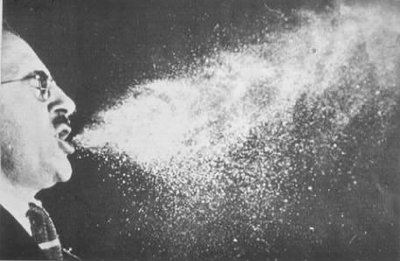
The primary reservoir for influenza viruses is infected humans. Transmission occurs mainly via aerosol droplets, which can survive outside the body for up to 24 hours.
Reservoir: Infected humans
Transmission: Aerosol droplets (coughing, sneezing)
Pathogenesis of Influenza
Initial Infection and Spread
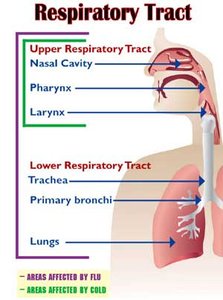
Influenza virus first invades the epithelial cells of the upper respiratory tract (URT), then may progress to the lower respiratory tract (LRT).
Target Cells: Respiratory epithelial cells
Initial Site: Upper respiratory tract (nasal cavity, pharynx, larynx)
Cellular Damage and Secondary Infection
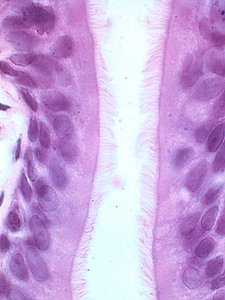
The virus destroys mucous and ciliated cells in the lower respiratory tract, compromising major host defenses and allowing secondary bacterial infections such as pneumonia.
Destruction: Mucous and ciliated cells (LRT)
Complication: Secondary bacterial infections (e.g., pneumonia)
Clinical Manifestations
Symptoms and Incubation Period
Influenza has a short incubation period (36-48 hours) and presents with a range of symptoms, some of which may persist for weeks.
Incubation: 36-48 hours
Symptoms: Fever, chills, headache, malaise, muscle soreness, cough, runny nose, sore throat, fatigue, weakness
Duration: Fatigue and weakness may last several weeks
Viral Shedding: About one week
Comparison with Other Respiratory Illnesses
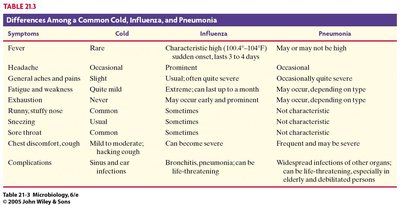
Influenza can be distinguished from the common cold and pneumonia by its characteristic symptoms and severity.
Symptoms | Cold | Influenza | Pneumonia |
|---|---|---|---|
Fever | Rare | High (104°F-105°F), sudden onset | May or may not be high |
Headache | Occasional | Prominent | Occasional |
General aches and pains | Slight | Prominent | Occasionally quite severe |
Fatigue and weakness | Quite mild | Extreme; can last up to a month | May occur, depending on type |
Exhaustion | Never | Early and prominent | May occur, depending on type |
Runny, stuffy nose | Common | Sometimes | Not characteristic |
Sneezing | Usual | Sometimes | Not characteristic |
Chest discomfort, cough | Mild to moderate; hacking cough | Can be severe | Frequent and may be severe |
Complications | Sinus and ear infections | Bronchitis, pneumonia; can be life-threatening | Widespread infections of other organs; can be life-threatening, especially in elderly and debilitated persons |
Diagnosis, Treatment, and Prevention
Diagnosis
Diagnosis is based on clinical symptoms and laboratory tests, including nasal or throat swabs and rapid tests.
Clinical Symptoms: Key for initial diagnosis
Swab Sample: Nasal swab preferred (higher viral load)
Rapid Test: Used for confirmation
Treatment
Antiviral drugs can lessen symptoms if administered promptly (within 48 hours). Some viruses may develop drug resistance.
Antiviral Drugs: Effective if given early
Drug Resistance: Possible in some viral strains
Prevention
Vaccination is the primary preventive measure. Vaccines may be killed (injection) or live attenuated (nasal spray), but effectiveness can vary by season.
Vaccine Types: Killed virus (injection), live attenuated virus (nasal spray)
Recommendations: Not all vaccine types are recommended every season
Antigenic Variation: Drift and Shift
Antigenic Drift
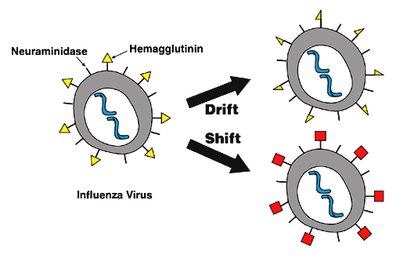
Antigenic drift refers to minor mutations in the hemagglutinin (H) and neuraminidase (N) spikes, resulting in new yearly strains of influenza.
Mechanism: Point mutations in viral genes
Result: Minor changes, new strains each year
Antigenic Shift
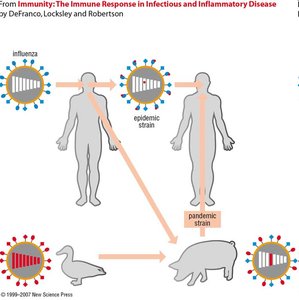
Antigenic shift involves gene reassortment, leading to dramatic changes in viral antigens and often preceding major epidemics or pandemics.
Mechanism: Reassortment of gene segments between different viral strains
Result: Major changes, potential for pandemics
Mixing Vessels: Swine and birds can serve as hosts for reassortment

Historical and Epidemiological Context
Pandemics and Mortality
Influenza pandemics have occurred at intervals, with different strains causing widespread disease. The "Spanish flu" of 1918 had the highest mortality rate among young adults and resulted in millions of deaths worldwide.
Pandemic Strains: H1, H2, H3
Historical Pandemics: H3 (1900, 1968), H2 (1889, 1957), H1 (1918, 1986, 2009)
Spanish Flu: 20-50 million deaths worldwide, >500,000 Americans
Mortality Rate: Approximately 5%
Avian Influenza and Zoonotic Transmission
H5N1 and Other Avian Strains
Avian influenza strains such as H5N1 primarily infect birds but can occasionally infect humans. Human-to-human transmission is rare, but outbreaks in poultry can lead to significant economic and public health impacts.
H5N1: Mainly infects birds; occasional human cases
Transmission: No person-to-person spread seen for H5N1
Impact: >50 million dead poultry in outbreaks
Summary Table: Influenza Virus Key Features
Feature | Description |
|---|---|
Genome | Single-stranded RNA |
Envelope | Lipid bilayer from host cell |
Surface Spikes | Hemagglutinin (H), Neuraminidase (N) |
Types | A, B, C |
Transmission | Aerosol droplets |
Pathogenesis | Destroys mucous and ciliated cells, allows secondary infections |
Prevention | Vaccination |
Antigenic Variation | Drift (minor), Shift (major) |
Additional info: These notes expand on the original content by providing definitions, context, and structured comparisons to aid understanding for Anatomy & Physiology students.
