 Indietro
Innate and Adaptive Body Defenses: The Immune System
Guida di studio - Note intelligenti
 Appunti personalizzati basati sui tuoi materiali, ampliati con definizioni chiave, esempi e contesto.
The Immune System: Overview
General Functions and Organization
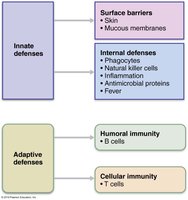
The immune system is a functional system that provides resistance to disease by defending the body against pathogens. It is composed of two main intrinsic systems: the innate (nonspecific) defense system and the adaptive (specific) defense system. These systems are intertwined and cooperate to protect the body.
Innate Defense System: Provides immediate, nonspecific protection through surface barriers and internal defenses.
Adaptive Defense System: Targets specific foreign substances and takes longer to respond.
Innate (Nonspecific) Defenses
First Line of Defense: Surface Barriers
The first line of defense consists of external body membranes, such as skin and mucosae, which act as physical and chemical barriers to pathogens.
Skin: Acts as a physical barrier; keratin is resistant to acids, bases, bacterial enzymes, and toxins.
Mucous Membranes: Provide mechanical barriers; mucin traps microorganisms.
Acid Mantle: Acidity of skin and mucous secretions inhibits microbial growth.
Enzymes: Lysozyme in saliva, mucus, and lacrimal fluid destroys microorganisms; stomach enzymes kill pathogens.
Defensins: Antimicrobial peptides that inhibit microbial growth.
Dermicidin: Chemical in sweat toxic to some bacteria.
Respiratory Modifications: Mucus-coated hairs in the nose and cilia in the upper respiratory tract trap and sweep away pathogens.
Second Line of Defense: Cells and Chemicals
If pathogens breach surface barriers, the innate system activates internal defenses, including phagocytes, natural killer cells, inflammation, antimicrobial proteins, and fever.
Phagocytes: White blood cells that ingest and digest foreign invaders.
Natural Killer (NK) Cells: Nonphagocytic lymphocytes that kill cancer and virus-infected cells.
Inflammatory Response: Involves macrophages, mast cells, white blood cells, and inflammatory chemicals.
Antimicrobial Proteins: Includes interferons and complement proteins.
Fever: Systemic response to infection.
Phagocytes and Phagocytosis
Types of Phagocytes
Neutrophils: Most abundant, become phagocytic upon exposure to infectious material.
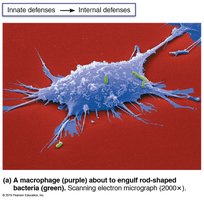
Macrophages: Develop from monocytes; chief and most robust phagocytic cells.
Free Macrophages: Wander through tissues (e.g., alveolar macrophages).
Fixed Macrophages: Permanent residents in organs (e.g., stellate macrophages in liver, microglia in brain).
Phagocytosis: Mechanism
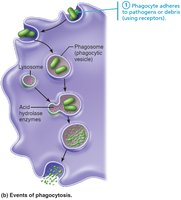
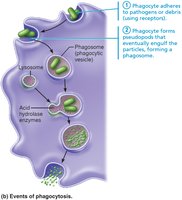
Phagocytosis is the process by which phagocytes ingest and destroy pathogens.
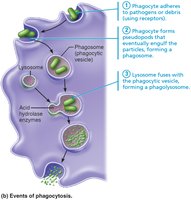
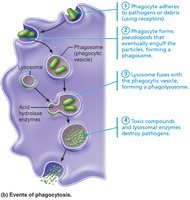
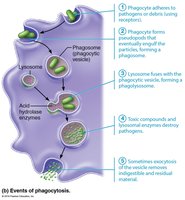
Recognition and Adherence: Phagocyte binds to pathogen's carbohydrate signature.
Opsonization: Antibodies or complement proteins coat pathogens, enhancing phagocytosis.
Engulfment: Cytoplasmic extensions (pseudopods) surround the pathogen, forming a phagosome.
Digestion: Phagosome fuses with lysosome, forming a phagolysosome; lysosomal enzymes digest the pathogen.
Exocytosis: Indigestible waste is expelled from the cell.
Respiratory Burst
Some pathogens resist lysosomal enzymes. Helper T cells can trigger macrophages to produce a respiratory burst, releasing free radicals and oxidizing chemicals (e.g., H2O2) to kill resistant pathogens.
Natural Killer (NK) Cells
Function and Mechanism
NK cells are large granular lymphocytes that patrol blood and lymph, targeting cells lacking "self" surface receptors.
Induce Apoptosis: Cause programmed cell death in cancer and virus-infected cells.
Enhance Inflammation: Secrete chemicals that amplify the inflammatory response.
Inflammation: Tissue Response to Injury
Purpose and Benefits
Inflammation is triggered by injury (trauma, heat, chemicals, infection) and serves to prevent spread of damage, dispose of debris and pathogens, alert the adaptive immune system, and initiate repair.
Cardinal Signs: Redness, heat, swelling, pain, and sometimes impairment of function.
Stages of Inflammation
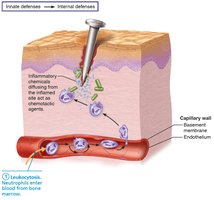
Inflammatory Chemical Release: Chemicals (e.g., histamine) released by injured tissues and immune cells cause vasodilation, increased capillary permeability, and attract phagocytes.
Vasodilation and Increased Vascular Permeability: Leads to hyperemia (redness, heat), exudate formation (swelling, pain), and delivery of clotting factors.
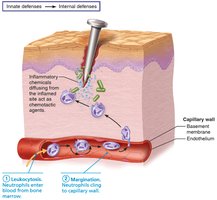
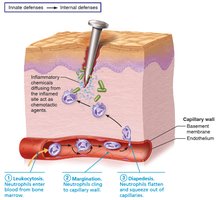
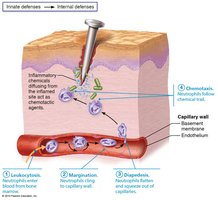
Phagocyte Mobilization: Neutrophils arrive first, followed by macrophages. Steps include leukocytosis, margination, diapedesis, and chemotaxis.
Antimicrobial Proteins
Interferons
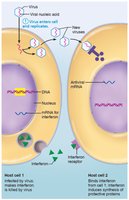
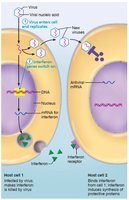
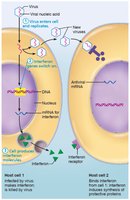
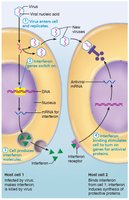
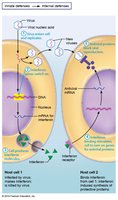
Interferons (IFNs) are proteins released by virus-infected cells to warn neighboring cells and activate immune responses.
IFN-α and IFN-β: Stimulate production of antiviral proteins and activate NK cells.
IFN-γ: Secreted by lymphocytes; activates macrophages and has widespread immune effects.
Clinical Use: Artificial IFNs are used to treat disorders such as hepatitis C.
Complement System
The complement system consists of about 20 blood proteins that circulate in inactive form and are activated to destroy foreign substances.
Classical Pathway: Antibodies bind to pathogens and complement proteins, triggering activation cascade (complement fixation).
Cell Lysis: Membrane attack complex (MAC) forms holes in microbial membranes, causing lysis.
Enhances: Both innate and adaptive defenses.
Fever
Fever is a systemic response to infection, induced by pyrogens released by leukocytes and macrophages.
Benefits: Sequesters iron and zinc, increases metabolic rate, and accelerates repair.
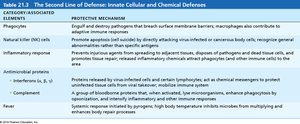
Summary Table: Innate Cellular and Chemical Defenses
Table 21.3: The Second Line of Defense
CATEGORY/ASSOCIATED CELLS | PROTECTIVE MECHANISM |
|---|---|
Phagocytes | Engulf and destroy pathogens that breach surface barriers; macrophages also contribute to adaptive immune responses. |
Natural killer (NK) cells | Promote apoptosis in infected or cancerous cells; recognize general abnormalities. |
Inflammatory response | Prevents spread, disposes of debris/pathogens, alerts adaptive defenses, sets stage for repair. |
Antimicrobial proteins | Interferons: Proteins released by virus-infected cells and certain lymphocytes; act as chemical messengers to protect uninfected cells. Complement: Group of bloodborne proteins that, when activated, lyse microorganisms, enhance phagocytosis, and intensify inflammation. |
Fever | Systemic response induced by pyrogens; high temperature inhibits microbes and enhances repair. |
Clinical Note: Homeostatic Imbalance
Pus, Abscess, and Granulomas
Pus: Mixture of dead neutrophils, tissue/cells, and pathogens.
Abscess: Collagen fibers wall off pus; may require surgical drainage.
Granulomas: Tumor-like growths formed by resistant bacteria (e.g., tuberculosis) inside macrophages.
Key Terms and Definitions
Pathogen: Disease-causing microorganism.
Phagocytosis: Cellular process of engulfing and digesting particles.
Opsonization: Enhancement of phagocytosis by coating pathogens with opsonins.
Apoptosis: Programmed cell death.
Pyrogens: Substances that induce fever.
Complement Fixation: Double binding of antibodies and complement proteins to pathogens.
Additional info:
Innate and adaptive defenses are interconnected; proteins released by innate responses alert adaptive cells.
Pattern recognition receptors (e.g., Toll-like receptors) are crucial for innate immune cell activation.
Inflammation is a complex, multi-stage process essential for tissue repair and immune activation.
